
Annular solar eclipse 2026: Antarctica set to showcase rare ‘ring of fire’; date, time and viewing tips explained | – The Times of India
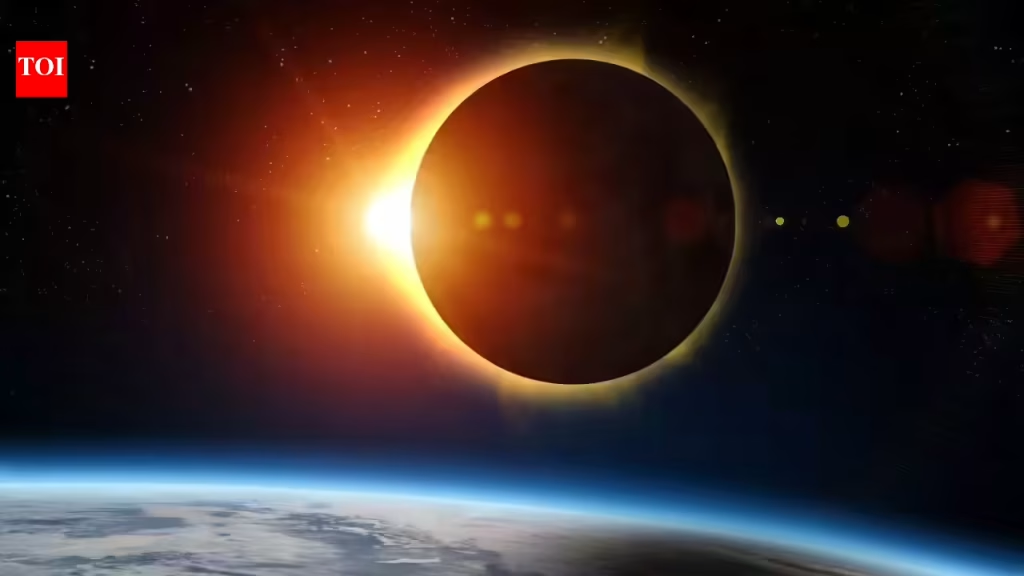

On 17 February 2026, a rare annular solar eclipse is set to streak across the icy expanse of Antarctica. Not many people will see the full spectacle, but it has already caught the attention of astronomers, photographers, and casual sky-watchers alike. The Moon will slide in front of the Sun, but not completely, and that’s what 2026 solar eclipse sound fascinating and thrilling. The famous “ring of fire” appears as a bright, glowing circle that seems to hover in the sky. Experts say the effect is brief, intense, and utterly mesmerising. Even from afar, it might inspire a sense of awe that’s hard to shake.
Annular solar eclipse 2026 : Understanding the ‘ring of fire’ and timing
The Moon will pass directly in front of the Sun, but it won’t cover it entirely. Reportedly, this is because the Moon is slightly farther away from Earth than usual, making it look smaller. A sliver of sunlight will peek around the edges, forming a luminous ring. The peak annular phase could last around two minutes and twenty seconds. But people who are there say it’s unforgettable. Regions seeing, at least, a partial eclipse: South in Africa, South in South America, Pacific, Atlantic, Indian Ocean, Antarctica according to Timeanddate.com. The eclipse kicks off at 07:01 UTC. Antarctica will get the best view as reported.
Solar Eclipse 2026 visibility
Most of the annular path, about 759 kilometres, runs over remote, uninhabited parts of Antarctica. Concordia Station and Mirny Station reportedly sit right on the track. At Concordia, around 80 people might catch it. Mirny could host between 50 and 200 viewers. Outside Antarctica, sightings are partial. Southern Argentina and Chile could glimpse it during sunrise. Some parts of southern Africa might get limited views, North America, Europe, and most of Asia.
Countries witnessing solar eclipse across the globe (annular and partial)
Source: Timeanddate
Will India witness the annular solar eclipse in 2026
India, it seems, will only see a very tiny partial eclipse, if at all but mostly at the far southern tip of the country. Most of India will miss it entirely.
Solar eclipse: Key tips to catch a glimpse
- Always use certified eclipse glasses. Regular sunglasses won’t cut it.
- Try live streams. Many observatories and astronomy groups will broadcast the event online.
- If you’re in southern Argentina, Chile, or southern Africa, aim for a clear horizon at sunrise. Clouds could spoil the view.
- Never look directly at the Sun. Even a few seconds can hurt your eyes.
- A camera with solar filters works, but check instructions carefully.