
‘Movers, shaker, and beggars’: Pakistan’s national meltdown over the India-US trade deal | India News – The Times of India
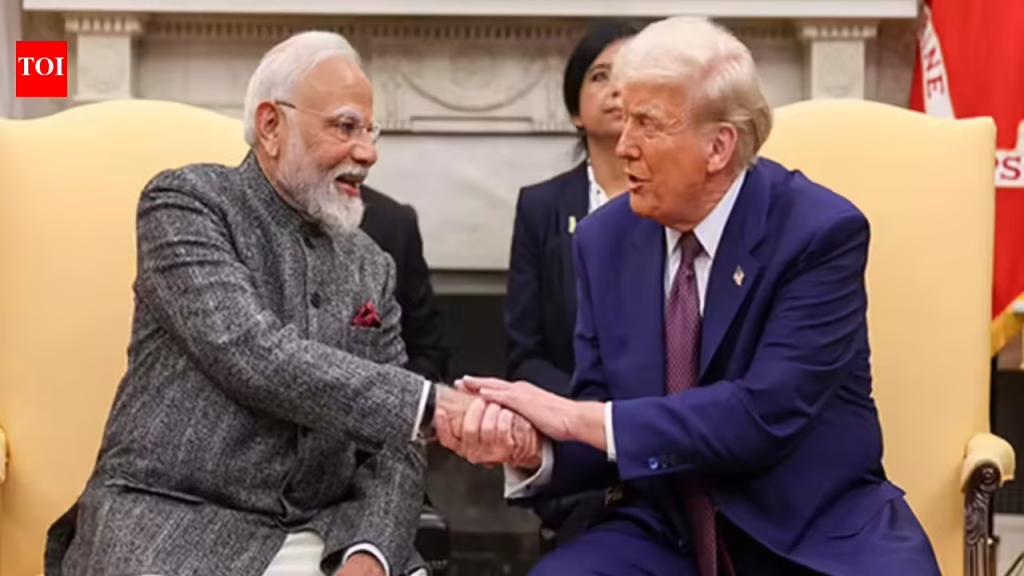
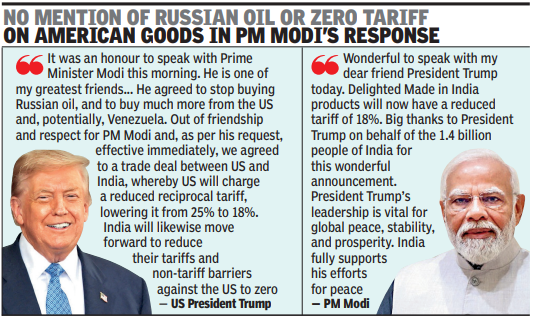
The received wisdom in Washington circles has been that Pakistan has ‘played’ Donald Trump better than its Indian counterpart. This has included praising Donald Trump to high heavens at every turn, nominating him for the Nobel Peace Prize with every breath, offering him (snake?) oil, and in general agreeing to anything including joining the Board of Peace. Perhaps, Pakistan felt it had returned to its older role of indispensable intermediary as New Delhi remained the insouciant child who refused to bow to Trump’s diktats. Overnight, the illusion shattered as Trump announced the US had reached a trade agreement with India lowering tariffs on India’s exports to 18%. While most of the details about the deal are still being worked out, that didn’t stop a full-blown meltdown on Pakistani (or South Asian) Twitter.One viral tweet summed up the mood: “Mover, shaker, and beggars.”
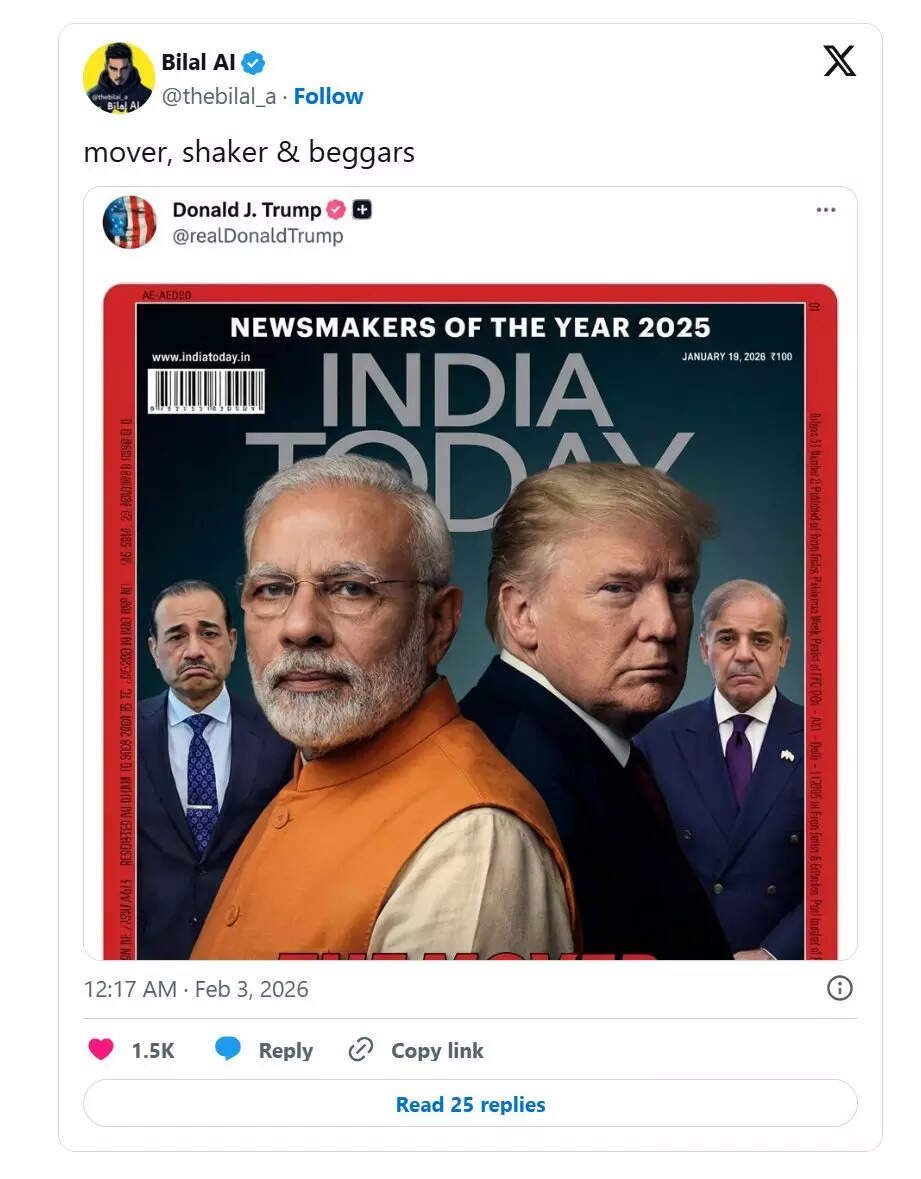
That line became a shorthand for something deeper than trade arithmetic. The reaction in Pakistan was not about supply chains or tariff schedules. It was about hierarchy.
The online reckoning
The first wave of reactions was disbelief. Then came sarcasm. Then came something closer to anger, much of it directed inward. Pakistani social media users began listing, almost ritualistically, the many ways Islamabad had publicly courted Trump. The Nobel Peace Prize nomination resurfaced again and again, often framed as a punchline. So did Pakistan’s enthusiastic endorsement of Trump’s various peace initiatives and grand visions.A widely circulated post laid it out bluntly: Pakistan did everything to please Trump, including nominating him for the Nobel Peace Prize, joining his “Board of Peace”, and offering cooperation on minerals. Yet India, which spent months resisting Trump’s pressure, ended up with a lower tariff rate. To make matters worse, users pointed out, India had also just secured major trade concessions with the European Union.The tone shifted quickly from disbelief to gallows humour. One viral image showed Prime Minister Shehbaz Sharif and Army Chief Asim Munir holding up an AI-styled magazine cover featuring Modi and Trump, both leaders pointing at the image as if presenting evidence of a reality they could not alter. The accompanying Urdu caption roughly translated to: “Asim Munir is stuck between them… the world has moved on.”Across Facebook and Instagram, memes treated the 18% versus 19% tariff gap like a scoreboard. Comment threads were filled with variations of the same lament: how did bending over backwards still lead to being sidelined? Why did obedience not translate into leverage?Even YouTube reaction videos, often noisy and incoherent, showed an unusual convergence. Commenters questioned the entire premise of Pakistan’s Trump strategy. If this was the payoff for flattery, many asked, what exactly had been achieved?
Why this cut so deep
PM Modi and Trump
For months, Pakistan’s elite discourse had convinced itself that India-US relations were deteriorating while Pakistan-US ties were stabilising. Trump’s public irritation with India was misread as strategic rupture. Pakistan’s warmth was read as influence. Proximity was mistaken for power.The trade deal punctured that narrative decisively. What Pakistan’s discourse missed was that India’s apparent indifference was not neglect. It was posture.New Delhi did not merely refuse to flatter Trump; it actively declined to participate in his theatre. Reporting through last year showed that as tariff tensions escalated, India chose distance over desperation. At the height of the standoff, international media reported that Prime Minister Narendra Modi declined to take multiple phone calls from Trump, an almost unheard-of move in the choreography of great-power diplomacy. Silence, in this case, was not accidental. It was communicative.That frostiness surfaced more clearly in what would become the last direct exchange between the two leaders. According to reporting by The New York Times, a June phone call turned sour when Trump claimed credit for de-escalating tensions between India and Pakistan and floated the familiar Nobel Peace Prize rhetoric. New Delhi pushed back firmly, insisting that India and Pakistan had managed matters bilaterally, without US mediation. After that call, the two leaders did not speak again for months.That, in hindsight, is what makes the trade deal so destabilising for Pakistan’s narrative. India did not win by courting Trump better. It won by not courting him at all.