
Scientists find a 2,400-year-old flush toilet in China showing how advanced ancient life was | World News – The Times of India
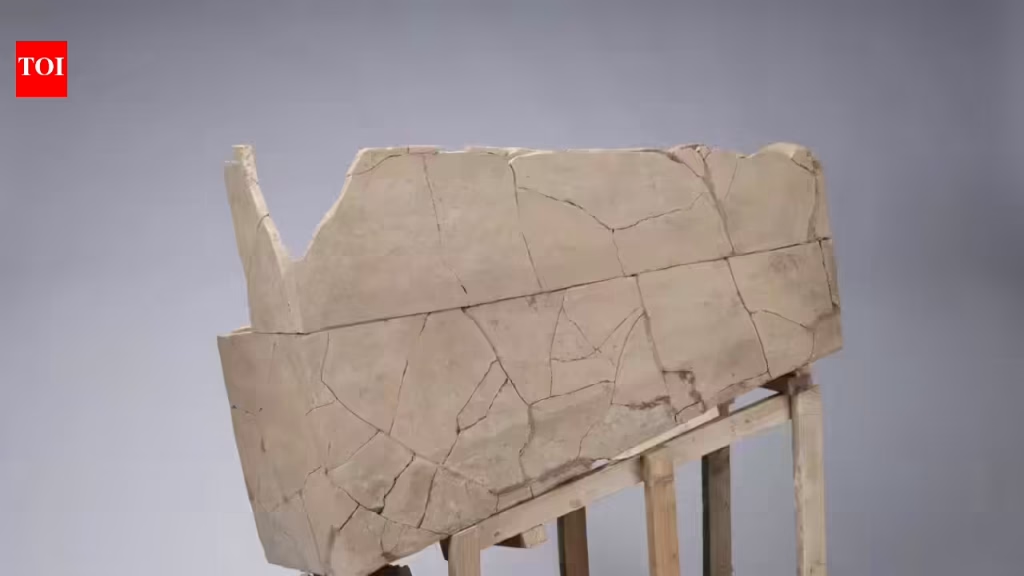
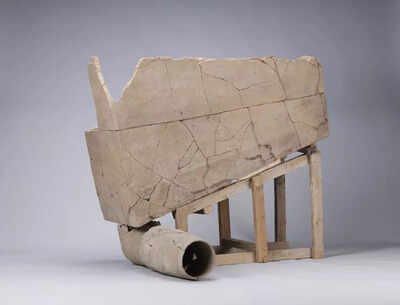
Archaeologists in northwest China have uncovered what is believed to be the country’s only known ancient flush toilet, a discovery that is reshaping assumptions about early sanitation and daily life. The find comes from the Yueyang archaeological site in Xi’an, once a major political centre during the Warring States Period and early Han Dynasty. Broken ceramic parts, including a curved pipe, were excavated from palace ruins and later reconstructed. Researchers say the toilet dates back to around 2,400 years ago and was likely reserved for elite use. Details of the find were reported by China Daily, drawing wider attention to how advanced some domestic systems may have been in ancient China.
2,400-year-old ancient flush toilet found in China offers rare glimpse into early sanitation
The toilet was discovered within the remains of a palace complex in ancient Yueyang city. Archaeologists believe it may have been used by Qin Xiaogong, his father Qin Xiangong, or possibly Liu Bang, the founder of the Han Dynasty. The palace is thought to have served administrative functions, making the presence of an indoor toilet especially striking.
Manual flushing relied on servants and water
What survives suggests something simple rather than mechanical. The bowl sat inside the building. A pipe ran outwards to a pit beyond the walls. Liu Rui, from the Chinese Academy of Social Sciences and part of the excavation team, said water was probably added by servants after each use. No mechanism remains. The upper part of the structure is missing, which leaves a basic question unanswered. Whether the user sat or squatted is not clear. Older carvings from the Western Han period lean towards squatting, but the toilet itself does not settle the matter.
Evidence challenges Western-centred timelines
For a long time, the story of the flush toilet began in early modern England. John Harington’s design for Queen Elizabeth I held that place almost by default. The Yueyang toilet does not overturn that history outright, but it complicates it. It shows that similar ideas were being worked through much earlier, in a different setting, without the same written trail.
Soil analysis may reveal ancient diets
The toilet has become a quiet focus of further study. Soil taken from inside it is being examined for traces of human waste. Researchers hope this might point towards what people ate and how food was processed. So far, the results have been thin. The samples mainly show fertilisers linked to later farming during the Han Dynasty. Even so, the work continues. The object has not finished speaking, even if it does so slowly.