
‘I Missed My Childhood’: Inside The Silent Reality Of Early Marriage Among Gujjar–Bakarwal Girls
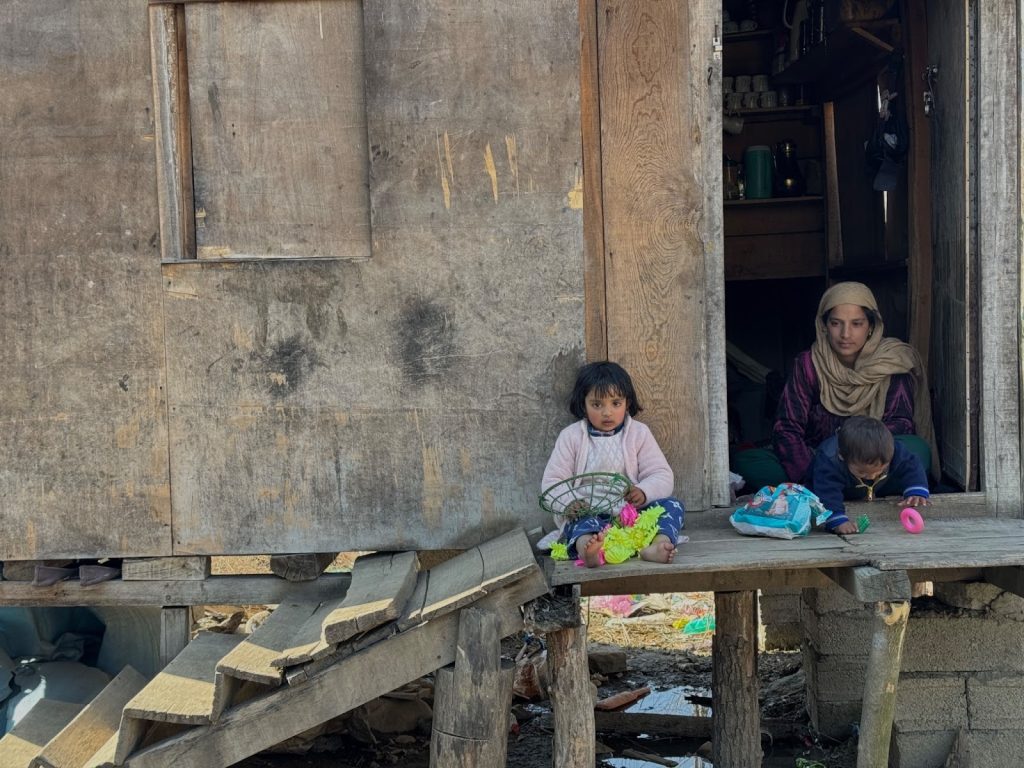
It is seven in the morning in Aragam, a tribal village in north Kashmir’s Bandipore district. The temperature hovers around 2°C. In an open cowshed, 19-year-old Razia Hussain stands wrapped in a faded woollen shawl, scattering fodder before two cows. Her fingers are stiff from the cold. She pauses briefly to rub her hands together, then resumes.
This is how her day begins. Every day.
After feeding the cattle, she walks straight to the kitchen. The water is boiled for the tea, and the dough is kneaded for the flatbread. The utensils have been scrubbed, and the floors are swept. By the time the sun rises over the village, Razia has already been working for hours.
‘There is no fixed time to rest,’ she says. ‘From morning till night, I keep working.’
Razia studied until class 9. She says she enjoyed school and imagined a different future for herself. ‘I wanted to become a doctor,’ she says, her voice steady. ‘In our Gujjar community, we don’t have enough doctors. I wanted to help my people.’
Even illness does not interrupt Razia’s routine. ‘Whether I am sick or tired, I have to wake up early,’ she says. ‘There is no one to share the work with. Everything falls on me.’
At the age of 17, her marriage was fixed. Soon after, her books were packed away. ‘I cried a lot when I left school,’ she recalls. ‘I didn’t want to get married so early.’ Now 19, she says, ‘I feel my childhood ended very quickly. Sometimes I see girls going to school, and I remember my own days as a schoolgirl.’
Even illness does not interrupt Razia’s routine. ‘Whether I am sick or tired, I have to wake up early,’ she says. ‘There is no one to share the work with. Everything falls on me.’
A village-wide pattern of child and early marriages
Aragam has more than 400 households, and many belong to the Gujjar community, which is part of the larger Gujjar–Bakarwal tribal population that makes up nearly 11.9 per cent of Jammu and Kashmir’s residents. Known for their pastoral livelihoods and seasonal migration between hills and plains, the community has preserved its distinct cultural and social practices.
Among these social practices is the early marriage of girls, which is found in several pockets.
Jammu and Kashmir reports relatively low numbers of registered child marriage cases compared to several other Indian states. However, local activists and researchers caution that these figures may not capture the full picture in remote tribal belts, where age documentation is inconsistent, and marriages are often informal.
Official data presented in the Parliament in recent years shows that Jammu and Kashmir reports relatively low numbers of registered child marriage cases compared to several other Indian states. However, local activists and researchers caution that these figures may not capture the full picture in remote tribal belts, where age documentation is inconsistent, and marriages are often informal.
Further, in migratory communities, the absence of birth certificates can make age verification difficult, and the enforcement of the Prohibition of Child Marriage Act uneven.
In villages like Aragam, girls often leave school not because of academic failure, but because marriage is seen as the natural next step.
Sent 250 kilometres away
Salma Banu was only fifteen-years-old when she was married. She was a class 10 student at the time. Salma grew up in Rajouri, but her marriage took her nearly 250 kilometres north to a village in Baramulla district.
‘I was still playing with children of my age,’ she recalls. ‘I didn’t even understand what marriage truly meant.’
‘My favourite subject was Urdu,’ she says. ‘I loved reading and writing. I thought I would study further.’ Instead, she was sent to a new household in a different district. ‘I was still playing with children of my age,’ she recalls. ‘I didn’t even understand what marriage truly meant.’
The transition was abrupt, both geographically and emotionally. ‘Everything happened very fast,’ she says. ‘I was not mentally prepared.’
For seven years after her marriage, she did not conceive. In her husband’s village, questions followed. She describes a period marked by medical visits, whispered conversations, and incessant scrutiny of her body.
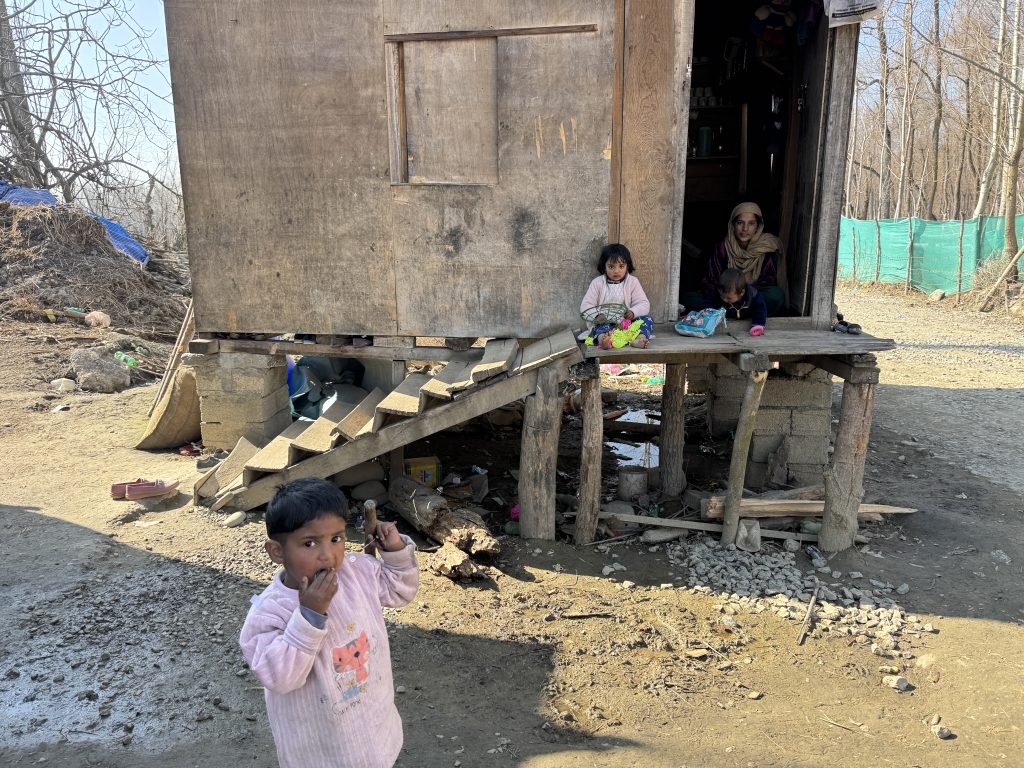
‘There was weakness in my body,’ she says. ‘I was very young and not strong enough.’
In those years, the pressure she faced was not about education, like it was for the other girls her age, but about fertility. She gradually learnt to do household work, adjusting to expectations she says she barely understood at first.
But she does not frame her regret in dramatic terms. Looking back, she says, ‘If I had continued my studies, maybe my life would have been different.’ Adding, ‘Girls should not be married when they are still children.’
Her family, like many others, struggled financially. Marriage was not only viewed as security, but also as reducing financial responsibilities at home by one.
Mobility, schooling, and implementation gaps
For Gujjar–Bakarwal families who migrate seasonally with their livestock, access to schooling is already precarious. Children may enrol in one school during winter and miss months during the summer move to higher pastures. Some districts operate seasonal schools, but continuity isn’t a guarantee. Given this context, girls’ education is often the first to be interrupted, and often permanently so.
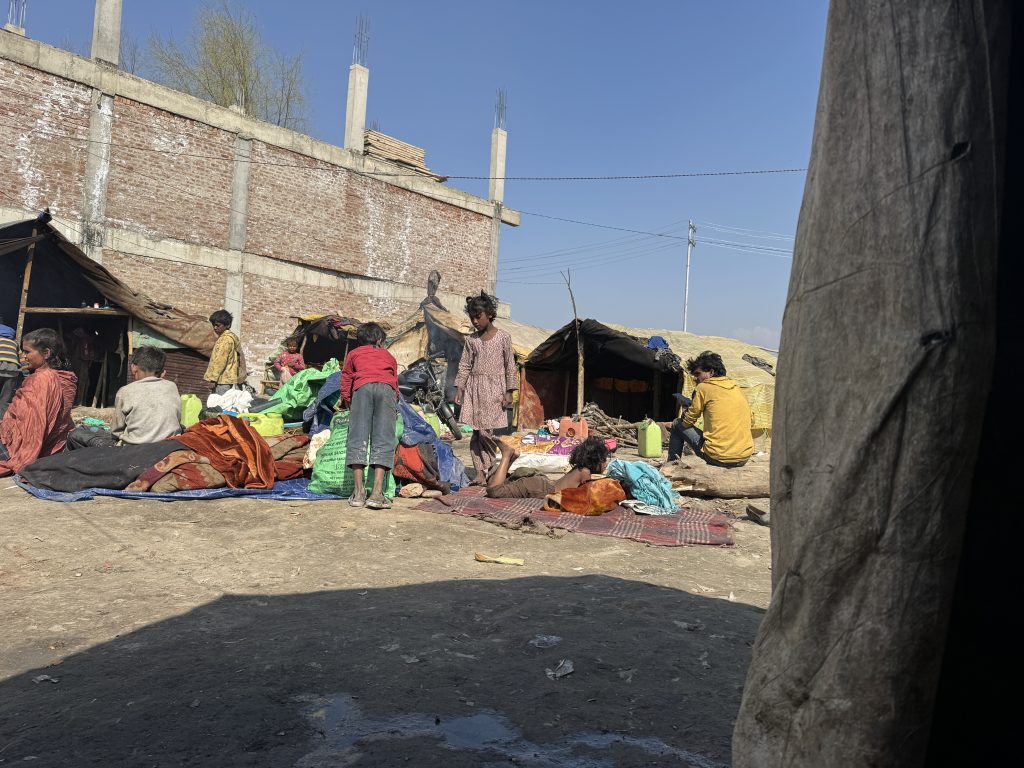
In several tribal hamlets, teachers and activists say that once a girl crosses mid-adolescence, concerns about safety, family honour, and economic strain converge. The decision to marry becomes a pragmatic concern. Boys, by contrast, are more likely to continue their education or seek wage work.
Access to health services adds another layer of complexity. Primary health centres are frequently located far from migratory routes. Adolescent pregnancies, local health workers say, can carry higher risks of anaemia and complications, though systematic data specific to nomadic populations remain limited.
Climate pressures, such as shrinking pastures and unpredictable weather, have further strained pastoral incomes. In years of loss, early marriage is often viewed as a means of reducing financial burdens.
An attempt to shift the conversation
In Bandipora, 26-year-old Shahida Khanum, herself married at 18, has been working within the community to delay marriages and encourage girls to remain in school.
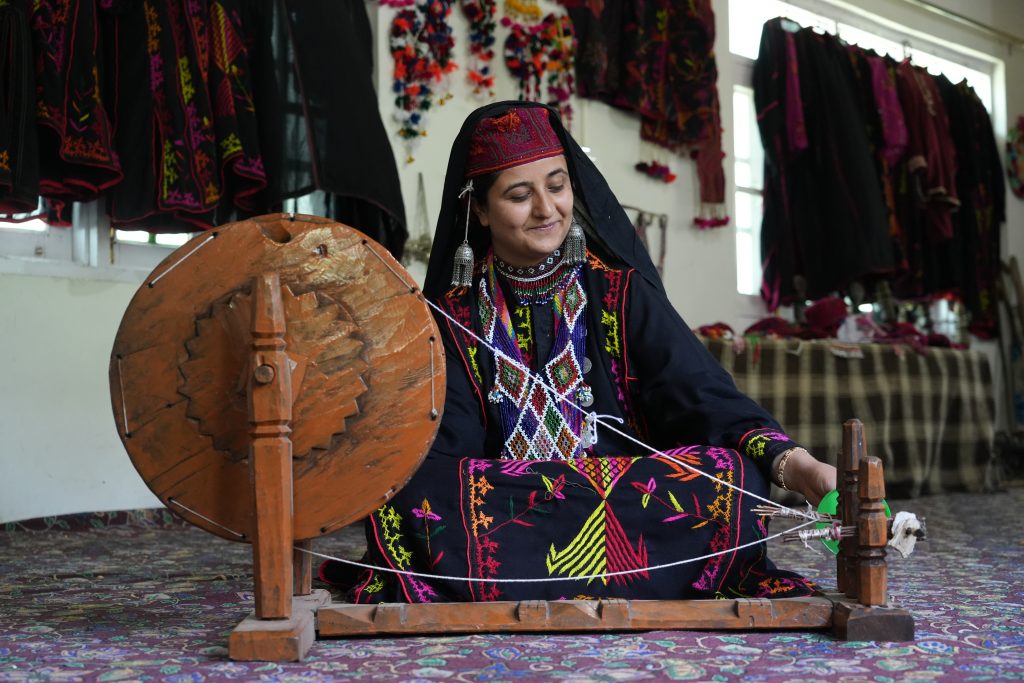
‘I have seen how early marriage affects girls,’ she says. ‘It stops their education.’
Khanum visits tribal hamlets, speaking to parents and elders. Alongside these conversations, she runs small craft sessions for young women, teaching them beaded jewellery making, knitting, Sozni-style embroidery, and traditional Laska cap-making.
Her approach is pragmatic. Families, she says, respond more readily when they see income possibilities. ‘When girls earn something, even a small amount, people start looking at them differently,’ she says.
Progress is gradual. ‘Change does not happen in one day,’ she notes.
The law and its success in preventing child marriages
At the district level in Jammu and Kashmir, Child Marriage Prohibition Officers have been appointed to monitor violations and counsel families. Cases can be reported through the child helpline (1098), now linked to the national emergency helpline 112. Government campaigns under schemes such as Beti Bachao Beti Padhao and Mission Shakti promote girls’ education and awareness of legal age requirements.
Identifying underage marriages depends heavily on local reporting. In areas where marriages are conducted within tight-knit networks and documentation is sparse, detection is difficult.
Yet implementation in migratory and remote communities remains complex. Officials acknowledge that identifying underage marriages depends heavily on local reporting. In areas where marriages are conducted within tight-knit networks and documentation is sparse, detection is difficult.
Activists argue that enforcement alone cannot address the issue without parallel improvements in schooling access, transport, documentation, and adolescent health services tailored to pastoral life.
Before sunrise
Back in Aragam, the morning cold lingers in the cowshed long after daylight spreads across the fields.
Razia has finished feeding the cows. In the kitchen, dough rests beneath a cloth before being rolled into flatbread. Her schoolbooks, she says, are still somewhere in a trunk.
Occasionally, when she sees girls in uniforms walking down the road, she thinks about the white coat she once imagined she would someday wear. Then she takes a long breath and turns back to the mud stove.
Quotes in this article are the author’s free translation from Urdu. Some of the quotes in this article have been edited for clarity and length.
This article has been published under the Laadli Media Fellowship 2026. The opinions and views expressed are those of the author. Laadli and UNFPA do not necessarily endorse these views.