
A Letter To My Fellow Woke Savarnas: Why Our Outrage Is Not Enough
Having spent my fair share of time in seemingly progressive academic spaces, I often wished to be counted among what I call “the woke”, a curious pack that appears to know and say all the right things. Fluent in theory, quick to outrage, and deeply convinced of its own radicalism. Like many social packs, this one too has conditions for belonging. Savarna lineage helps, though it is not the only entry point. Others are welcome as well, as long as they do not challenge who leads the pack. Often, a Savarna feminist woman, steeped in theory and certain that her experience of gendered oppression authorises her to speak for struggles she will never have to live; or the performatively radical man, revolution carefully curated across his Instagram grid. In these spaces, what passes as politics often resembles a “woker-than-thou” performance, where credibility is earned not through action but through vocabulary and volume.
Coming from the hinterlands of Uttar Pradesh and from less glamorous academic institutions, I often felt that even with my Savarna caste status, I was being offered only provisional belonging. The pressure to perform awareness, to constantly sound correct, eventually became suffocating and I chose to step away.
That step back brought relief but also discomfort. I had to confront why I wanted to belong in the first place. With limited exposure to elite academic and activist spaces, I had long admired the confidence, polish, and political fluency of those within them. Wanting their approval felt natural. But what I once admired began to exhaust me. The judgement was relentless, their presumed superiority unmistakable, and disagreement often meant being cut off mid-sentence.
As woke Savarnas, we speak endlessly about injustice. Yet we spend remarkably little time examining our own privileges or asking how we can use them more responsibly. Too often, our politics stops at naming oppression, without interrogating where we stand in relation to it.
Stepping away was possible only because of my caste, class, and other privileges. These cushions gave me the confidence to disengage and find my own footing. However, many others do not have these fallbacks. If it took so long for me to find such confidence inside me, I can only imagine how difficult it must be for others. It is from this vantage point that I write this letter. Not as a moral superior, but as someone implicated in the very structures I critique, hoping these reflections might prompt some inward reckoning.
The labour we avoid
As woke Savarnas, we speak endlessly about injustice. Yet we spend remarkably little time examining our own privileges or asking how we can use them more responsibly. Too often, our politics stops at naming oppression, without interrogating where we stand in relation to it.
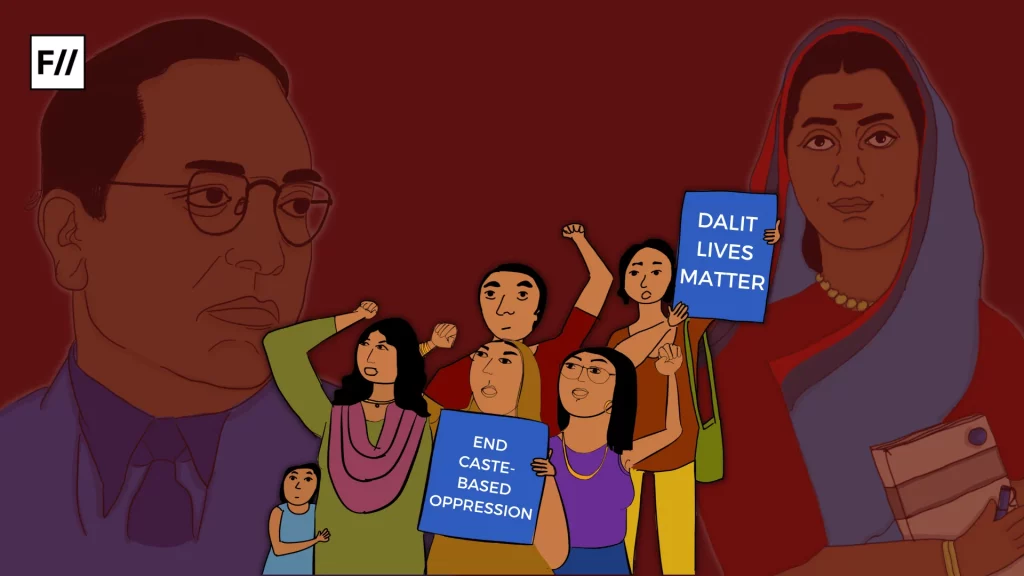
In our passion for justice, we sometimes even slide into imagining ourselves as the oppressed. A striking example of this surfaced during a recent JNU Student Union presidential debate, where a Savarna woman candidate claimed figures like Phoolan Devi and Nangeli as her “ancestors”. Not as inspirations or political foremothers, but as lineage. This act of appropriation was sharply criticised by Priyanshi Arya, a Dalit student leader, who asked a simple but unsettling question: how can Savarna women claim Dalit women as ancestors without disowning the very caste histories that oppressed them?
This impulse is not accidental. It emerges from a culture of performing awareness, where one’s progressive credentials depend on how quickly and loudly one signals outrage. We call out before fully understanding and turn outrage into identity. The louder we are, the more radical we feel, and we only end up becoming rebels without a cause.
Outside these performative spaces, my doctoral research on caste privilege has revealed a quieter, more unsettling reality. Interviewing nearly a hundred individuals from advantaged-caste, urban, salaried families, I was struck by how many genuinely believed caste no longer shaped their lives. They were not consciously plotting discrimination. They were simply inhabiting worlds that had always worked for them, unaware of how deeply caste cushioned their everyday choices.
This ignorance does not absolve them. Its consequences remain harmful. Nor does it mean that overt casteism has disappeared. But alongside deliberate hostility exists another form of caste power: subtle, normalised, and therefore invisible to those who benefit from it. It is precisely this everyday obliviousness that often attracts our sharpest scorn. “How can they not know better?” we ask, directing our anger at individuals rather than the system that produced them.
When someone suggests that unlearning takes time, that worldviews are shaped by social positions, we respond with a familiar refrain: “It is not the job of the oppressed to educate the privileged.” This is true. But what we often forget is this: we are not the oppressed.
We come from the same social worlds as those we condemn. We speak the same languages and occupy the same spaces. So why do we refuse the labour of engagement ourselves? Why leave it to those already burdened by inequality?
Because outrage is easy. Accountability is not. Calling out feels powerful; staying in conversation feels tedious. Yet change does not come from outrage alone. It comes from engagement.
When Savarnas engage other Savarnas, explain, argue, and listen, it may not look radical, but it is one of the few forms of solidarity that does not centre us while still redistributing labour. It shifts the burden of explanation away from the marginalised. Refusing this work does not make us radical; it only deepens polarisation, and in a polarised world, it is never the privileged who pay the greater price.
What emotional labour looks like
Emotional labour begins in ordinary places. Explaining to our families why a casteist joke isn’t funny; helping a peer understand how a ‘small’ remark about ‘merit’ can wound deeply; acknowledging out loud that much of what came our way came because of where we began, so the myths around merit and success can break, and others aren’t left questioning the worth of their own hard work.
It also means making room for mistakes and staying in conversations long enough for learning to occur. It means choosing patience over snark and explanation over performance. This work is slow, unglamorous, and rarely rewarded. Perhaps that is why we avoid it. It takes time away from our own merit-making—writing, publishing, speaking, building reputations. We like justice in theory, but not when it disrupts our momentum. Yet we are precisely the ones best positioned to do this work. If this labour must be done, it should be done by those who can afford its costs.
The obsession with sounding right has become our generation’s soft power. Ironical as it may sound, speaking up even against dominant power structures, brings with it its own clout which we Savarnas can benefit from without having to give up anything real because we only indulge in talk and no action. This earns us applause in progressive circles, opens academic and activist doors, and helps us brand ourselves as “aware.” But this awareness is just another hierarchy.
The obsession with sounding right has become our generation’s soft power. Ironical as it may sound, speaking up even against dominant power structures, brings with it its own clout which we Savarnas can benefit from without having to give up anything real because we only indulge in talk and no action. This earns us applause in progressive circles, opens academic and activist doors, and helps us brand ourselves as “aware.” But this awareness is just another hierarchy. One that rewards the polished Savarna for knowing while excluding everyone else, including even those Savarnas who haven’t had the opportunities to master the complex language of politics, and most ironically, the marginalised whose knowledge comes from life, not from theory.
The uncomfortable truth here is that many of us choose not to engage because nothing in our lives depends on that change. For the privileged, activism is often a choice that brings recognition. For the marginalised, it is a necessity tied to survival. This asymmetry itself is a form of inequality.
What accountability looks like
Albert Einstein once said, “The world will not be destroyed by those who do evil, but by those who watch them without doing anything.” Well, those limiting themselves to throwing temper tantrums about all that is wrong with the world aren’t helping much either. We are often in deep disarray over what everyone else is doing, while rarely asking what accountability demands of us. At best, we offer admissions of guilt. But guilt helps no-one.
Accountability begins with using our access meaningfully. Student unity ‘can’ live long, but only when we share our books, our notes, and our ways of learning. When we show up to group studies not just when we need them, but to ensure that no one struggles alone. When we don’t wait to be asked. When we don’t gatekeep knowledge.
Yes, workers of the world ‘must’ unite, but first, they must pass on that job listing and share that contact without fearing that one more person knowing will reduce their chances. If we truly value fairness, why fear a truly fair playing field where information isn’t hoarded but shared?
It means educating ourselves about the burdens our Dalit peers carry without demanding explanations from them. It means calling ourselves in before calling others out. It is in forming solidarities that are non-judgemental, unconditional, and willing to stay even when our views are not echoed or centred, and doing this work without needing applause.
Outrage is easy. The true real test lies in actively working to dismantle the very structures that sustain our own privilege. Until then all our ‘Jai Bhim’s and ‘Lal Salaam’s will continue to ring hollow.
The world does not need more woke Savarnas. It needs more accountable ones.