
‘Twisted Lies’: Power, Consent And The Problem With Billionaire Romance
Twisted Lies is the fourth and final book of the Twisted Series by author Ana Huang. The series has four books, each following one particular character from a group of four girls: Ava, Bridget, Jules and Stella. Twisted Lies follows the romance between sweet influencer Stella Alonso and morally grey billionaire Christian Harper. What begins as a mutually beneficial fake-dating arrangement spirals into a protective custody romance when Stella’s past stalker returns, forcing her to move in with Christian. While the novel delivers the steamy, high-drama romance readers expect, a closer look through an intersectional feminist lens reveals troubling patterns about power, agency, consent and how romance often disguises deeply patriarchal dynamics.
Stella Alonso and The Perfect Daughter Syndrome
Stella’s character embodies the conflict between personal ambition and familial duty. Stella is described as being very ambitious about her career; she is an influencer, a blogger and also works for a fashion magazine in D.C. as her day job simultaneously. She is very sweet like a ray of soft sunshine. Even though she is an influencer, her life doesn’t involve constantly being on camera. Stella’s family is mixed-race and they don’t support her creative dreams.

For them Stella is a disappointment because she was not the “perfect” daughter they expected her to be – ‘An Alonso was supposed to be perfect,’. This mantra carries the weight of immigrant and minority aspiration, where “perfection” means following the rigid prestigious path carved by her parents. Stella’s choice to be a fashion influencer and blogger is seen as a public, unstable and disreputable venture.
This lack of support from her parents and her job at the fashion magazine with a toxic boss, frames her anxiety and imposter syndrome not as personal failings but as internalised consequences of defying intersecting expectations of her race, class and gender. The line ‘An Alonso didn’t suffer from anxiety attacks or spend their nights worrying about every little thing that could go wrong the next day,‘ reflects the consequences of the societal pressure she has been enduring. Many young women, especially in Asian families will understand this pressure to choose “safe” careers over their passions to meet family and societal expectations and have a voice of their own in a room.
Many young women, especially in Asian families will understand this pressure to choose “safe” careers over their passions to meet family and societal expectations and have a voice of their own in a room.
This internalised pressure also shapes her view of relationships. She repeatedly notes that Christian is the perfect son-in-law by saying ‘My parents would probably love Christian. On paper, he was as perfect as they came. Rich. Good-looking. Well mannered,‘. These sentences mirror a societal reality where a prospective partner’s status, wealth and background are often prioritised over compatibility or mutual respect, reducing a relationship to a transaction that satisfies family honour.
Christian Harper: the billionaire landlord and protector
Christian is the billionaire CEO of Harper Security, he is a cyber security expert and also happens to be Stella’s landlord, a glimpse of which is given to us in Twisted Hate where Jules and Stella move into his fancy apartment building for a fraction of the usual rent, so that Jules and Stella could afford it. This establishes a foundational power imbalance before their romance even begins.
Christian has been portrayed as the total opposite of Stella’s personality, something which is very common when it comes to romance novels. He is cold, hard and morally ambiguous. Stella and Christian begin fake dating as Stella hopes that posting about a mysterious boyfriend could give a boost to her stagnant Instagram growth and help her secure a luxury brand deal. Meanwhile, Christian could use a date to all the functions he attends so people stop trying to set him up or trying to get together with him.
The relationship is built on a foundation where he holds all the cards – financial, physical and informational.
Here, the book briefly touches on the exploitative nature of influencer labour where Stella’s livelihood depends on algorithmic attention, desirability and curated intimacy while Christian remains unaffected both professionally and financially as he is the billionaire landlord. The relationship is built on a foundation where he holds all the cards – financial, physical and informational.
The double standard of “protective” stalking
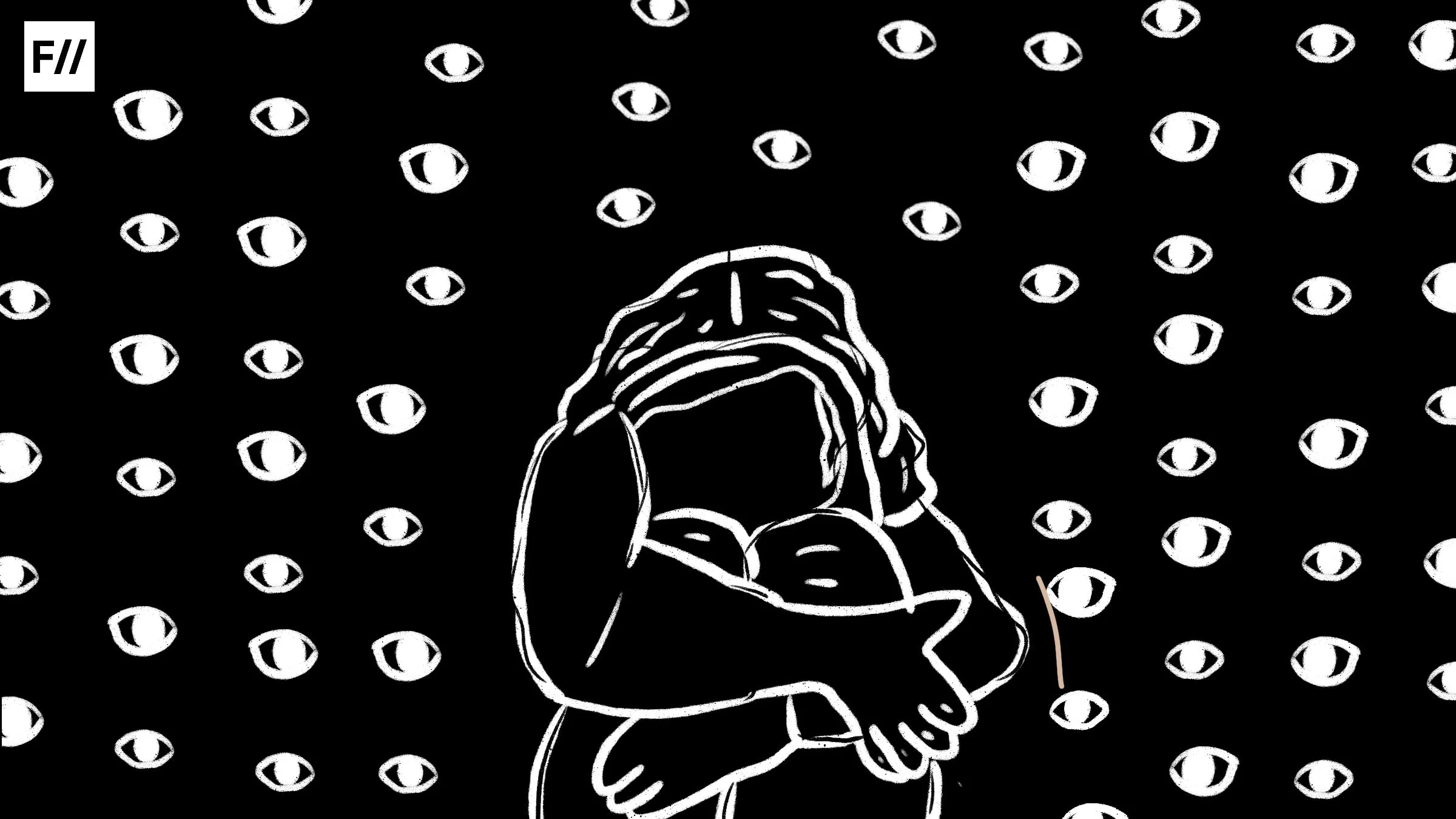
The issue of agency is central to the book’s most problematic element; the story presents two stalkers: the obvious villain from Stella’s past who begins to harass her again and Christian himself who has been observing her life without her knowledge long before their fake-dating arrangement. The book depicts double standards here where the “bad” stalker is rightly portrayed as a threat, but Christian’s actions, including his stalking, his “rescue” involving the high-tech resources of Harper Security like surveillance, breaking into Stella’s apartment to “check” if there are any hidden cameras and justifying it by saying ‘Privacy doesn’t exist when it comes to security,‘ are reframed as the ultimate acts of a protective, obsessed lover.
His class and power whitewash the violation. In reality, such behavior is terrifying and abusive, teaching readers to mistake control for care. For women, this blurred line between romance and surveillance is not just a trope, it normalises a deeply disturbing pattern where a man’s obsession is excused if he is powerful, wealthy and frames it as care.
The burden of forgiveness
When Stella discovers the extent of his deception and surveillance, she feels deeply betrayed. But, following the typical romance trope she forgives him after an intense period of his “groveling.” This story conveys a message that the violation of trust, autonomy and consent can be forgiven by dramatic display of regret on the part of the powerful man, who then shifts the burden of emotional labour for forgiveness on the woman. This romance, therefore, excuses problematic behavior as long as the man is sufficiently committed afterward.

While Twisted Lies achieves success as an intense fantasy book which includes passionate love scenes, its underlying messages about power and agency are conflicted. Stella’s battle against gender and cultural expectations creates a relatable struggle, but the story leads her to a romantic relationship that brings her a partner who dominates her through constant monitoring. A truly empowering romance would allow its heroine to retain her voice and boundaries consistently, with a partner who respects her as an equal from the start, not as a subject to be watched, managed and ultimately won over.

Gunn Bhargava (she/her) is a Political Science undergraduate at the University of Delhi and a feminist writer focusing on gender justice, power, and human rights. Her work engages with feminist media, pop culture and political analysis, drawing from her experience with platforms such as Feminism in India, Writing Women and The Women Story. She is keen on contributing to transnational feminist conversations through progressive journalism.