
Keir Starmer out, Shabana Mahmood in? How Epstein revelations could lead to the UK’s first Muslim prime minister | World News – The Times of India
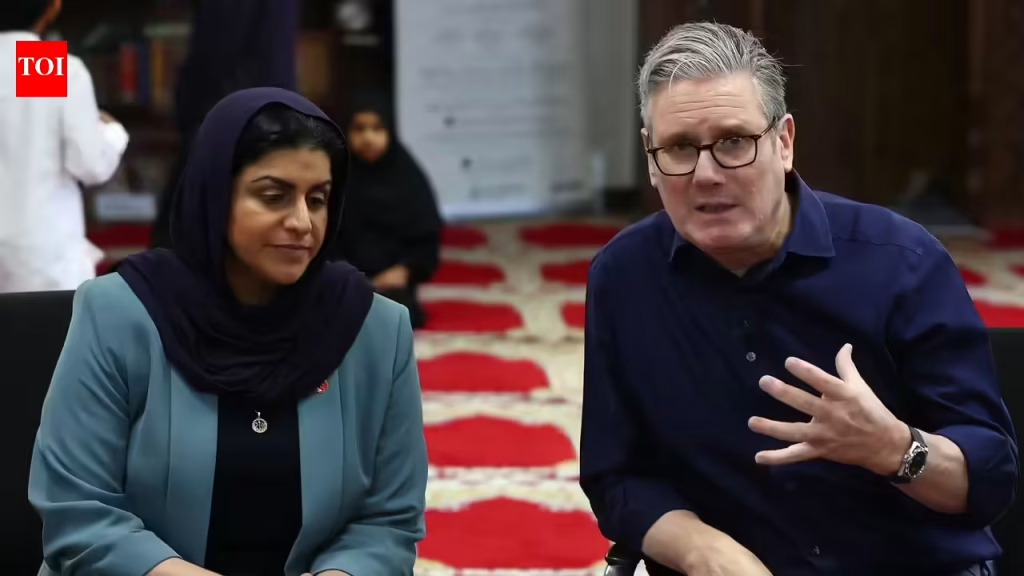
British prime ministers are rarely undone by what they say. More often, they are undone by what they fail to anticipate.Keir Starmer is under mounting pressure not because of any personal wrongdoing, but because of a political misjudgement that has landed at precisely the wrong moment: the decision to bring Peter Mandelson back into the heart of Labour’s power structure just as the Epstein Files resurfaced in public consciousness.Starmer is not accused of misconduct, and Mandelson has consistently denied any impropriety. Yet British politics does not operate solely on legal thresholds. It operates on perception, timing and instinct. The renewed attention on Epstein has revived a broader unease about elite networks, proximity to power and the sense that some figures are insulated from consequences. In that climate, Mandelson’s return has become a liability rather than an asset, raising uncomfortable questions not about guilt, but about judgement.What has unsettled Labour MPs is not the substance of any allegation, but the feeling that Starmer failed to grasp how unforgiving the political moment had become. His response has been procedural and defensive, when the moment demanded moral distance and political clarity. Once a leader’s judgement is questioned, authority begins to thin out rapidly in Westminster.That is why the survival of Starmer’s premiership, once assumed, is now openly discussed as conditional.
Why Mandelson has become the fault line
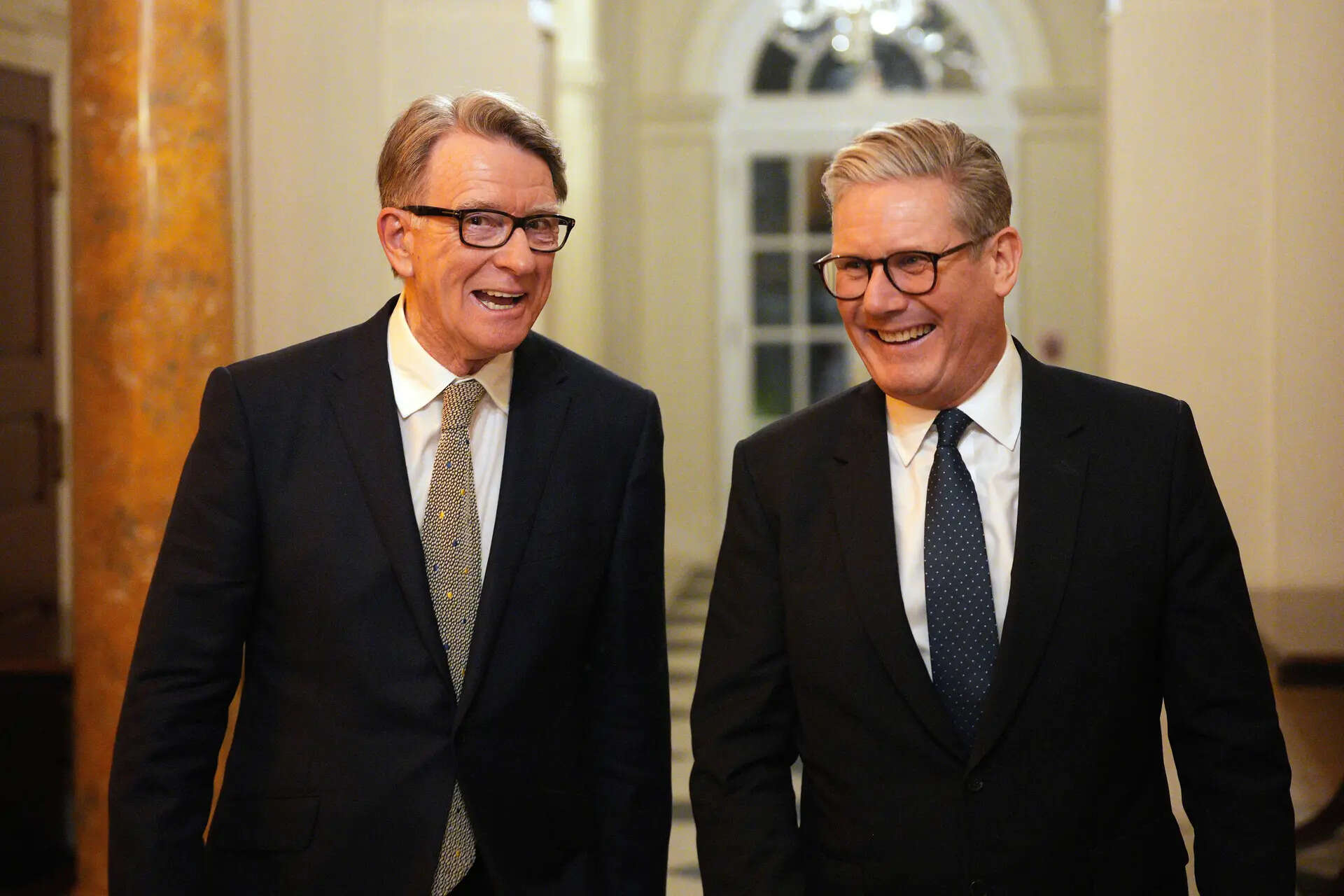
FILE – British Prime Minister Keir Starmer, right, talks with Britain’s ambassador to the United States Peter Mandelson during a welcome reception at the ambassador’s residence on Wednesday, Feb. 26, 2025 in Washington. (Carl Court/Pool Photo via AP, file)
Peter Mandelson is not merely a former minister or adviser. He is the embodiment of Labour’s New Labour era, a survivor of past scandals and a symbol of a governing class that many voters now view with suspicion. By relying on Mandelson’s experience, Starmer was signalling competence and seriousness. Instead, he has inherited the baggage of an era increasingly seen as detached from public anger about privilege and access.The Epstein Files have intensified that discomfort. Even without direct accusations, Mandelson’s name has become shorthand for elite proximity, and Starmer’s inability to foresee the backlash has exposed him to criticism from within his own party. The question Labour MPs are quietly asking is no longer about Mandelson’s conduct, but about Starmer’s political instincts.In British politics, that is often the beginning of the end.
If Starmer falls, the succession question becomes unavoidable
Labour’s leadership rules are designed to protect incumbents, but they cannot protect leaders who lose the confidence of their parliamentary party. If Starmer were to resign or be forced out, the transition would be swift and pragmatic. Governments do not pause to reflect when authority collapses; they move to stabilise.That has brought renewed attention to a small group of senior figures seen as immediately viable. Among them are Angela Rayner, Wes Streeting, and increasingly, Shabana Mahmood.This is no longer just media speculation. Betting markets and prediction platforms have begun pricing the scenario with a degree of seriousness. Mahmood is not viewed as the frontrunner, but she is consistently placed in the second tier of contenders, with bookmakers offering odds broadly in the 7/1 to 12/1 range, while prediction markets assign her a high single-digit probability of becoming prime minister. These figures are not endorsements, but they reflect plausibility. Bookmakers respond to structure, not symbolism.
What are the odds?
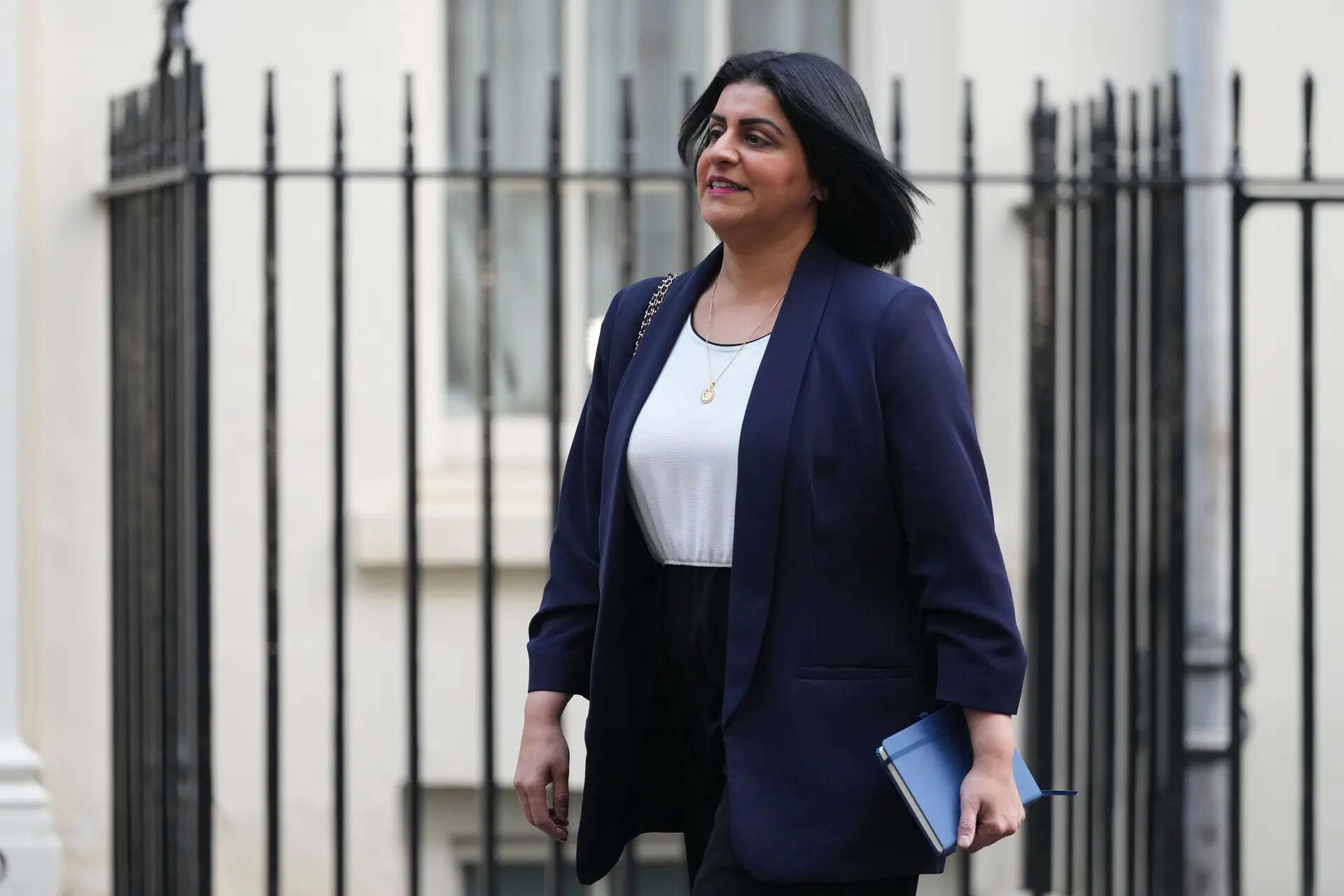
FILE – Britain’s Home Secretary Shabana Mahmood departs 10 Downing Street in London, Wednesday, Nov. 26, 2025. (AP Photo/Kirsty Wigglesworth, File)
In current markets on who could replace Keir Starmer, Shabana Mahmood is positioned as a credible second-tier contender rather than a long shot. On Polymarket, she is trading at roughly an 8% implied probability, well behind Angela Rayner, who sits in the low-20s, and Wes Streeting, who is typically in the high-teens. Traditional bookmakers broadly reflect the same hierarchy. Bet365, William Hill, Ladbrokes, and Paddy Power have all priced Mahmood in a band ranging from 7/1 to 12/1 in recent snapshots, compared with shorter odds for Rayner and Streeting and significantly longer prices for more speculative names. That placement puts Mahmood squarely between the frontrunners and the outsiders, signalling that markets see a plausible route to the leadership, even if they do not yet see her as the most likely outcome.
What a Mahmood premiership would represent
If Shabana Mahmood were to become prime minister, Britain would have its first Muslim prime minister. It would be an undeniable historical milestone, but one that would arrive quietly rather than triumphantly.Mahmood has never framed her politics around identity mobilisation. She does not campaign as a symbol, and she has shown little interest in cultural signalling. Her appeal, such as it is, rests on competence, seniority and institutional trust. Any history made would be the by-product of parliamentary arithmetic rather than ideological intent.
Who Shabana Mahmood actually is
As Home Secretary, Mahmood holds one of the four great offices of state and arguably the most politically punishing department in government. The Home Office tests authority daily, demanding decisions on borders, policing, national security and public order. It is a role that rewards control and punishes misjudgement.An MP since 2010 for Birmingham Ladywood, Mahmood has built a reputation as a serious, detail-oriented administrator. She is not a natural showrunner in the media age, nor does she chase rhetorical spectacle. Within government, she is regarded as methodical, cautious and tough-minded.Her politics align closely with Labour’s governing instinct rather than its activist impulse. On immigration and settlement, she has supported firmer frameworks tied to conduct and contribution. On policing and protest, she has emphasised public order and the cumulative impact of disruption. On security and technology, she has shown comfort with an expanded, modernised state capacity.This positioning has made her broadly acceptable across Labour’s internal spectrum. She may not inspire fervour, but she commands a degree of trust, which in moments of crisis can matter more than charisma.
Why she could win, and why she might not
Mahmood’s case rests on stability. She is senior, scandal-free and already managing one of the most demanding departments in government. In a post-Mandelson moment, where Labour would need to demonstrate seriousness and distance from elite complacency, her low-drama profile could become an asset.Yet leadership contests are rarely decided on competence alone. They are shaped by internal alliances, momentum and narrative control. Mahmood does not yet possess an obvious factional machine, and her caution, which has served her well in office, may limit her reach in a fast-moving contest.Above all, this future remains hypothetical. Keir Starmer is still prime minister, and until that changes, every succession scenario remains provisional.
The larger irony
If the Epstein fallout and the Mandelson miscalculation were to end Starmer’s premiership, and if that collapse were to elevate Shabana Mahmood, British politics would complete a quiet historical loop.The same political system that once presided over the division of India and Pakistan along religious lines would, within a single decade, have produced a Hindu prime minister in Rishi Sunak and potentially a Muslim one as well.History, it turns out, has a sense of irony that imperial cartographers never planned for.