
Womanhood And Love Are Political: An Analysis Of Srishti Chaudhary’s Lallan Sweets
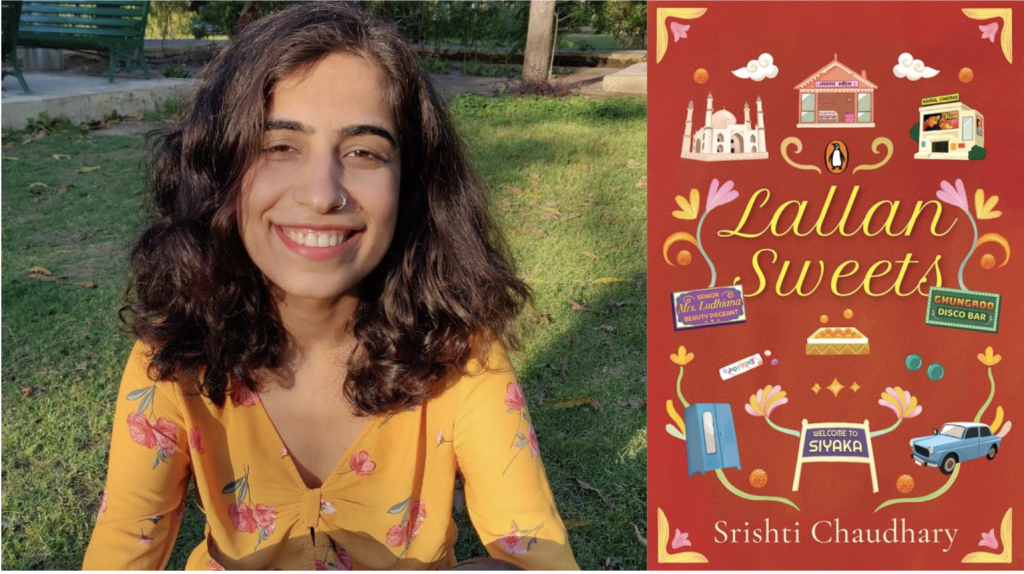
‘Joy is a very militant thing,’ author Arundhati Roy once said.
This was especially true for Indian women in the 1990s, an era when they were compelled to follow the script of being ‘good’ women. However, Tara Taneja from Srishti Chaudhary’s Lallan Sweets defies this expectation.
The ‘new woman’: a mindset, not a concept
Women sell better when they are docile or submissive. At least that is what the 90s entertainment industry in India would want us to believe. Looking forward to marriage with a man of her family’s choice, finding happiness in her husband’s happiness, and dying a martyr by being dutiful till her very last breath is what Indian pop culture taught us a ‘good’ woman was.
With time, Indian women began to move away from the patriarchal notions of femininity imposed on them and evolved into being outspoken women with more individualism. This evolution, however, was not only deemed threatening by a patriarchal society but also as deeply Western.
But Lallan Sweets discards these simplistic ideas and poses a tough question instead: What if love is beyond a romantic thing and is political? The book, however, steers clear of the probable and the obvious, defying the expectations of readers while remaining firmly relatable.
In Lallan Sweets, Srishti Chaudhary, a contemporary feminist author whose writing is committed to revolution, transformed the ‘new Indian woman’ from a concept to a mindset.
In Lallan Sweets, Srishti Chaudhary, a contemporary feminist author whose writing is committed to revolution, transformed the ‘new Indian woman’ from a concept to a mindset. This is evident in the character of Tara, who hails from a middle-class Indian family, doesn’t appear outwardly ‘Westernised’, yet earns her own money and aspires to run her family’s business, Lallan Sweets, someday.
Lallan Sweets, the performance of gender, and feminism
Lallan Sweets is set in the small town of Siyaka, where Tara’s family runs a confectionery shop. When her grandfather retires, and her extended family starts to vie for control over the shop, a battle for succession begins. The grandfather challenges the grandchildren to find the secret ingredient in their famous laddoos to be named the successor.
Tara’s character exists in contradiction with the ideas of femininity prevailing at the time due to her aspirations and unrelenting ambition.
From here on, the spotlight shifts to Tara, who not only embarks on a quest to find the secret ingredient but also teaches others to claim and exercise their agency along the way. Tara’s character exists in contradiction with the ideas of femininity prevailing at the time due to her aspirations and unrelenting ambition. Her undivided focus on her goal — of running the shop one day — makes the sexist and patriarchal society around her uncomfortable.
Tara also doesn’t conform to the everyday patriarchal and sexist norms forced upon women. For instance, she does not hesitate to sneak out of the house in the middle of the night with her childhood friend Nikku after he offers to join her quest to find the ingredient. She chooses to do so despite the fact that she is set to marry someone else soon. Even today, let alone in the 90s, women are expected to interact with men minimally, and for a woman to be seen with a man without marriage remains a cause for patriarchal panic and policing.
While at first Lallan Sweets appears to be a bitter-sweet family drama that keeps readers rooting for Tara’s win and for her to be chosen as the successor, we eventually realise that it is a story of self-discovery as well. Through the course of the book, Tara learns more about herself and what she wants, owing to which she breaks off her engagement with her fiancé and pursues a relationship with Nikku instead.
However, this is not Tara’s self-discovery alone, but also that of the readers, who understand the importance of the self-actualisation that Tara endorses throughout the book. Although the ending feels a bit rushed, it successfully delivers the message that it wants to — radical love is political. Tara’s strong characterisation as someone who stands her own ground and exercises her agency is revolutionary for Indian fiction set in the 90s.
In the end, when Tara and her cousins reunite to learn who the successor will be, a significant twist emerges. We learn that there can be more than one right answer and that together they can run Lallan Sweets a lot better than just Tara alone. The ‘winning together’ approach is in stark contrast to patriarchal and hyper-masculine ideas that understand victory as a solitary thing that can only be achieved through overshadowing others, and rarely acknowledge the benefit of collective effort and collaboration.
Nikku’s character in Lallan Sweets contradicts the notion of hyper and toxic masculinity.
Srishti Chaudhary also draws a comparison between the man Tara was initially engaged to and the man Tara finally chooses — Nikku. While the former was seen as committed but emotionally unavailable, the latter only wants to be a support to her, expecting zero reciprocation. Nikku’s character in Lallan Sweets contradicts the notion of hyper and toxic masculinity. He stands out as a soft yet strong personality who understands Tara’s dreams better. Through Nikku, the book rejects the idea that masculinity can only look a certain way.
The politics of love in Lallan Sweets
Love entails liberation. Control and the imposition of patriarchal norms in the name of love is merely possession. In Lallan Sweets, Tara does not try to build her empire on the backs of the other characters in the book. She does not seek control. However, the book goes one step further by questioning the patriarchal control we unconsciously impose on ourselves as well. What Lallan Sweets depicts excellently is the deconditioning of the patriarchal consciousness that women are trapped by, which keeps them from choosing themselves or putting themselves first.
‘Love is political as much as feminism is,’ said Srishti Chaudhary in one of her live interviews. This is the belief that dominates her writing but emerges as a crucial element in Lallan Sweets. Srishti, through Tara, makes the co-existence of love and revolt and kindness and strength possible, thereby making Lallan Sweet a timeless classic.

Besides being a teacher, reader, and storyteller, Disha writes to calm the voices in her head. Writing started out as an act of survival for her, but today Disha writes about truth, curiosity, and life and its possible meanings.