
Fragments, Shadows, And The Public Gaze: A Review Of Darshana Sreedhar Mini’s Rated A
Back in 2017, when Sunny Leone was set to inaugurate a mobile store in Kerala’s Kochi, the weeks leading up to her arrival were igniting my college campus with a sense of anticipatory excitement and ‘masculine performance’. MG Road, the city’s high street and artery, dramatically transformed itself into a theatre projecting public fantasies.
This period of time, which was unmistakably gendered and highly performative, created an opportunity for peer validation in a hitherto impossible way. It also revealed much about spectators even before the ‘spectacle’ had materialised. Such public displays of affection, fascination, and longing, characterised by their charged atmosphere, reveal vital patterns of the affective and emotional registers of everyday life. However, such discourses, due to their informality and attached ‘illegitimacy’, are often ignored.
Every society has produced its own raw, collective, public moments and vocabulary of erotic fascination. The fervour directed at Sunny Leone recalls the earlier male obsession with the yesteryear South Indian soft porn actress Shakeela, which was institutionally mythologised in the 2007 Malayalam film Chota Mumbai.
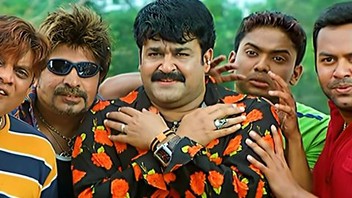
The movie showcases how public desire lingers as a nostalgic trace. In both these cases, there was an implicit sense that the physical proximity (or the promise thereof) of these actors actively collapsed screen-mediated fantasies into everyday life. These acts are in no way isolated incidents; but are cultural moments whose affective dimensions are loud, omnipresent, and unapologetically carnal.
From semi-nude sketches in weeklies, painkili sahithyam (pulp fiction), voluptuous cartoonish figures in magazines, ikkili padangal (erotic movies), glamorous photographs in magazines, posters, confessional accounts in film magazines, to the algorithm-mediated clickbait news on social media, the sources that created such intense moments of desire have evolved in accordance with time.
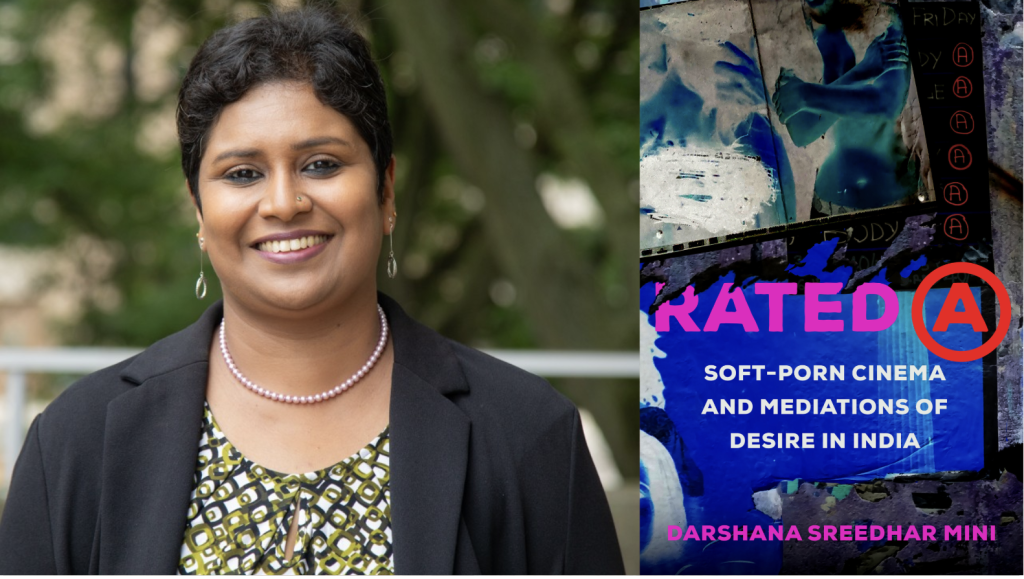
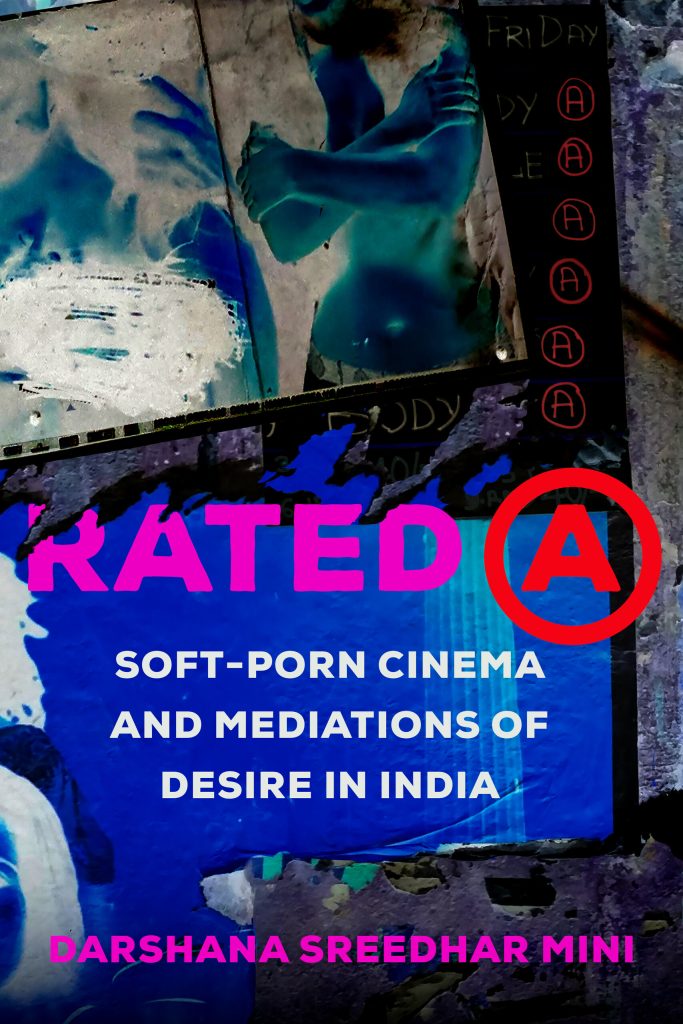
This ever-evolving archive, while trivial but telling, has often remained too ‘vulgar’, too ‘intimate’, and too ‘ordinary’ for academia to consume. It is this hushed-up history that Darshana Sreedhar Mini portrays through her one-of-a-kind work, Rated A: Softporn Cinema and Mediations of Desire in India.
Navigating the archives of everyday
Beyond the compelling and interventional nature of the subject matter of the book, Darshana Sreedhar Mini distinguishes her work through its intellectually innovative and ethically grounded theoretical framework. Darshana easily transforms the hurdles that she faced while journeying through the subject of Malayalam softporn movies — conventionally considered incompatible with the idea of a ‘respectable woman’ — into her methodological strength.
In Mini’s own words, in a world where anything ‘Rated A’ is routinely cast as forbidden for a woman, her presence as a female researcher was seen ‘as a site of curiosity as well as anger’.
In Mini’s own words, in a world where anything ‘Rated A’ is routinely cast as forbidden for a woman, her presence as a female researcher was seen ‘as a site of curiosity as well as anger’. Darshana, through her ethnographical positioning, questions what is deemed acceptable for a woman to study and, more precisely, challenges the social convention of who gets to narrate the history of mediated desire.
At the core of Mini’s research practice is her refusal to instrumentalise vulnerability. She began her fieldwork by following informal production trails in 2010 in Chennai. Darshana recalls how acquiring access to information on the industry was a slow, difficult, and sensitive process where gaining trust became more important than gathering data. To facilitate this, the author had to take up informal and odd jobs in the industry.
Mini’s work adopts a speculative feminist historiography. Darshana explicitly refuses to name, expose, or romanticise. Mini’s deep engagement with the vernacular is also critical. By placing Malayalam softporn cinema as the centre of the study, she refuses to blindly conform to the idea that Hindi cinema is equivalent to Indian cinema and all other regional language film industries are sub-branches.
The author deliberately grounds her analysis in the linguistic, moral, and sensory vocabularies of Malayalam. She decodes how the formulations in the Malayalam vernacular shape desires and fantasies through a transregional network, inspiring other industries in the process. Mini meticulously analyses the term thundu, which originally denotes a ‘cut piece’. She traces the word to the softporn industry, where it refers to uncensored pieces which were added to the movie during its theatrical release. Today, thundu has semantically drifted and become a colloquialism that refers to all forms of erotic visual content.
The madakarani and the politics of desire
Rated A contends that scandal itself operates as a form of media logic formulating ‘scandal publics’, wherein public interest is used to justify intrusion into private lives. Through the imagining of the madakarani (the seductress), the author observes that anxieties surrounding sexual autonomy are being redirected.
The madakarani is a volatile and complex cinematic and social archetype, intersecting with larger constructions of sexuality, caste, and labour.
The madakarani is a volatile and complex cinematic and social archetype, intersecting with larger constructions of sexuality, caste, and labour. The term originates from the Sanskrit word madakatvam, which means excess or uncontainable desire. Madakatvam exists sharply in contrast to the more domesticated, respectable, and private premam (love). Unlike intimately private premam, the uncontainable desire towards the madakarani operates in public spaces where her desirability is weaponised, and she is subjected to a voyeuristic gaze. She simultaneously fulfils male fantasies while also destabilising them. This, according to Mini, may be recognised as a mirror to ‘society’s hypocrisy’.
The book suggests that the legibility of the madakarani figure is determined by caste identity. Darshana notes that women from marginalised caste backgrounds are more readily read as such figures, especially when embodied by dark-skinned South Indian actresses. She locates this process of racialising and caste-marking within a larger context of media ecology.
For instance, she focuses on the case of Malayalam film magazines’ scripting the figure of the madakarani. The author notes that discourses in these magazines collapse the madakarani‘s labour and performance into the language of veshyathvam (sexual excess), framing the Madakarani as a polluting presence that threatens both the idea of heteronormativity and the symbolic boundaries safeguarding what is deemed ‘respectable’.
Darshana Sreedhar Mini observes that the label of madakarani clings to the bodies of the actors who play her. The actors, in turn, become subjected to reputational policing, sexualised surveillance, and in some cases, even posthumous erotic commodification.
Darshana Sreedhar Mini observes that the label of madakarani clings to the bodies of the actors who play her. The actors, in turn, become subjected to reputational policing, sexualised surveillance, and in some cases, even posthumous erotic commodification. In Mini’s reading, the madakarani often becomes the site where the state, the censor, the gossip columnist, the meme-maker, and the viewer compete for interpretative authority.
The madakarani remains hyper-visible but disposable; she marks herself as iconic but is exploited. However, despite all this, she manages to survive, said Mini during an interview for this article. In the broader context, the madakarani remains ‘an unstable social figure’ who is primarily indigenous and embraces non-conjugal sexuality while also mobilising sexuality for self-fashioning. This often garners her the tag of a ‘public woman’ over whom Kerala’s patriarchal public sphere claims moral and erotic jurisdiction, wherein their anxieties about modernity, caste, and female agency intersect.
Cinematic labour and the spatial politics of production
The excellence of the book lies in the fact that Rated A underscores the Malayalam softporn industry as a deeply stratified economic formation. The author notes that ‘an invisible organising line’ separates the mainstream from the ‘softporn underground’. Such demarcations through inherent encryptions of caste codes, aesthetic values, and moral grounds create a ‘good side’ and a ‘bad side.’
Those who fall on the ‘bad’ side of the line are framed as morally questionable and lacking professionalism, leading to stigmatisation of the labour they perform.
Those who fall on the ‘bad’ side of the line are framed as morally questionable and lacking professionalism, leading to stigmatisation of the labour they perform. Darshana Sreedhar Mini notes that the madakarani, therefore, is imagined as a ‘second-tier labourer’ and is punished for the work she does.
Mini zooms in on Chennai’s Kodambakkam — once a centre of Malayalam film production — to unravel the unseen economies and temporalities of film production. Through deep field exploration, she conceptualises ‘wait time’ as a significant process of cinematic labour. Unlike the usual perception, waiting does not indicate idleness in this case. Instead, wait time acknowledges aspiration, exclusion, and the informal economies of Kodambakkam.
In acting school and grooming centres, the phrase ‘payatti theliyuka’ (to shine after repeated struggle) frames endurance through prolonged precarity as a sign of sincerity. Mini captures the textures of this waiting time at Kodambakkam through her ethnography, mapping how the low-budget waiting room doubles as rotating dormitories, how continuity albums document extras who never appear onscreen, and how access to unions is guarded with high entry fees that effectively exclude marginal workers.
The author further sheds light on the cost of this labour by theorising ‘embodied vulnerability’ as the process by which cinema’s informal economies inscribe risk onto the workers’ physical, emotional, private, and reputational lives. The softporn workforce is often disciplined through unwritten norms that demand loyalty and silence.
Through its credit-based payments, pseudonyms, and uncredited roles, a workforce that is able to move between genres without long-lasting association is created, which ultimately leads to its erasure from film history.
Unions such as the Film Employees Federation of Kerala (FEFKA) work for the benefit of a generic male-coded idea of a cine worker. Such a structure, by nature, undermines the varied risks borne by women workers, workers from marginalised castes, and queer workers. Rated A records how volatile the nature of this system is. Through its credit-based payments, pseudonyms, and uncredited roles, a workforce that is able to move between genres without long-lasting association is created, which ultimately leads to its erasure from film history.
Afterlife and digital flows
The Malayalam softporn era was not confined to Kerala alone. Rated A traces its transnational flow made possible by piracy networks, informal economies, and migrant desires. The author notes how these movies screened in the labour camps on Friday nights and operated as a form of ritualised reconnection to home for the working-class Malayali migrants in West Asia. This also turns our attention to how dominant histories have only focused on elite cultural flows while documenting diaspora narratives.
Mini follows these movements into the present, documenting the redeployment of soft-porn’s visual and narrative vocabulary in digital content economies. Adult OTT platforms such as Nueflix and Uncut Adda, subscription-based VOD services, and global spaces like OnlyFans and LiveJasmin host performers, meme-makers, and cammers who adapt familiar tropes for an ‘internet-empowered’ desi viewership. Today, these productions maintain this genre’s remnants through influencer marketing, camming, escort services, and smartphone-enabled self-production.
Rated A reminds us that while Malayalam softporn might have ceased to exist as a genre today, its images, tropes, and, more importantly, the figure of the madakarani continue to persist across new media.
Rated A reminds us that while Malayalam softporn might have ceased to exist as a genre today, its images, tropes, and, more importantly, the figure of the madakarani continue to persist across new media as grainy clips, torrent downloads, Reddit nostalgia threads, and meme culture. Mini coins the term ‘soft porn affect’ to denote the mode that assembles the textures, sounds, and stylistic devices associated with thundu as part of wider digital grammar.
When the screen goes dark
Rated A does us a great service by examining Malayalam soft porn as a cultural artefact that shaped regional and transnational circuits of desire, love, labour, and media economies. Mini clarifies that the history of cinema in general, and that of the soft porn industry in particular, cannot be detached from the networks of workers, informal markets, and spatial arrangements that have produced it.
The book is shaped from a feminist epistemology that centres labour and outrightly rejects victimising cliches, moral binaries, and discipling hierarchies. Mini’s scholarship challenges the dominance of Western-centric porn studies by insisting on regionally grounded histories. While often neglected from the category of ‘national cinema’, the author traces how the Malayalam soft porn industry has managed to inspire the visual imagination of Indian pornography.
Refusing to rely on what is deemed conventional or official, Mini engages deeply with ethnography. She transforms archival absence into a method. Rated A successfully manages to legitimise the genre of Malayalam soft porn as the story of those who sustained it. Here, the daily negotiations of risk, secrecy, and aspirations are written in the vocabulary of labour that is interpersonal, contextual, and embodied.
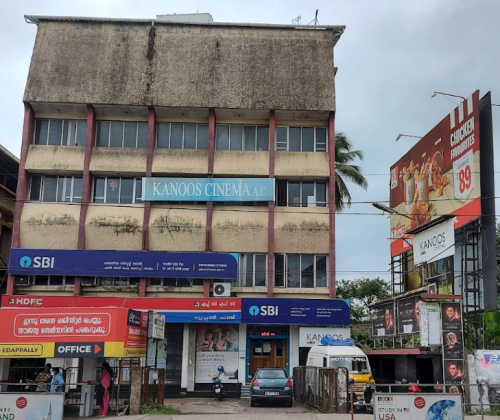
Today, as I walk through Kochi’s MG Road, I try to trace the ghost of the erstwhile Kanoos theatre, which was known for showcasing adult cinema. I can recollect how, as a young girl, you were expected to avert your gaze from the posters of the films that were screened there, because respectability demanded distance. The theatre seems to have quietly shut down, and the city never bothered to mourn. That building has faded from public memory, as has the era it represented. However, such erasures should not pave the way for sanitised histories.
Rated A is not an attempt to sanitise or sensationalise. Mini reminds readers of what has been erased and invites us to trace its existence from the fragments that are available. She excavates through bits and pieces to ask larger questions about the everyday histories of labour, desire, and respectability that continue to shape our cultural identities.
Editor’s Note: All quoted text and utterances attributed to Rated A’s author, Darshana Sreedhar Mini, are drawn from an interview conducted with the author of this article.