
Domestic Workers And The Law That Still Won’t See Them
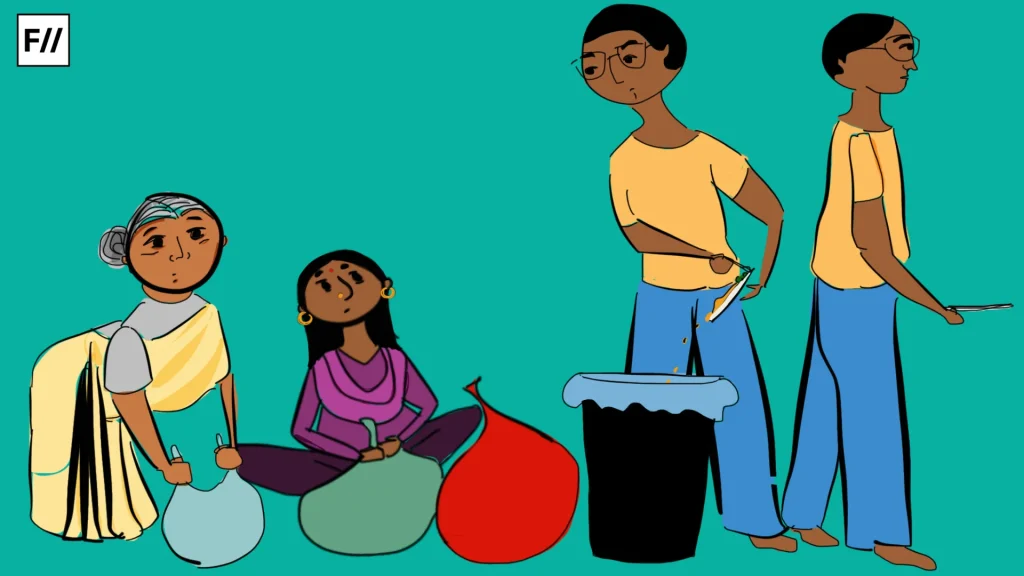
It is 5:30 in the morning. Neha is already up. Before she steps out, she makes breakfast for her two children, packs their school bags, and checks that they are ready for the day ahead. Then she leaves. She will clean, cook, and sweep through four different homes before returning by evening. For all of this, she earns somewhere between six and seven thousand rupees a month. No written contract. No paid leave. No one has ever told her she is entitled to either.
Neha came to Ranchi from Kolkata after her marriage. This was the life she had moved to, the city she had made her own. Then her husband found someone else and left, leaving her alone in a place with two children, Aarohi and Aarav, with no real option to go back. She is still here, still in the same house, working four homes a day so that her children can go to school and have a life that looks different from hers.
A Workforce Nobody Counts Properly
India’s domestic workforce is enormous, although the numbers themselves reveal something about how little the state has attempted to count them. Government estimates put the figure at around 4.75 million. The ILO estimates closer to 20 million. Unions and worker collectives cite 20-50 million, making India home to roughly 4.8% of the global 76 million.
Women make up between 76 and 82 per cent of that total, and nearly 90 per cent in India. Many are migrants from Dalit, Adivasi, or Muslim communities. Urban domestic work is the second largest sector of female employment in the country. When a workforce is this hard to count, it is usually because no one has built the systems to see them. A 2024 study in Coimbatore and Erode found that many domestic workers had little to no formal education and entered the sector out of economic necessity.
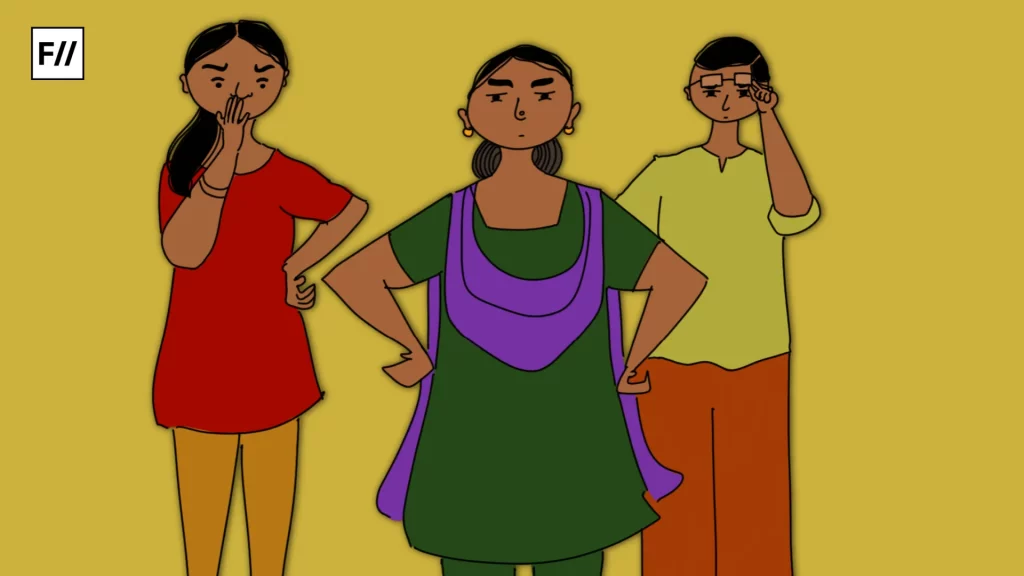
Wages hover between Rs 6,000 and Rs 9,000 per month in states like Tamil Nadu which has issued welfare notifications but no formal minimum wage, far below what other informal workers in construction or manufacturing typically earn as a baseline. And yet the workforce still remains in a legal grey zone, where they continue to get exploited but remain invisible and ignored.
The Work That Does Not Count
Domestic workers continue to be invisible in part due to structural factors. The work takes place in private setting. There isn’t a factory, an officially recognised workplace, or an employer of record. There are no formal contracts and no body or department for accountability or oversight. Neha, for example, has a separate, completely informal arrangement with each of the four households she visits in a single day.
Adopted in 2011, ILO Convention 189 attempted to address this issue worldwide. It established minimum requirements for domestic workers, including written contracts, set hours, minimum wages, and equal access to social security. ILO Recommendation 201 went a step further by addressing access to housing, food, and healthcare. When the convention was adopted, India was present. It did cast a vote in favour. It still hasn’t been ratified fifteen years later. When Parliament was questioned about this in July 2025, the government stated that ratification would take place after Indian laws were fully aligned with the requirements of the convention.
Beneath all of this is the caste dimension of the work. Communities at the bottom of the social hierarchy have traditionally performed domestic work, and this has not significantly changed. The framing has been altered. Although the term ‘caste duty’ has been replaced with ‘informal employment,’ the women who perform it are still mostly from the same communities. The distinction is important because it alters how the law views them.
Beneath all of this is the caste dimension of the work. Communities at the bottom of the social hierarchy have traditionally performed domestic work, and this has not significantly changed. The framing has been altered. Although the term ‘caste duty’ has been replaced with ‘informal employment,’ the women who perform it are still mostly from the same communities. The distinction is important because it alters how the law views them.
The physical toll of this kind of work is also one of the most neglected aspects of domestic work. Domestic workers commonly experience long-standing back and knee pain, ongoing respiratory problems resulting from years of being exposed to cleaning chemicals, and a persistent feeling of exhaustion or fatigue. Many deal with emotional and psychological stress but often finds themselves with no outlet to share that experience with. There are no colleagues, no union to go to, and no sick day to take.
A History of Failed Legislation
Since the 1950s, India has seen a number of bills on domestic worker welfare, none of which has translated into becoming law. Starting as early as 1948. Domestic workers were left out of the Minimum Wages Act. Then 1961, left out of the Maternity Benefit Act, too. The Unorganised Workers Social Security Act of 2008 technically included them, but most workers had not heard of it a decade later, let alone accessed anything through it. The Decent Conditions and Regulation Bills of 2015 and 2017 were drafted, discussed, but went nowhere.
The four Labour Codes passed between 2019 and 2020 mention domestic workers. Their actual vulnerabilities, be it the missing contracts, the wage gaps, the lack of any recourse are not addressed anywhere in the text. As recently as 2025, the Ajay Malik judgment and a PIB statement on ILO Convention 189 confirmed that ratification remains pending. Karnataka being only one of the major states with a 2025 draft bill which has presented a concrete and a comprehensive thought process on this issue.
The Supreme Court’s ruling in Ajay Malik vs State of Uttarakhand stated that states had moved on domestic worker protections specifically because the centre had not. The 2008 Act is a good example of how this works in practice. Domestic workers were included in its scope. Most of them had never heard of the Act a decade after it passed, let alone registered under it or claimed anything from it.
The four labour codes are the same story. Domestic workers appear in the text. Their specific situation which involves no contracts, no fixed hours, wages set entirely by whoever is employing them that week is not dealt with. Neha has no written agreement with any of the four homes she works in. Her wages, her hours, whether she can take a day off when one of her children is ill all of it depends on how each employer feels that morning.
What Has Been Tried
State governments have done more than the centre, though not enough. Tamil Nadu set up a welfare board in 2007 offering education assistance, accident coverage, and pensions. Maharashtra followed in 2008 with district-level boards that let workers voluntarily register for benefits. Kerala introduced a welfare bill in 2021. In 2022, Delhi drafted a comprehensive bill that would have addressed welfare boards, wages, and registration. The majority of these initiatives have the same issues: employees who are unaware of them, lax enforcement, and voluntary registration.
What domestic workers’ unions and civil society groups have consistently asked for is simple. They want a central law that recognizes domestic work as real work.
Since its launch in 2021, the eShram portal has registered more than 30 crore unorganised workers. Despite being one of the largest segments of the workforce, domestic workers only make up about 8 to 9 percent of registrations; women make up about 53 percent of that total. In addition to being under-represented in policy, they are also under-represented in the databases designed to locate them.
Additionally, even those who have registered frequently are unable to identify a single scheme to which they are eligible. When asked what the portal offered, the majority of workers surveyed in the 2024 Coimbatore study were unable to identify the programs created for them. In actuality, registration has had very little significance. In this regard, the Supreme Court ordered the Ministries of Labour, Social Justice, Women and Child Development, and Law to jointly form a committee and examine a legal framework for the rights of domestic workers when it heard the Ajay Malik case in January 2025. The guidance has been provided. The committee hasn’t released a report yet.
The Ask Is Not Complicated
What domestic workers’ unions and civil society groups have consistently asked for is simple. They want a central law that recognizes domestic work as real work. Written contracts should be standard, not optional. Workers need access to a provident fund, health insurance, and maternity benefits. They need a way for someone like Neha to file a complaint and expect it to be taken seriously. Karnataka’s 2025 Draft Bill suggests dedicated welfare funds based on the model for the construction worker cess board. This is currently the most concrete proposal available. If it were expanded nationwide and paired with the ratification of ILO Convention 189, formal protections could benefit over 20 million workers. The Supreme Court has already instructed four ministries to create a joint framework in the Ajay Malik case. The instruction has been issued, but no action has followed.
The resistance to this issue is significant and should be acknowledged. Households that rely on domestic workers often resist recognizing these individuals as workers with real rights. Employers argue that any regulation would be an intrusion on their personal arrangement with the said person. In the past, Resident Welfare Associations in many cities have imposed entry and timing limits on domestic workers without any legal support. Placement agencies take out all profits from non-regulation, so they have every reason to oppose any licensing rules.
None of these arguments hold up. Throughout Indian history, every labour law encountered similar pushback from those who gained the most from its lack. The National Domestic Workers Movement has organized across 16 states for years. It has reached over 10,000 members through facilitation centres. At the 2025 International Labour Conference, unions worldwide once again pushed for ratifying Convention 189. They pointed out that over 80 percent of domestic work globally remains unprotected. The tools needed to change the legal framework, such as court directives, union networks, and international pressure, are available. What is missing is the government’s willingness to act.
Neha will be home by evening. She will make dinner. She will help Aarohi and Aarav with their schoolwork. She will be up again at 5:30 tomorrow. The social stigma of domestic work goes beyond wages. It’s about what the work says about you in a household, in a neighborhood, and in a specific caste context.
Without a law, everything about Neha’s work, her wages, her hours, her security, remains negotiable. A law would not solve everything. But it would mean that negotiation has a floor. Across the world, 76 million people do what Neha does. Eighty per cent of them have no formal protection either. In that sense, India is not an exception. It is just the rule.
References:
1. International Labour Office. Effective Protection for Domestic Workers: A Guide to Designing Labour Laws. Geneva: ILO, 2012.
2. Karunagaran, D., S. A. Shanmathi, K. P. Naachimuthu, R. Sowmiya, and C. Gayathri Devi. “Understanding the Lives of Domestic Workers.” FMDB Transactions on Sustainable Management Letters 2, no. 2 (2024): 65-79. https://doi.org/10.69888/FTSML.2024.000236.
3. Kumar, Anamika. “Recognising the Invisible: The Legal Landscape of Domestic Workers in India and the Road Ahead.” ActionAid India, June 16, 2025. https://www.actionaidindia.org/recognizing-the-invisible-the-legal-landscape-of-domestic-workers-in-india-and-the-road-ahead.
4. Ministry of Labour and Employment, Government of India. “Rights of Domestic Workers.” Press Information Bureau, July 21, 2025. https://pib.gov.in/PressReleasePage.aspx?PRID=2146475.
5. National Domestic Workers Movement. “The State of Domestic Workers in India.” NDWM. https://ndwm.org/domestic-workers/.
6. “Empowering Domestic Workers in India.” Drishti IAS, October 23, 2025. https://www.drishtiias.com/daily-updates/daily-news-editorials/empowering-domestic-workers-in-india.
7. Supreme Court of India, Ajay Malik v. State of Uttarakhand, Criminal Appeal Nos. 441-442 of 2025 (arising out of SLP (Crl.) No. 8777/2022), decided January 29, 2025 (2025 INSC 118). https://api.sci.gov.in/supremecourt/2022/29282/29282_2022_3_1501_58793_Judgement_29-Jan-2025.pdf.