
Gendered Barriers And Opportunities For Women Drivers In India’s App-Based Taxi Economy
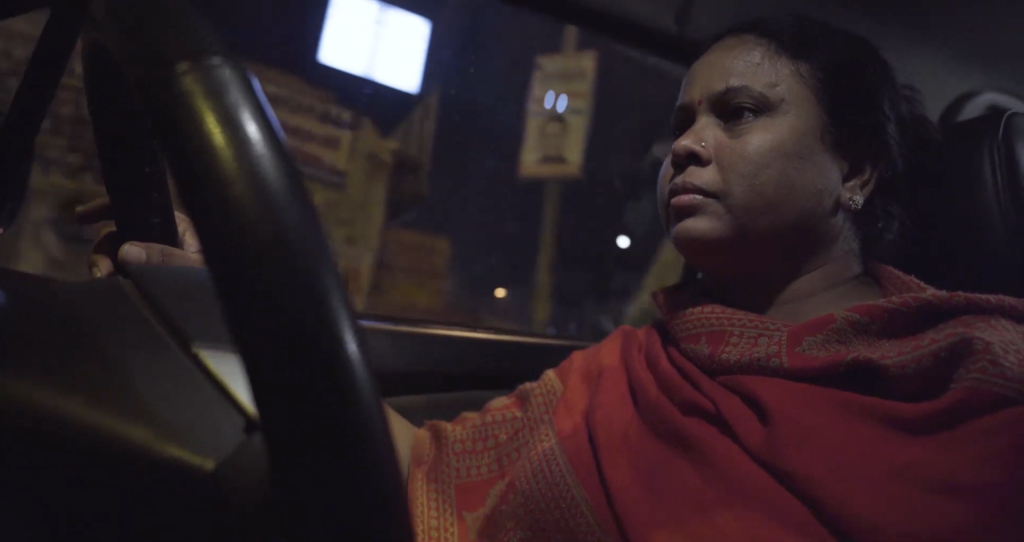
The expansion of platform-mediated labour markets has compelled states worldwide to confront a regulatory dilemma: how to incorporate digitally mediated work arrangements into frameworks historically designed around standard employment relationships.
In India, the Code on Social Security, 2020, represents a notable attempt to address this challenge by formally recognising gig and platform workers. Similarly, some Indian states, such as Karnataka, have implemented social security laws for gig workers, while certain others have passed laws but have yet to implement them. While these legislative shifts signal a significant reorientation of labour regulation, their implications still reveal deeper tensions between formal recognition and substantive protection.
Despite the gig economy emerging as an enabler of employment creation, it has not directly increased Female Labour Force Participation (FLPR) and perpetuates the existing gendered division of labour observed in traditional employment settings.
This gap becomes particularly visible when examining women gig workers, such as ride-hailing app drivers. Research in India, such as the Economic Survey 2020-2021 and the NITI Aayog 2022, shows that despite the gig economy emerging as an enabler of employment creation, it has not directly increased Female Labour Force Participation (FLPR) and perpetuates the existing gendered division of labour observed in traditional employment settings.
Gendered context of mobility and work
‘I usually use the washrooms at nearby petrol stations when necessary,’ says Soni, a cab driver.
Another driver, Nikita, said, ‘‘I don’t take intercity rides because men can sleep in cars, but how can we?‘
In India, women’s access to urban spaces is shaped by the negotiation of risk, constant surveillance, social judgment, and scrutiny. Therefore, flexibility, a defining promise of gig work, acquires gendered meanings. For women drivers, time is mostly structured by unpaid care work. And despite the autonomy of choosing their own working hours in gig work, the economic value of flexibility is uneven. Earning stability often depends on responding to fluctuating demand patterns, but women drivers are constrained by temporal availability, spatial mobility, and risk exposure.
Driving as an occupation also demands nighttime work and interacting with strangers, intensifying these challenges for women workers. One study showed an earning gap of 7 per cent between male and female Uber drivers in the United States of America. Similar studies in India have also shown an earning gap among delivery workers in the country.
Further, gig work is also influenced by gendered urban infrastructures. For ride-hailing app drivers, the workplace is not a fixed site but a dispersed, diffused, moving, insecure urban landscape. Institutional measures in terms of public amenities or infrastructure often fail to incorporate the needs of women drivers, affecting their mobility and the supply of their labour.
Women’s participation in platform work remains structurally unsupported. There is a need for safe rest shelters, designated parking zones, and accessible sanitation facilities.
Women’s participation in platform work remains structurally unsupported. There is a need for safe rest shelters, designated parking zones, and accessible sanitation facilities. The reliance on fuel station washrooms underscores the importance of gender-specific needs in urban planning and infrastructure development. Further safety concerns are not abstract. Platforms frequently advertise safety measures keeping passengers in mind rather than the vulnerability of drivers.
Embedding principles such as natural surveillance in urban design, where urban spaces are designed in a way that enhances public visibility and informal social monitoring, is essential. Well-lit streets, mixed land use, and transparent building facades reduce the cover of anonymity for potential perpetrators of violence against women and deter harassment. A gender sensitive approach to planning can reduce gender-based violence and move towards socio-spatial justice, with the right to mobility at its core.
Economic barriers and access to capital
‘Because of a family dispute over land in my village, I don’t own any assets. I had to take a loan from a local moneylender who knew my family to buy my cab. Without that, I couldn’t have started driving. Also, to get a commercial number plate, there are many formalities,’ says Nisha, a cab driver.
‘My husband leased this cab, so the rental agreement is in his name. At night, he drives, and in the morning, I drive. As the cab is on lease, the owner decides whether we can drive it, for how long, and what share of my monthly earnings I get to keep. Even though I do the work, I don’t have full control over the vehicle or my income,’ notes Priya.
Growing evidence highlights substantial financial vulnerabilities and physical dangers faced by gig workers in the absence of institutional backing by platforms.
Growing evidence highlights substantial financial vulnerabilities and physical dangers faced by gig workers in the absence of institutional backing by platforms. Entry into app-based work requires access to capital for an initial upfront investment to buy a smartphone and a vehicle. However, women in India face structural disadvantages in accessing formal credit, controlling financial resources, and inheriting or acquiring productive assets.

Moreover, a lack of decision-making power within households may constrain women’s ability to undertake such investments. These constraints limit women’s ability to enter and sustain in taxi driving or other capital-intensive options. To reduce economic barriers, women drivers need targeted financial support in terms of low-interest credit or collateral-free loans, grants for vehicle purchase, and platform-facilitated financing. Other measures, such as financial or digital literacy programs and women’s cooperatives, are essential as well.
Social norms and occupational legitimacy
‘Women are poor drivers. They are fearful, and they don’t have a proper understanding of how to drive,’ said a male driver working for an app-based ride-hailing service.
‘There is no safety in this line. Women in the taxi business don’t become a part of it happily or by choice. They do so out of necessity and helplessness,’ said the President of Tricity Cab Drivers’ Welfare Association.
Women drivers confront everyday scepticism from passengers, traffic police, families, and peers, and navigate questions of legitimacy alongside everyday micro-struggles.
There is a widespread notion that driving is a ‘masculine skill’ — owing to the need for mechanical expertise, interacting with strangers, working long hours, and the constant negotiation of public spaces. Women drivers confront everyday scepticism from passengers, traffic police, families, and peers, and navigate questions of legitimacy alongside everyday micro-struggles. There is an urgent need to challenge societal norms and stereotypes and inspire social acceptance of women in these jobs.
In India, there is always the added pressure for women drivers to prove their competence, to navigate not just the city but also the biases of those who question their ability to do their jobs. For them, each ride becomes an act of asserting their agency and a step towards normalising women’s visibility in public spaces.
Policy inadequacies and the way forward
Cities rely on platform workers to sustain everyday urban life. Yet the city offers little institutional or material support in return. India’s regulatory responses to platform work remain fragmented and evolving. Policy debates have largely centred on issues such as classification of workers or passenger safety. Gendered dimensions of platform labour, however, have received very little attention.
Drivers are typically treated as a homogeneous category, obscuring differentiated experiences structured by gender, caste, migration status, and other social factors.
Drivers are typically treated as a homogeneous category, obscuring differentiated experiences structured by gender, caste, migration status, and other social factors. Various legislations, such as the Motor Vehicle Aggregators Guidelines, 2020, and other state-led initiatives, seldom account for the specific vulnerabilities faced by women drivers.
The only significant protection in place for women is the Sexual Harassment of Women at Workplace (Prevention, Prohibition, and Redressal) Act, 2013 (also known as the PoSH Act), which is applicable to gig workers working for ride-hailing platforms as per the Motor Vehicle Aggregators Guidelines, 2020.
However, this then raises the question of how the Act applies to a workforce that is increasingly diffused and dispersed within the gig economy. For gig workers, who may be spread across different locations with no clear employer-employee relationship and lack a formal workplace embedded in physical as well as digital spaces, the challenge lies in defining what constitutes a ‘workplace’ and determining who holds responsibility for ensuring a safe work environment.
The transient and informal nature of gig work can make it difficult for workers to access legal resources or report incidents. Therefore, it is time to rethink how the Act can be made to address the current dynamics of gig work.
The state should also ensure accessibility to basic public services, such as hygienic washrooms and clean water. Infrastructural support, such as waiting shelters or separate parking spaces for women drivers, is also essential to boost women’s participation. In digital spaces, this would include infrastructure for safeguarding against cyber harassment and ensuring privacy.
A more inclusive regulatory approach would require integrating gender equity into platform governance frameworks. Structural transformation of urban safety, economic access, and platform governance is central to meaningful change.
Some quotes in this article have been edited for clarity and length.
All names in this article have been changed to protect the privacy of individuals.
Author’s Note: The article is based on in-depth interviews with women drivers in the Chandigarh Tricity region. This region was chosen for its smart city infrastructure, planned urban design, and its reputation as a relatively safer Tier-2 urban setting. Notably, among roughly 3,000 cabs operating in the region, only a few are operated by women drivers, underscoring the depth of gendered exclusion within platform labour markets.
References:
- Kasliwal, Ria (2020): “Gender and the Gig Economy: A Qualitative Study of Gig Platforms for Women Workers”. Observer Research Foundation issue, Brief No. 359
- Nair, Gayatri (2022): ‘New terrains of precarity–gig work in India; Contemporary South Asia, Vol 30, No. 3, pp 388-401.
- NITI Aayog. (2022). India’s booming gig and platform economy: Perspectives and recommendations on the future of work (Policy brief). Government of India. https://www.niti.gov.in/sites/default/files/2023-06/Policy_Brief_India%27s_Booming_Gig_and_Platform_Economy_27062022.pdf
- Ray A (2019) Unrest in India’s gig economy: Ola-Uber drivers’ strikes and worker organisation. Futures of Work Online Magazine, 9 December. Available at: https://futuresofwork.co.uk/2019/12/09/unrest-in-indias-gigeconomy-ola-uber-drivers-strikes-and-worker-organisation/
- Ray, A. (2024). The digital dis-intermediation and social re-intermediation of work and labour in India’s gig economy. In Geographies of the platform economy: Critical perspectives (pp. 189-201). Cham: Springer International Publishing.
- Shipra and Behera M (2020). Gig work and platforms during the COVID-19 pandemic in India. Economic and Political Weekly, 7 November. Available at: https://www.epw.in/engage/article/gig-work-and-platformsduring- covid-19-pandemic
- Sarkar, Subhashri, and Anu Sabhlok. 2025. 36 Infrastructure, 451–460. doi:10.1515/9783111289274-037.