
Beauty, Bias, And Algorithm: AI Beauty Tools And The Amplification Of Inequality In India
Over the past year, artificial intelligence has entered our everyday lives not just through abstract debates, but in the shape of our own faces. From Ghibli-style portraits and cinematic headshots to tropical beach edits and “professional” profile photos, AI-generated images, made through tools like Lensa, Remini, and FaceApp, have become a popular way of seeing and showing ourselves in online spaces. These images circulate rapidly, gathering likes, comments, and affirmation. For many, they offer a small moment of joy, confidence, or visibility.
But beneath this seemingly harmless trend lies a deeper question: if beauty is subjective, then who decides what kind of ‘beauty’ AI produces, and how does the product it produces feel so validating?
AI Is Learning Beauty From a Biased World
AI does not imagine beauty on its own. It learns from data: billions of images uploaded to the internet, tagged, ranked, liked, and shared. These datasets overwhelmingly reflect existing social hierarchies. Research on large image datasets used to train generative AI, including the Gender Shades study by Joy Buolamwini and Timnit Gebru shows consistent overrepresentation of lighter skin tones, slim bodies, youthful faces, and upper-class, urban aesthetics. Images associated with “beauty,” “success,” or “professionalism” are far more likely to feature fair-skinned, able-bodied, attractive people as presented in popular culture.
These images when created do not present creativity but it repeats what the internet and society has already affirmed as ‘beautiful’.
These images when created do not present creativity but it repeats what the internet has already affirmed as ‘beautiful’. The subjective and culturally specific beauty standards that got spaces in the popular imagination of people. AI generated ‘beautiful’ images are in the threat of again sliding away from mainstream and flattening into something more universal and neutral. Parameters of beauty have never been just about aesthetics; it has been a tool of discipline, shaping who is seen as worthy, respectable, or desirable.
What Happens When You Upload Your Face
Most users experience AI image tools as magic: upload a photo, wait a few seconds, and receive a polished version of yourself. But beneath this seamless interface is a process worth understanding. Generative AI models, including those powering Midjourney, Stable Diffusion, and DALL-E, are trained on billions of images scraped from the internet, social media posts, and stock photographs, and artwork often without the knowledge or consent of the people in them. Investigations into datasets like LAION-5B have revealed the inclusion of private photographs, medical images, and personal content people never intended to share. The AI does not “see” beauty. It sees statistical patterns: which features tend to appear together, what lighting correlates with “professional,” and what skin texture gets labelled “flawless.” When it “enhances” your face, it is not expressing a creative opinion. It is nudging your features toward a mathematical average of everything it has been taught to call beautiful.
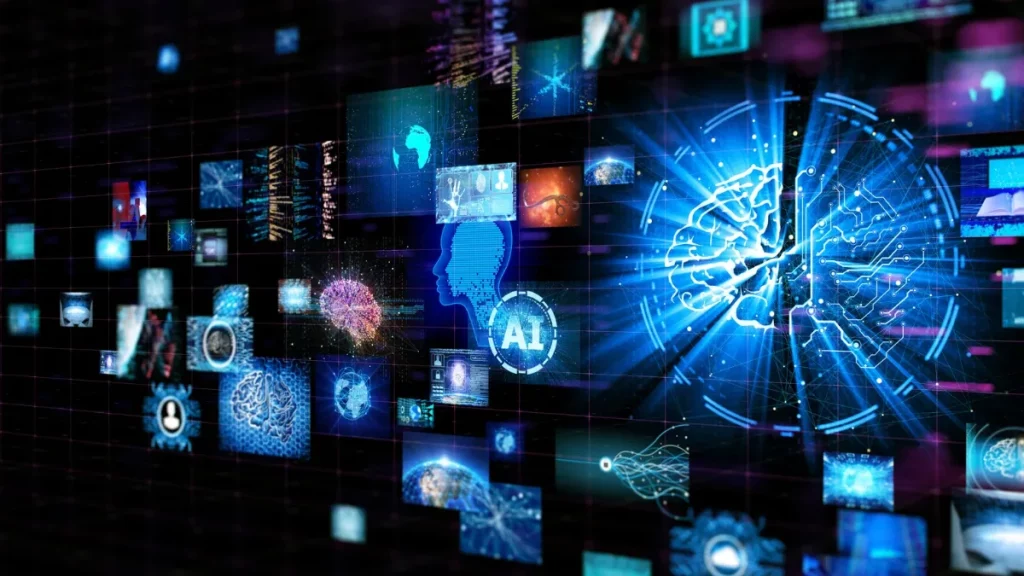
This process happens in what engineers call “latent space,” an abstract map where your face is reduced to a set of coordinates. Enhancement means moving those coordinates closer to the cluster labelled “ideal.” The result feels personal, but it is deeply impersonal: your face, filtered through the aesthetic preferences of millions of strangers whose images trained the model. You are not being seen. You are being optimized.
Consent We Never Gave
There is another layer most users do not consider. When you upload your photo, you often grant the company broad rights to store, modify, and reuse it, sometimes to train future models, sometimes to share with third parties. These permissions are buried in terms of service that few people read and most find confusing, a concern widely reported when Lensa’s “magic avatars” went viral. Your face becomes raw material, feeding back into the system that will shape the next user’s “enhancement.” Some apps extract what is called a ‘facial embedding’: a mathematical fingerprint unique to your face, which can identify you across images and platforms and which may persist long after you delete the original photo, similar to the technology used by Clearview AI to scrape billions of faces from social media without consent.
The same technology that makes you look like a Ghibli character is the same technology that enables deepfakes, AI-generated images that place real faces into fabricated scenarios without consent. Research by Sensity AI shows that over ninety percent of deepfake content online is non-consensual pornography, overwhelmingly targeting women. The tools are not separate. They share the same technical architecture, wrapped in different interfaces. The question is not simply whether the image looks appealing. It concerns what we are feeding, who else can use it, and whether clicking “I agree” constitutes meaningful consent when we do not understand what we are agreeing to.
Performing the “Beautiful” Self Online
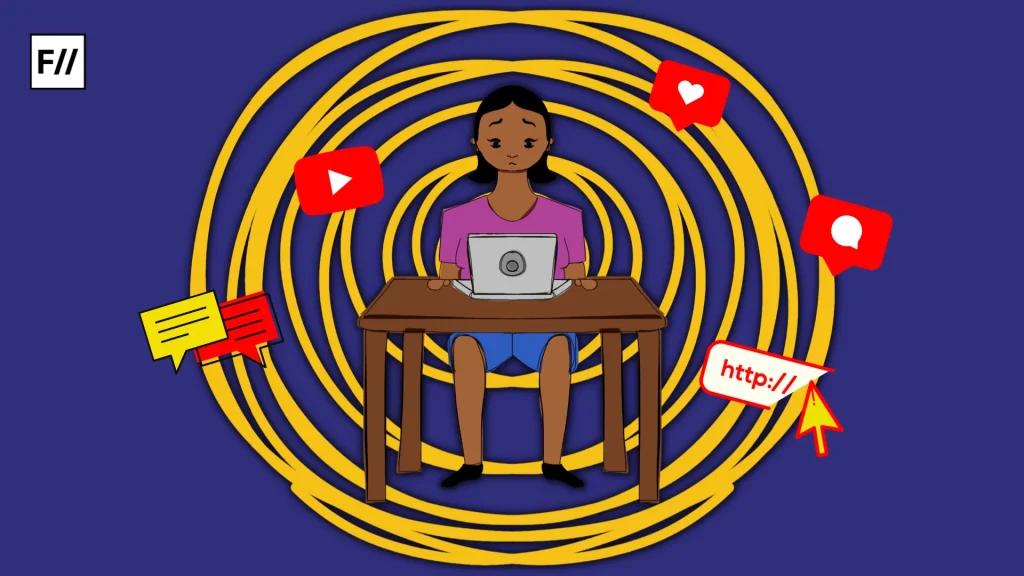
Many people perceive their use of AI generated beauty pictures as something they do voluntarily and for fun. They experiment with versions of ourselves, adjust angles and expressions, and choose the image that feels “right.” But this choice happens within an algorithmic environment that constantly, like the offline world, rewards conformity.
Over time, these signals get internalised. They begin to anticipate what will be liked, what will be shared, what will be ignored. This is a form of self-surveillance, where validation becomes tied to how well we align with dominant aesthetics. Happiness gets equated with visibility; visibility with conformity.
AI image tools are often celebrated for making beauty accessible to everyone. Editing software and professional photography, once available only to the privileged, are now accessible to anyone with a smartphone. This narrative feels empowering, especially in a world where access to resources is deeply unequal.
Access to tools does not automatically dismantle power. AI-enhanced images that align with conventional beauty norms receive higher visibility and validation. Users quickly learn what works and what does not. The result is not freedom from beauty norms, but their enforcement at scale.
But access to tools does not automatically dismantle power. AI-enhanced images that align with conventional beauty norms receive higher visibility and validation. Users quickly learn what works and what does not. The result is not freedom from beauty norms, but their enforcement at scale.
Besides, beauty is not the same everywhere. In India alone, beauty ideals shift dramatically across regions, caste locations, class positions, and cultural contexts. What is considered attractive in one district may not hold true a few hundred kilometers away. Skin tone, body shape, clothing, and even posture carry different meanings depending on social location.
Yet AI-generated beauty often reflects a globalised, elite aesthetic, one associated with wealth and mobility. Regional features, darker skin tones, non-normative bodies, and local styles are either erased or subtly corrected when using AI.
This is not accidental. AI systems trained on global datasets reproduce what is most visible and profitable online. What looks like a universal standard is, in reality, the taste of the privileged section being dispersed and expanded by technology.
A Missed Feminist Possibility
Feminist scholars working on data and technology have long argued that AI could be designed differently, with a more intentional gendered lens. In the case of beauty, instead of reinforcing hegemonic beauty norms, AI could have made visible the diversity and multidimensionality of beauty. It could reflect multiple, context-specific aesthetics rather than converging on a single ideal. It could even have shown how beauty standards change across time, geography, and social location.
It could have become a window of opportunity for bodies that were traditionally not seen as ‘beautiful’ to be given space to present themselves. It could have opened up discussions on how love, happiness, honesty, and attributes like these shape how someone appears beautiful or ugly. The same face can look most beautiful or most ugly depending on how it responds to situations or how their ideals are. Conversations like these could have been initiated through AI.
It is understandable that AI cannot act on its own; it is society that determines how it functions. In that sense, this becomes a missed opportunity. Hegemonic beauty performs well because it is familiar and easily consumable. For many users, engaging with AI-generated images brings pleasure in being seen, in being admired, and in momentarily escaping the insecurities imposed by a harsh world. These feelings are real and should not be dismissed. But they exist within a system that offers conditional agency, that is, visibility in exchange for conformity. AI, as it currently operates, offers moments of affirmation while quietly reproducing the very hierarchies that feminism seeks to dismantle.
The question we must ask is not whether people should stop using AI-generated images. It is whether we are willing to challenge the systems that decide whose beauty is amplified and whose is edited out. If AI is shaping how we see ourselves, then feminist and gender studies scholars must insist on reshaping AI itself. Otherwise, we risk mistaking smooth skin and cinematic lighting for progress, without countering the deeper structures of exclusion that remain firmly in place.