
The 1921 Chargola Exodus: Plantation Women And The Erasure Of Intersectionality In Colonial History
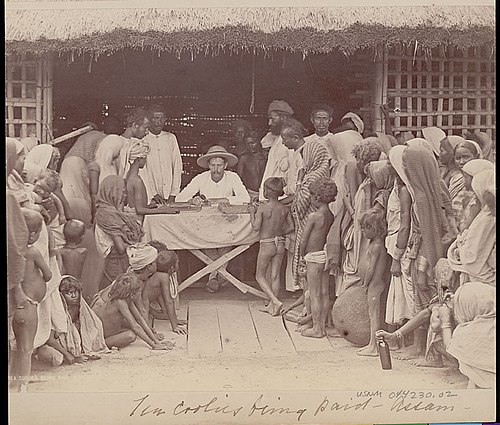
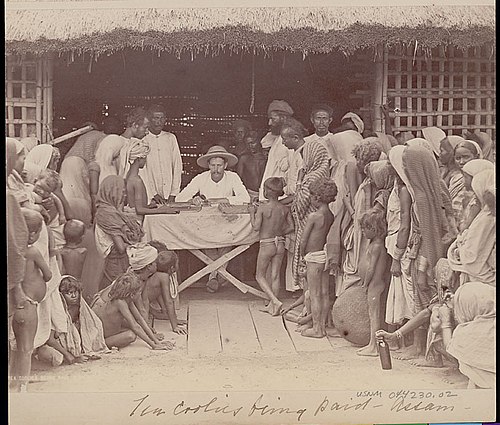
“Tea” could be considered a national drink of India. May it be a morning starter for some or just a way to take a break, tea is commonly consumed across all strata of society. Still, very few know the story of the workers who cultivate this tea and bring it to us. Such a harmless drink is tainted with the years of bonded labour of migrated women, which mainstream forces have tried to “cleanse” and it needs to be looked at from an intersectional feminist lens. When we talk about women who made “history”, we often talk about upper caste women. For example, Rani Lakshmi Bai who fought against the British in a war, or women like Sarojini Naidu who participated in the drafting of the Constitution. However, we rarely talk about the working class women, such as “coolies of tea plantations” who endured the economic exploitative side of the patriarchy too. Therefore, revolts such as the 1921 Chargola Exodus, led by Adivasi working class women are erased from history under the shadow of the Great Men of the nationalist Indian freedom movement.
A system designed to exploit Adivasi women
One may ask why the 1921 exodus is a “feminist act”. To answer this, we have to dive deeper into how the plantation system played out for women. The tea plantation industry in the north-eastern parts of British India was more than just a business. It was a well-designed system to economically and sexually exploit tribal Adivasi women, recruited from various parts of undivided India to work on the tea estates by employing a variety of techniques such as false promises, kidnapping or forced marriages. While men were also recruited to work on the tea estates and economically exploited, what sets the story of these women apart is their exploitation for reproductive capacity. This was done to ensure that there is always a stable workforce to work in the plantations, which cannot be guaranteed with only male workers.
Women plantation workers were abused in three ways. Firstly, economically by the British tea estate owners for their labour at the workplace;secondly, for their domestic labour in their homes; and thirdly, sexually by the appointed tea estate supervisors.
Women plantation workers were abused in three ways. Firstly, economically by the British tea estate owners for their labour at the workplace;secondly, for their domestic labour in their homes; and thirdly, sexually by the appointed tea estate supervisors. Therefore, on all fronts of their lives, these women workers were facing patriarchal exploitation while constantly staying in fear of sexual and physical violence for every misstep.
In this context, it is important to relook at the mainstream narrative of the 1921 Chargola Exodus. When we hear about this event, the story goes like this: in May 1921, after getting “inspired” by Mahatma Gandhi’s Non-Cooperation Movement, thousands of tea plantation workers of the Surma Valley (spanning current day Bangladesh) decided to abandon their work at the estates and join the movement. Though this story is not completely untrue, it is misleading with respect to the motivation of this exodus. It gives the impression that Adivasi women who, in fact, led this exodus did so because of external inspiration from urban, upper caste men’s leadership rather than exhaustion from their own patriarchal exploitation and therefore, takes away their agency.
As an ultimate measure, protesting tea plantation workers marched to Chandpur railway station on the night of May 20, 1921 to take trains to their homelands, hurling the slogan of “Mulk Chalo”, which literally means “Let’s go home”. While workers were waiting at the Chandpur railway station, in a desperation to crush the protest, British authorities ordered a brutal police charge, leading to a bloodbath. For the women who participated in the Chargola exodus, “Mulk Chalo” was not just a slogan associated with a larger national political movement, but it was more like a cry from the women who could not take it anymore and just wanted to go back to their homelands. Their decision to leave their workplace and march to Chandpur station to hail homebound trains was a feminist act of withdrawing themselves from an abusive system that commodified their labour and sexuality.
History written for people in power
There is a disconnect between the lived realities of protestors on the night of Chandpur violence and how history recorded this. As it is often said, history writes the story of the powerful, and these Adivasi women who were trying to escape an exploitative system hardly fitted the bill. The use of violence at Chandpur on “poor labourers” was taken by then political leaders as a way to challenge the “civilized” image of British rule. On the other hand, elite leadership was also somewhere threatened by the fearless workers who were ready to leave the system that exploited them. That day the system was run by British plantation owners, but tomorrow it could also be against Indian landlords and factory owners – which would disbalance the power. Therefore, by subsuming these individual, gendered acts of protest into the larger “National” struggle, they tried to maintain the existing social order because acknowledging the motivations for the protest of lower caste, poor women would raise questions over the larger Indian class and gender inequalities.
This is precisely the reason why we should look at local traditions lived by and folk literature produced by the women who actually were part of this abusive system. Contrary to popular history books which tell tales of those in power, these are the tools to understand the history of those who were silenced under the garb of “larger national interests”. Even today in the tea plantations of Assam we hear about Mangri Orang, also known as “Malati Mem”. She was an Adivasi woman who became the first female martyr of the anti-colonial struggle in Assam who was killed during the 1921 violence. However, her name never comes up in the popular sources of Indian freedom struggle history, which (though occasionally) still gives some credit to upper caste women who participated in the freedom struggle. This is because Mangri Orang was a woman on the wrong side of caste and class hierarchy and her feminism was not about well articulated debates but more about physical acts of rebellion.
We have to acknowledge that the “nationalist” movement often suppressed subaltern voices to maintain a “united” front, which led to the erasure of some of them and it is our responsibility to find them and include them in the larger Indian feminist history. Those who are consciously trying to go beyond popular history and truly understand the feminist history of the Northeast are relying on such oral traditions and folklore. Their work shows that the Adivasi plantation women workers were considered powerless and “primitive” and so “available” for exploitation. The act of Adivasi women to leave the plantation system that claimed a right over their labour and bodies is a choice which the system otherwise does not offer and therefore, it is a powerful feminist expression, which may be different from the upper caste feminist idea of feminism we are more used to. Understanding their history and struggles is important to understand the history of the Indian feminist movement as a whole; otherwise, our feminism is exclusive and limited to the experiences of a selected few upper caste women.
Inclusion of subaltern feminist history in the mainstream idea of Indian feminism is also important because history is not just about the past but it actively shapes the present too. Even today women workers in Assam’s tea plantations are fighting for their dignity, fair wages and protection from violence. In this context, incidents like the 1921 Chargola Exodus are important to remind us that this is a century old battle (whether against British or Indian owners), and we owe it to them to tell this story not as a footnote to a larger freedom movement but as a headline in the history of Indian feminism.