
Assi Review: A Film That Forces Viewers To Confront Women’s Everyday Reality
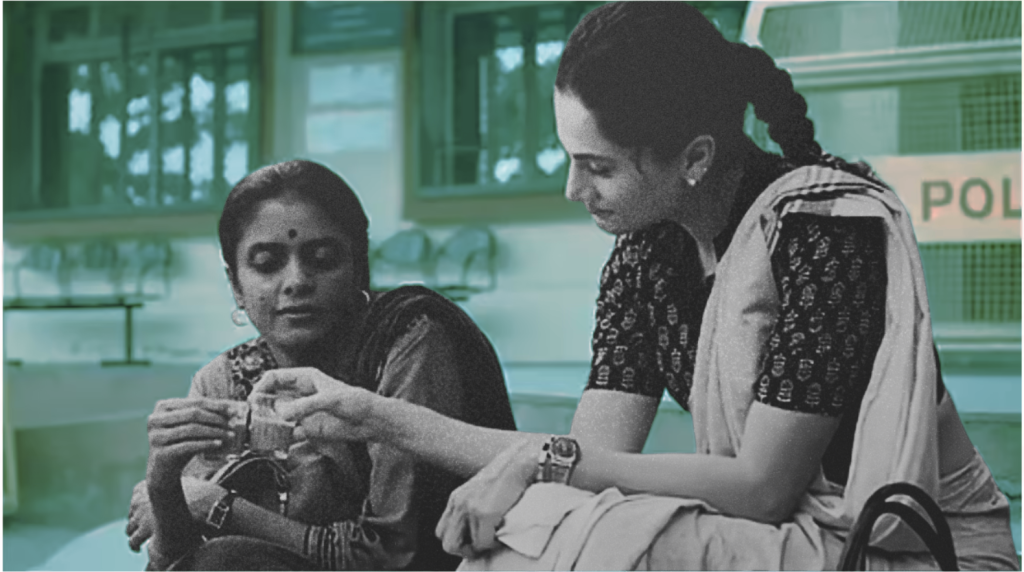
Every day, around 80 cases of rape are reported in India. A number that reveals a horrific reality that Indian women continue to face each day. However, even this number may not paint a complete picture. According to the World Health Organisation (WHO), sexual violence remains massively underreported in India. The 80 cases recorded each day, therefore, represent not the full scale of violence, but only the cases that are reported and enter official records.
Assi, Anubhav Sinha’s latest film, is about this reality that Indian women face. The title ‘Assi‘ translates to ‘eighty’, referring to the 80 cases of sexual violence reported each day. The film follows the story of Parima (played by Kani Kusruti), a schoolteacher who is sexually assaulted and left to die by her attackers.

Bollywood films have long been criticised for producing melodramatic narratives about violence against women that aim to shock. However, when cinema attempts to depict reality, it often goes unnoticed or receives limited audience attention. Assi, unsurprisingly, has not performed particularly well at the box office, despite being an important watch that underlines a grave reality of contemporary India: the fragile sense of safety women experience.
However, the discourse surrounding the film focuses less on the reality it portrays and more on its extended rape scene, which, admittedly, is graphic and deeply unsettling. But the film asks a simple question of us viewers: What is more shocking? The scene we watch or the reality we routinely ignore? Throughout the course of the film, the screen turns red every twenty minutes, reminding viewers that another sexual assault has been reported somewhere in the country, and in doing so, Assi raises questions about how viewers engage with films that confront rather than comfort.
Violence and the cinematic gaze
After the 2012 Delhi rape and murder case, the subject of sexual violence entered public discourse in unprecedented ways. Films and series, such as Pink and Delhi Crime, attempted to depict both the brutality of such crimes and the institutional processes surrounding them. However, despite the increased visibility of sexual violence, rape culture continues to exist and thrive in India, and therefore, so do the patriarchal social norms that normalise, excuse, and overlook violence against women.
In such a context, cinematic attempts to explore such themes become inherently risky. Assi attempts to situate sexual violence not as an isolated act committed by deviant individuals but as a product of systemic patriarchy.
In such a context, cinematic attempts to explore such themes become inherently risky. Assi attempts to situate sexual violence not as an isolated act committed by deviant individuals but as a product of systemic patriarchy. The hyperrealistic portrayal of the banality of such incidents becomes central to the film’s narrative.
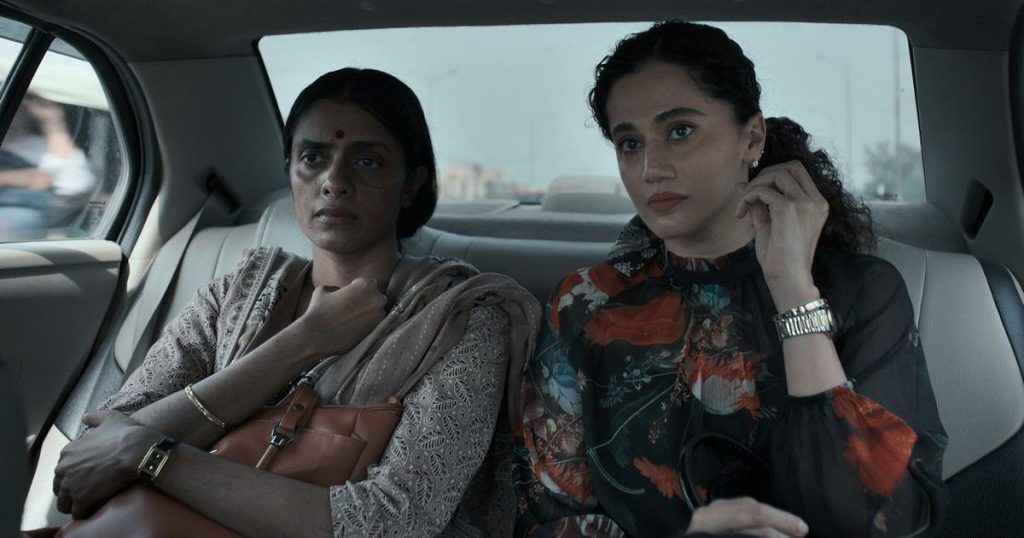
The core plot of the film follows how Parima is abducted by five men, brutally sexually assaulted, tortured, and left to die. The narrative then unfolds largely through an intense courtroom drama, led by public prosecutor Raavi (Taapsee Pannu). Through the legal proceedings, the film explores various themes such as judicial delays, media attention, vigilante justice, and trauma.
The film echoes elements of other courtroom-driven narratives, such as Pink (2016) and Talvar (2015). However, Assi distinguishes itself through its deliberate decision to depict the assault sequence graphically, which ultimately becomes central to the ethical debate surrounding the film.
Should films show graphic violence?
Before discussing the relevance of the graphic rape scene in Assi, it’s important to understand the arguments around showing violence on screen. On the one hand, an argument can be made for realism. French film critic André Bazin argued that realism should be the base of any cinematic work.
Hence, it can be said that if depictions of violence are softened on-screen, audiences can distance themselves from it and view it as just another crime. Hence, this school of thought urges filmmakers to realistically depict crime and force viewers to confront real-world brutality.
On the other hand, there is a critique to be made of depicting rape graphically. Laura Mulvey, in her seminal 1975 essay, Visual Pleasure and Narrative Cinema, talks about how the camera often positions the audience as a voyeur. Hence, graphic depiction of violence could desensitise viewers. Within this framework, the camera does not merely record violence; it also structures how audiences look at it. American writer Susan Sontag also talked about this when she said images of suffering can shock, but also numb.
Crafting discomfort: how Assi depicts sexual violence
The real question here, then, is not if violence should be depicted on screen but how one should depict it. While sexual violence imagery has been historically exploited in cinema, the depiction of rape in Assi is realistic and not exploitative or voyeuristic. The scene in the film is an example of responsible filmmaking that aims to confront the realities of the crime that it portrays, but does not normalise graphic depictions of violence against women for shock value.

The film is shot in an observational style with no glamorisation, true to the realism it aims to depict throughout. Furthermore, the sound design uses minimal background music. The silence itself amplifies discomfort, making viewers uneasy and restless. This choice leads to an intense emotional experience. The editing choices also take the film’s commitment to realism into account. Long takes, especially during the sexual violence sequence, force viewers to remain with the scene, despite their discomfort.
The 20-minute red-screen warnings are based on Bertolt Brecht’s alienation effect, a technique that forces the viewer to distance themselves from the narrative and engage in critical thinking, instead of passively watching what is unfolding on screen.
The lighting showcases a muted colour palette, and there is no stylisation or aestheticisation of the narrative. The 20-minute red-screen warnings are based on Bertolt Brecht’s alienation effect, a technique that forces the viewer to distance themselves from the narrative and engage in critical thinking, instead of passively watching what is unfolding on screen.
When the film ends, reality remains unchanged
The film refuses to provide emotional catharsis. Rather than leading to a comforting resolution, it deliberately leaves several narrative threads open. This lack of closure reflects an uncomfortable truth: films like these don’t borrow from reality; instead, they mirror it.
The film ends, but the effects of the crime it depicts do not. Many questions, therefore, remain unanswered. Even if certain outcomes appear hopeful, the viewer is left unsettled because the film leaves us with one thought: the film ends, but the violence it represents continues.

Ananya Shukla is a development communication researcher and poet currently pursuing her Master’s at Jamia Millia Islamia. Her work bridges academia and creative expression, using media like documentaries and poetry to explore how storytelling can drive social change.