
This ocean animal has no blood and survives using seawater instead | – The Times of India
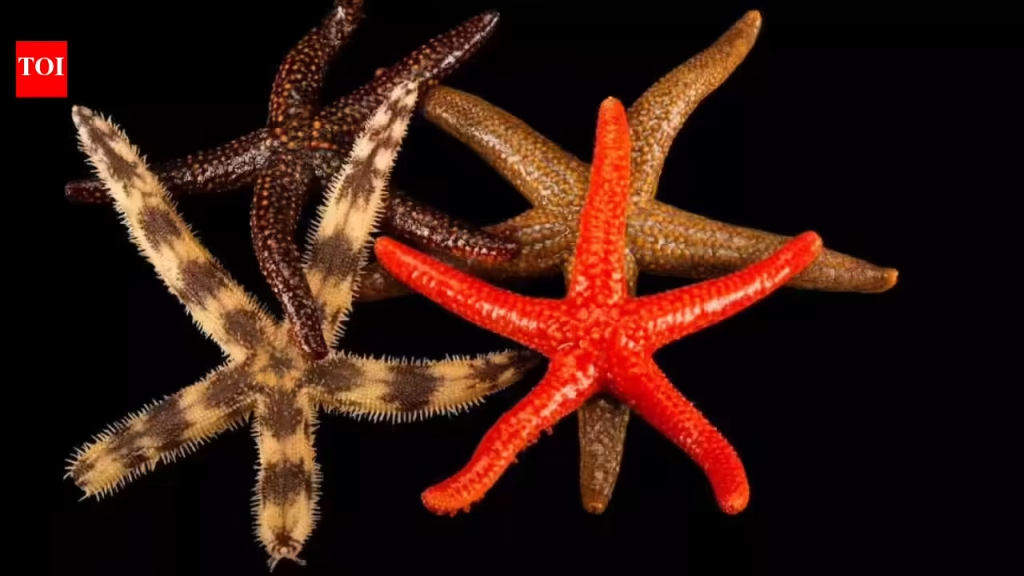
The natural world is full of interesting creatures with unique biological systems. Among the most interesting creatures is the starfish, also referred to as a sea star. Starfish are unique in that they do not have blood flowing through their bodies. This is one of the most interesting aspects of starfish, as most people find this characteristic surprising. This is due to the fact that most people consider blood to be one of the most important components in any living creature.Starfish are types of creatures found in the sea. They are referred to as echinoderms, which include sea urchins and sand dollars. These types of creatures have unique biological systems in that they do not use blood to circulate nutrients, oxygen, and waste products. Instead, they use a unique water system that allows them to survive in their environments.Learning about starfish and their ability to live without blood is interesting due to the variety of life in the sea.
Why starfish don’t need blood to survive
Most animals require blood to carry oxygen, nutrients, and other materials from one part of the body to another. The blood is pumped by the heart and flows through blood vessels. But in a starfish, there is no heart, blood vessels, or blood.Starfish have a special system called the water vascular system. Sea stars rely on seawater in the water vascular system along with internal body fluids to circulate materials.The seawater enters the starfish’s body through a small hole at the top of its body called the madreporite. The water then passes through a series of canals and tubes. These canals carry nutrients and oxygen to various parts of the starfish’s body.Since starfish live in water, it is easy for them to use seawater to perform many of the functions that blood does in other animals.
The water vascular system explained
One of the most important aspects of starfish anatomy is their water vascular system. This system is important not just for the transportation of nutrients and oxygen but also for their movement and feeding.Inside the starfish’s body, seawater circulates through a series of radial canals. These radial canals extend into each starfish arm. From each of these radial canals, smaller tubes branch off and connect to hundreds of small structures called tube feet.Tube feet are small, flexible structures on the underside of each starfish arm. These tube feet extend and retract by controlling the water pressure in them.This allows starfish to crawl on the ocean floor, hold on to rocks, and even pry open shells from their prey, such as clams and mussels.
How starfish get oxygen without blood
Because sea stars lack blood and a heart, they rely on diffusion and dermal gills for gas exchange. The oxygen enters the starfish’s body directly through tiny structures on the surface of its skin.The tiny projections on the surface of the starfish skin, also known as dermal gills, play an important role in the absorption of oxygen from the water environment. The oxygen absorbed by the starfish’s body is distributed throughout its body.As the starfish can only get oxygen by direct contact with water, they should live in a moist environment. If they don’t live in water, they can’t get enough oxygen, which can lead to their death.
Other fascinating facts about starfish
The absence of blood in their bodies is just one of the many unusual features that starfish have. Starfish have several other remarkable features that make them unique creatures in the marine world. For example, starfish have five arms that radiate from their bodies. Some starfish may have more than five arms. Their bodies are also protected from predators by their spiny skin. Another remarkable feature that makes starfish unique is their regenerative capacity. For example, starfish can regrow their lost arms in case they are attacked by predators. In some instances, a new starfish can also develop from a single starfish arm that still has some of the starfish’s central body. Starfish have a remarkable way of eating their food. They can push their stomachs outside their bodies to digest their food.
The importance of starfish in marine ecosystems
Starfish are important for maintaining equilibrium in the oceanic ecosystem. Many species of starfish are predators that consume shellfish like mussels and clams. The regulation of these creatures’ populations by starfish ensures that the marine ecosystem remains diverse.Some species of starfish have been regarded as keystone species by scientists, as they greatly affect the nature of the ecosystem.If starfish were to disappear, some ecosystems might end up being dominated by a single species, which would decrease biodiversity.
A remarkable animal without blood
The starfish is a remarkable demonstration of the diversity of life. The starfish has managed to develop a very effective system for the transport of nutrients and oxygen using the seawater, even though it lacks a heart and true blood vessels, but it has primitive fluid transport systems.The water vascular system, regenerative properties, and unusual feeding behaviour of the starfish make it one of the most intriguing creatures that can be discovered in the ocean. Researching these animals is continually providing new information on marine biology and the amazing adaptability of life on Earth.