
Tihar and beyond: How Sheikh Sajjad Gul and Shabbir Lone rebuilt terror networks in Pakistan, Bangladesh after release | Delhi News – The Times of India

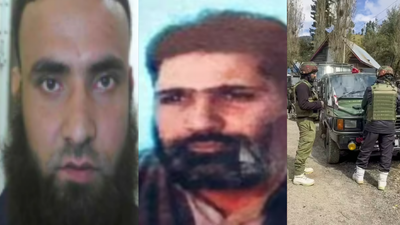
NEW DELHI: A covert operation by Delhi Police’s Special Cell on May 9, 2002, led to the arrest of three suspected Lashkar-e-Taiba (LeT) operatives at Nizamuddin railway station, triggering a chain of events that would stretch across decades and international borders.Acting on a tip-off from a central intelligence agency about the arrival of terrorists in the capital, Special Cell teams kept a close watch on passengers arriving by the Punjab Mail from Mumbai. Three suspects, Sajjad, Mehrajuddin and Firoz were intercepted at the station. During searches, the police recovered around 5 kg of RDX, an AK-47 rifle, two pistols, detonators, plastic explosives and about Rs 2 lakh in cash.
Sheikh Sajjad Gul ’s Arrest
May 9, 2002
- Delhi Police’s Special Cell alerted by a central intelligence agency about arrival of terrorists.
- Three suspects nabbed by one of the teams from Nizamuddin railway station.
- Explosives, RDX, detonators and ₹2 lakh in cash seized from the trio identified as Sajjad, Mehrajuddin and Firoz.
- The three revealed about their plans to meet two Pakistani Lashkar commanders at Humayun’s Tomb.
- Cops carried out an operation. Both the terrorists, Abu Bilal and Abu Zabiullah, were shot dead.
Tihar and beyond
- Sajjad aka Sheikh Sajjad Gul was arrested and convicted in 2003. He remained in Tihar Jail and was released around 2017.
- Around the same time, another Tihar inmate from Kashmir, Shabbir Ahmed Lone, was also released. He was arrested by Special Cell in 2007.
- Both Sajjad and Lone fled to Pakistan soon after their release.
- Sajjad was placed at the helm of Lashkar’s proxy,
The Resistance Front . Lone was then sent to Bangladesh where he set up a terror cell. - TRF under Sajjad Gul carried out several terror strikes, including the Pahalgam attack.
- Lone’s cell is recruiting Indian Muslim youths, giving them test tasks and readying them for a big attack.
During interrogation, the trio revealed they were supposed to meet two Pakistani Lashkar commanders near Humayun’s Tomb. Based on the disclosure, a police team rushed to the area and located a Maruti car parked nearby. Inside were two militants later identified as Abu Bilal and Abu Zabiullah. In the gunfight that followed, officers from the Special Cell neutralised both terrorists.The arrested trio, including Sajjad, later identified as Sheikh Sajjad Gul, were convicted in 2003 and sent to Tihar Jail.Five years later, another arrest linked to the same terror network took place. In July 2007, Special Cell officers apprehended Shabbir Ahmed Lone in Delhi after receiving intelligence inputs about a militant being dispatched to the capital. Lone was found carrying grenades, arms, ammunition, $280 and around Rs 1 lakh in cash. He too was lodged in Tihar Jail.For nearly a decade, Sajjad and Lone remained incarcerated in the high-security prison. However, after completing their sentences, both were released around 2017–2019. Soon after their release, the two men allegedly fled India and resurfaced abroad.According to security agencies, Sajjad escaped to Pakistan and later rose to head The Resistance Front (TRF), believed to be a proxy outfit of Lashkar-e-Taiba. Under his leadership, the group has been linked to several terror strikes, including the attack in Pahalgam.Lone, it turns out, fled to Pakistan and was sent to Bangladesh by Inter-Services Intelligence (ISI) to set up a terror cell there. Lone left the agencies alarmed recently when the henchmen he recruited carried out a “test task” in Delhi by pasting provocative posters before the AI summit. Operating now from the safety of Bangladesh, backed and funded by ISI, Lone is operating with the specific goal of radicalising Bangladeshi youth for terror plots in India.Born in 1974 in Jammu and Kashmir, Sajjad had pursued higher education and professional training before allegedly drifting into militancy. He studied science in Srinagar, completed a lab technician course in Kerala and later joined an MBA programme in Bengaluru in the mid-1990s. After returning to Kashmir, he set up a diagnostic centre but also reportedly became an overground worker for Lashkar-e-Taiba before eventually joining militant ranks.Security agencies now classify both Sajjad Gul and Shabbir Lone as “Category A” terrorists. With alleged backing from hostile networks abroad and their involvement in cross-border terror plots, they remain among India’s most wanted militants, with intelligence agencies continuing to track their activities across the region.