
This fish can generate powerful electric shocks, hunt prey, and navigate murky waters | – The Times of India
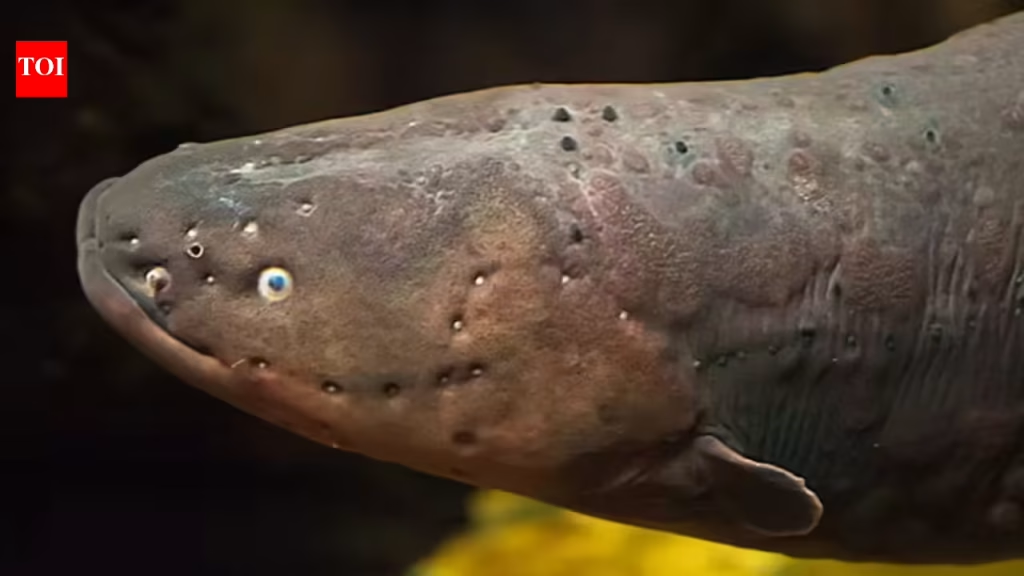
Electric eels are something else. Snake-like fish, long and cylindrical, glide through murky waters. They can deliver a shock that’ll make you jump or freeze. People have been fascinated by them for centuries. For a long time, scientists thought there was just one species. But now it seems there are actually three: Electrophorus electricus, E. varii, and E. voltai. These eels can grow over 2.5 metres, tipping the scales at more than 20 kilograms. And most of their body? Filled with organs that produce electricity. Weird, right? They’re not “true” eels either, but knifefishes, closer to catfish and carp.
Electric eels: how their bodies work like living batteries
It looks as if electric eels are like, well, batteries. Scientists say they have these special muscle cells called electrocytes stacked inside them. Each cell has a positive and a negative side. When triggered, zap, an electric pulse shoots into the water. They have three main organs that make electricity at different strengths. Strong shocks from the main and part of the Hunter’s organ are for defence or stunning prey. Weak pulses, from the Sach’s and the other half of Hunter’s organ, help them find their way or chat with other eels. Apparently, E. varii can generate up to 860 volts. That’s like, almost four times a UK plug.
Eels’ murky world and deadly tricks
Electric eels like murky, slow-moving waters. Pools, swamps, oxbow lakes, basically the Amazon and Orinoco rivers in northern South America. They’re not great at seeing, relying on electrolocation instead. They breathe air too, surfacing roughly every ten minutes. Makes sense. Oxygen levels in their waters can get really low. And in the dry season? Pools shrink, predators circle. Shocks come in handy then, deterring caimans or even jaguars. You wouldn’t want to mess with one.Their negative end stays in the water, creating a full circuit. Zap. Full power. Pretty clever. And sometimes, eels hunt in groups, corralling prey and delivering coordinated shocks. It’s like teamwork. You might not expect such a strategy from something that looks like a wriggly snake.
Could electric eels really be dangerous
Could an electric eel kill a person? Experts say it’s theoretically possible. Multiple shocks could stop a heart or make someone drown. But it seems they’re not aggressive. Mostly defensive. Still, the idea that this fish could literally stop your heart is… unnerving.Other fish make electricity too, mostly weak pulses to sense their environment. Only a few, like stargazers, certain catfish and rays, can really shock. Even some fish mimic eels, like the bluntnose knifefish, pretending to be electric to scare predators away. Clever survival trick, apparently.
Electric eels: Feeding, nesting and inspiring science
Eels breed in dry or early wet seasons. Males build bubble nests, females lay eggs, up to 1,200 in a season. Their diet? Mostly fish, but crabs, insects, even small mammals can make the menu. They might be shocking, but they’re not monsters.People have wondered if eels could power batteries. Not really. They recharge slowly and can’t produce continuous high-power electricity. But scientists are inspired. Lab-grown eel tissue could one day create flexible, tiny bio-batteries for things like pacemakers.