
Sustained PM2.5 exposure ups depression risk: Study | India News – The Times of India
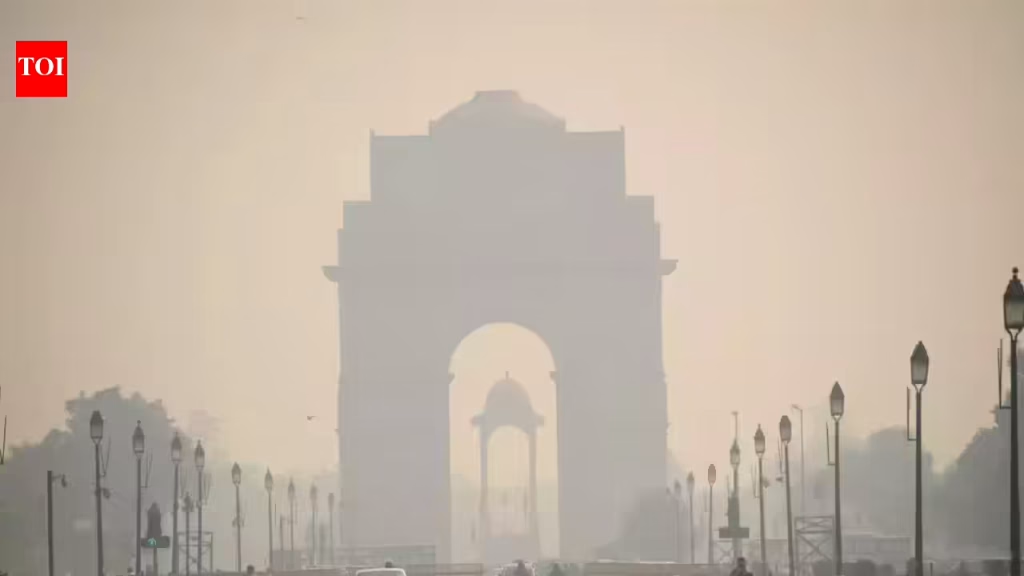
NEW DELHI: As the Union Budget steps up focus on strengthening mental health infrastructure, a nationwide study has flagged a rise in depression and anxiety linked to long-term exposure to toxic fine particles in the air, underlining how environmental risks are adding to India’s mental health burden.The study was led by researchers from IIT-Delhi, in collaboration with AIIMS New Delhi, NIMHANS and St John’s Medical College, and published in international journal iScience.Analysing data from 34,802 adults across 12 states, including Punjab, UP, Rajasthan and Assam, researchers found sustained exposure to PM2.5 was associated with an 8% higher odds of depression and a 2% increase in anxiety.The analysis is based on clinically diagnosed cases from National Mental Health Survey (2015–16) and is cross-sectional, meaning it establishes association rather than causation. One of the authors, Dr Anand Krishna from the community medicine department at AIIMS, said this distinction was important. However, he noted even modest associations assumed significance because a very large segment of the population was exposed to polluted air.The burden was highest among urban metro residents, people aged 40-49 years, and those from lower-income groups. Regionally, pollution-linked depression showed stronger associations in eastern India, while anxiety was more prominent in the western region. Risks also peaked during the post-monsoon season, when pollution levels typically rise.The study went beyond overall PM2.5 levels to examine individual chemical constituents of air pollution. It found components largely generated by traffic, industry and agricultural activity — including sulphates, nitrates and ammonium — had stronger links with depression. Elemental carbon, a marker of diesel and fossil-fuel combustion, was most strongly associated with anxiety.By identifying pollution components, the researchers said the study helped prioritise emission sources for targeted action, with clear policy relevance at a time when air quality has worsened across many regions.The analysis also covered participants from Gujarat, Manipur, Madhya Pradesh, Chhattisgarh, West Bengal, Jharkhand, Tamil Nadu and Kerala, using advanced satellite data and atmospheric modelling.