
The Politics Of Respectability: Who Is Allowed To Look “Put Together”?
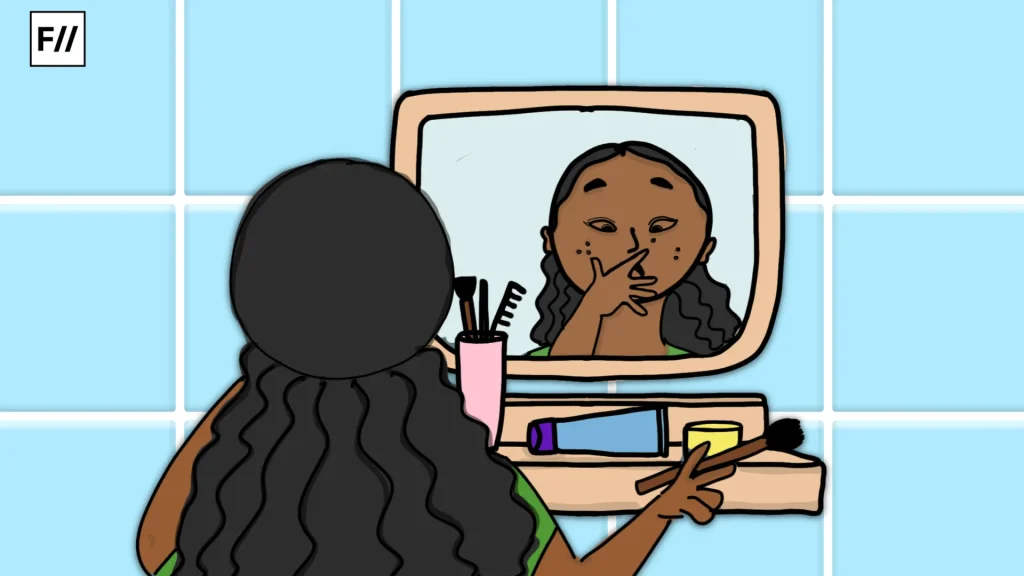
It is often said that dressing well is a choice, a discipline, or a sign of self-respect. Tidy hair, clean clothes, subtle makeup, ironed clothes, polished shoes, and so on are promoted as neutral markers of professionalism and good character. However, this notion of respectability is never neutral; it has always been deeply political. Who is complimented for appearing well-groomed and who is criticized, reprimanded, or marginalized, shows the gender, caste, or class and race at work in our lives in a subtle way.
To many women, grooming is not merely a matter of appearance; rather, it is about life and death. When a woman does not appear tidy enough, it is interpreted as being reckless, irresponsible, or even immoral. The most well-known argument posited by feminist scholar Sandra Bartky is that beauty practices act as a kind of discipline on the female body, whereby routines require time and money and/or emotional labour but are branded as natural femininity. A woman is supposed to appear as though she has just tumbled together, despite the fact that the work went on always, draining and hardly paid.
Tidy hair, clean clothes, subtle makeup, ironed clothes, polished shoes, and so on are promoted as neutral markers of professionalism and good character.
These expectations are the most prominent in the workplace and in normal life. A woman with bright lipstick can be told that she presents an unprofessional appearance, whereas the same lipstick appears as a bold or confident shade on another woman, likely a fair-skinned, dominant-caste, English-speaking, and socially secure woman. In a similar manner, any woman who does not wear makeup can be labelled as lazy or unpresentable, unless she belongs to a “high-class” group where minimalism is seen as an expression of sophistication. We always have to remember that beauty norms are not personal preferences but part of systems of domination, including patriarchy, caste, race, and class, which determine whose bodies deserve care and attention and whose bodies deserve to be seen.
Caste, class, and the unequal cost of looking “decent”
In South Asian situations, caste provides respectability with the most cutting edge. Historically linked to the dominant castes, traits like light skin, straightened or well-tamed hair, restrained clothing, soft speech and bodily discipline have been normalized as indicators of decency and civility. These rules are even considered universal, despite being caste-coded. The bodies of Dalit, Bahujan, and Adivasi are often perceived as too loud, too attention-seeking, too disruptive, and even too improper, no matter how well they are represented.

The feminist activists of Dalit have reiterated many times that respectability cannot be gained through imitation. The dignity is mostly denied even in a situation where the Dalit persons have done all the specifications of grooming, dressing and conduct. It is not an appearance issue but a social structure that in the past had been dehumanising some bodies.
A report by the Centre for Law and Policy Research found that 78% of Dalit women and substantial proportions of Dalit persons, including transgender respondents, reported their skin colour being used to identify caste and suggest “lower class” status.
Class also determines who can look weary, dishevelled, or disarranged. An immigrant maid who reports to work with her hair loosely tied can be rebuked for being considered careless, while a corporate worker who reports the same is seen as a burnt-out person and is looked at with empathy. The same unkempt appearance that signals dedication and overwork in one body signals irresponsibility in another. Sociologist Erving Goffman described social life as a performance, but not everyone is given the same costume, rehearsal time, or room for error.
Race, gender expression, and the limits of respectability
This politics is further compounded by race and colour. Black women worldwide have been punished for having their natural hair, which is considered unprofessional just because it does not conform to white and Eurocentric standards of beauty. Professionalism has long been racialised; however, feminist activists have long argued that the idea of professionalism is constructed around thinness, whiteness and controlled femininity norms.
The Times of India report highlights that skin-tone prejudice persists even in states considered socially progressive like Kerala, showing that colour biases do not disappear with education or per capita development.
This politics is further compounded by race and colour. Black women worldwide have been punished for having their natural hair, which is considered unprofessional just because it does not conform to white and Eurocentric standards of beauty.
Gender expression is also policed by respectability politics, especially for queer and trans individuals. Masculinity that seems to be too feminine is punished, and femininity that seems to be too visible as well. In the case of trans women, there is always a false expectation that comes with grooming and makeup. Using too much or too little makeup may lead to ridicule or aggression and acceptance or marginalization, respectively. Gender, as Judith Butler points out to us, is not merely performed but is imposed by rewards of conformity and punishments of deviation, all repeated.
What becomes clear is that “looking put together” is not merely about care or self-expression, but it is about conformity. It asks a quiet but powerful question: how close can you come to an ideal that was never designed for you? Feminist activist Audre Lorde warned us that the master’s tools will never dismantle the master’s house, and respectability is one such tool. It offers the promise of acceptance but rarely delivers dignity. To question the politics of respectability, then, is not to reject care, beauty, or pleasure. It is to ask why care is demanded relentlessly from some bodies and treated as optional for others. It is to challenge a system that measures worth through neatness, polish, and performance. Perhaps true liberation lies not in looking “put together”, but in being allowed to be tired, imperfect, and human, without losing safety, dignity, or respect.

Dharanesh Ramesh is a native of Coimbatore and a postgraduate student of Gender and Development Studies at the Tata Institute of Social Sciences, Hyderabad. Rooted in the belief that stories shape structures, his study and work explore the intersections of gender, caste, and public policy through an intersectional feminist lens. He is particularly drawn to understanding how power, privilege, and policy weave together to define inclusion and equity in everyday life. Inquisitive by nature, Dharanesh often turns to drawing, painting, photography, and writing as extensions of his reflective practice. His work seeks to bridge thought and experience, analysis and art, in the pursuit of justice and representation.