
Why BJP Is Not Giving Mamata Banerjee the Fight She Wants in West Bengal – Woman’s era Magazine
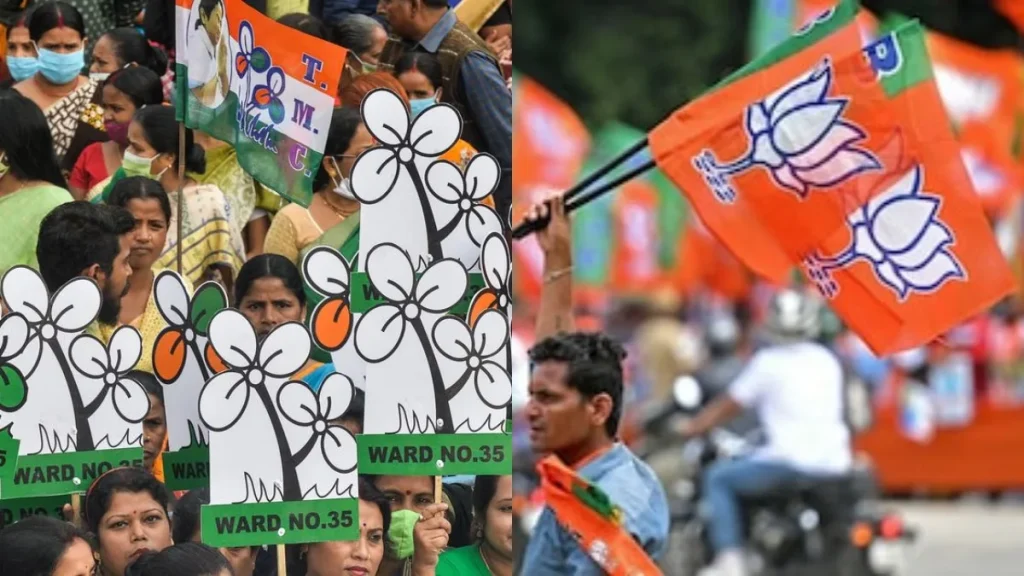
As West Bengal moves steadily towards another high-stakes Assembly election, the political theatre in the state is being shaped as much by strategy as by confrontation. Chief minister Mamata Banerjee has long built her political narrative around resisting an aggressive opponent, portraying herself as the last defender of Bengal’s political and cultural identity. Yet the paradox of the present moment is that the Bharatiya Janata Party (BJP), the principal opposition force in the state, appears unwilling to engage in the kind of fight Banerjee thrives on.
This strategic mismatch is reshaping the contours of Bengal politics. While Banerjee continues to project the BJP as an existential threat to Bengal’s identity, the saffron party seems to be calibrating its approach differently. Instead of confronting Banerjee on the emotional terrain of regional pride and outsider politics, the BJP is attempting to broaden the electoral contest through organisational expansion, selective narrative-building and issues that resonate beyond the state’s traditional political discourse.

The result is an unusual political situation. Mamata Banerjee’s strategy is built around polarisation with the BJP, but the BJP’s strategy increasingly appears to revolve around avoiding the terrain where Banerjee is strongest.
Mamata Banerjee’s Politics of Confrontation
For over a decade, Mamata Banerjee has mastered a style of politics built around confrontation with a powerful adversary. Her rise from a grassroots Congress leader to the founder of the Trinamool Congress (TMC) and eventually chief minister was forged through relentless agitation against the Left Front government.

Her political identity has often been that of a fighter confronting a stronger establishment. The 1993 protest against the Left government, during which police firing killed 13 people, became a defining moment that cemented her reputation as a combative leader willing to challenge authority.
That narrative carried into the TMC’s battles against the BJP as well. In the 2021 Assembly election, Banerjee successfully framed the contest as one between Bengali identity and what she described as an “outsider” political force. The TMC’s campaign slogan “Bangla Nijer Meyekei Chay” (Bengal wants its own daughter) sought to reinforce this emotional connect between the chief minister and the electorate.
The strategy worked. Despite the BJP’s massive campaign machinery and national leadership presence, the TMC returned to power for a third consecutive term with a comfortable majority.

Since then, Banerjee has continued to rely on the same template. Political confrontations with the Centre, public rallies framed as battles for federalism, and symbolic gestures of defiance are all designed to reinforce the image of a leader standing up to a powerful adversary.
BJP’s Strategic Restraint
However, the BJP appears increasingly reluctant to enter the battlefield exactly as Banerjee defines it.
Instead of aggressively contesting the Bengali identity narrative, the party has tried to shift the focus to governance, law and order, corruption allegations and demographic concerns. This shift is visible in the rhetoric of senior leaders, who often highlight issues such as infiltration from Bangladesh, the Citizenship Amendment Act (CAA), or alleged administrative failures in the state government.

Union Home Minister Amit Shah, for example, has repeatedly accused the state government of allowing infiltration and promised that Hindu refugees would not lose citizenship under the CAA.
By foregrounding such issues, the BJP attempts to reshape the electoral discourse around national security, migration and governance rather than cultural identity. The party’s calculation appears to be that engaging directly with Banerjee’s regional narrative only strengthens her political positioning.
The Limits of Polarisation
The BJP’s cautious strategy also reflects the complexities of Bengal’s electoral demography.
Muslims constitute roughly 30 percent of the state’s population and have largely voted as a consolidated bloc against the BJP in recent elections. This demographic reality has often tilted electoral outcomes in favour of the TMC.
For Banerjee, therefore, a polarised contest with the BJP can be politically advantageous. The sharper the confrontation, the easier it becomes for the TMC to consolidate minority voters while appealing to sections of Bengali Hindus through the rhetoric of regional pride.

The BJP appears aware of this trap. A purely confrontational strategy risks reinforcing the very narrative that Banerjee has used effectively in the past.
Instead, the party has tried to widen its appeal through social groups such as the Matua community and other backward classes while emphasising welfare and citizenship issues.
Organisational Asymmetry
Another reason for the BJP’s relatively cautious approach lies in organisational realities.
Despite its impressive rise in the state over the past decade, the BJP still lacks the grassroots organisational depth that the TMC possesses across Bengal’s districts and rural areas.

Banerjee’s party has spent years building an extensive network of local leaders, welfare schemes and community outreach programmes. Initiatives like “Didi Ke Bolo,” which allows citizens to directly communicate grievances to the chief minister, have helped strengthen this connection with voters.
The BJP’s organisational expansion in Bengal is still a work in progress. While it has established strongholds in certain regions such as north Bengal and parts of urban south Bengal, it continues to face structural disadvantages compared with the TMC’s entrenched political machinery.
In such a scenario, a strategy of measured expansion rather than direct confrontation may appear more pragmatic.
Mamata Banerjee’s Counter-Narrative
Banerjee has responded by intensifying her political rhetoric against the BJP, portraying the party as an external force attempting to reshape Bengal’s social and cultural fabric.
Issues such as voter roll revisions, alleged discrimination against Bengali speakers in other states, and federal disputes with the Centre are frequently invoked in her speeches. These narratives reinforce the idea that Bengal must defend itself from outside interference.
Political theatre also plays a crucial role in this strategy. Whether appearing at protests, confronting central agencies, or engaging in symbolic gestures, Banerjee consistently projects herself as the leader of resistance.
For her, the BJP is not merely a political rival but the central antagonist in a broader ideological struggle.
Governance Controversies and Political Opportunity
The BJP’s challenge, however, is not entirely defensive. The state government has faced significant controversies in recent years, from corruption allegations in recruitment processes to protests by dismissed teachers following a Supreme Court verdict cancelling thousands of appointments.
The 2025 protests by nearly 26,000 jobless teachers highlighted deep frustration over alleged irregularities in recruitment and created a major political crisis for the TMC government.
The BJP has attempted to use such issues to question the credibility of the state administration and highlight governance failures.
Prime Minister Narendra Modi and other leaders have also raised concerns about law and order, unemployment and alleged protection of criminals in high-profile cases.
Yet these criticisms often remain policy-centric rather than personality-centric, reinforcing the impression that the BJP is reluctant to transform the contest into a purely personal duel with Banerjee.
The Missing Face of Opposition
One structural limitation continues to shape the BJP’s strategy in Bengal: the absence of a leader who can rival Mamata Banerjee’s political charisma.
Banerjee’s personal popularity and direct connection with voters remain central to the TMC’s political dominance. She is not merely the party’s leader but also its principal campaigner, strategist and symbolic figure.
The BJP, in contrast, has not produced a single state-level leader with comparable appeal. While figures such as Suvendu Adhikari command influence in certain regions, they have not yet emerged as statewide political icons.
As a result, the BJP’s campaign often relies heavily on national leaders such as Narendra Modi and Amit Shah.
This asymmetry makes it difficult for the party to transform the election into a direct leadership contest.
A Strategic Waiting Game
Seen in this context, the BJP’s seemingly restrained approach may be less a sign of weakness than a calculated strategy.
Rather than engaging Mamata Banerjee on the terrain of identity politics and regional pride, the party may be waiting for broader shifts in voter sentiment driven by governance issues, economic concerns and organisational expansion.
This strategy carries risks. Avoiding direct confrontation could allow Banerjee to dominate the political narrative and maintain her image as the central figure in Bengal politics.
But it also offers potential rewards. If the BJP succeeds in broadening the electoral debate beyond identity politics, it may gradually erode the TMC’s core narrative.
A Battle of Political Frames
Ultimately, the contest in West Bengal is becoming less about ideological differences and more about competing political frames.
Mamata Banerjee seeks to frame the election as a battle for Bengal’s identity against an external force. The BJP seeks to frame it as a contest over governance, corruption and demographic concerns.
Each side’s success depends on which narrative resonates more strongly with voters.
If the election becomes a referendum on identity and regional pride, Banerjee’s strategy may once again prove decisive. But if governance issues dominate public discourse, the BJP may find an opening to expand its political footprint.
The Road to the Next Election
As the next Assembly election approaches, the central question is whether the BJP will eventually engage Banerjee on her chosen battlefield or continue to redefine the contest on its own terms.
For now, the evidence suggests that the party prefers the latter approach.
In doing so, it is refusing to give Mamata Banerjee the fight she wants.
Whether that decision proves to be strategic foresight or political miscalculation will ultimately be determined by Bengal’s voters.
