
Middle East crisis: Global oil markets on edge as Iran closes Strait of Hormuz — Why it matters – The Times of India
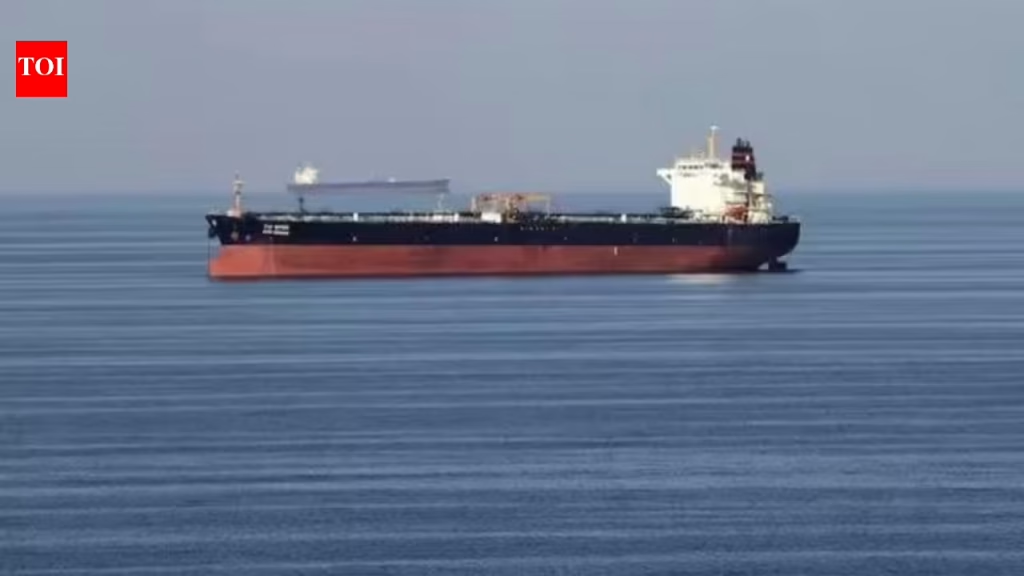
Iran’s Revolutionary Guards have declared the Strait of Hormuz closed, warning that any vessel attempting to pass will be attacked. Ebrahim Jabari, a senior adviser to the commander-in-chief of the Islamic Revolutionary Guard Corps (IRGC), said ships trying to transit the narrow waterway would be “set ablaze”.The strait, which lies between Iran and Oman, is one of the most critical chokepoints in global trade. It connects the Persian Gulf to the Gulf of Oman and, beyond that, the Arabian Sea. Though bordered by Iran and Oman, it is regarded as an international shipping lane.
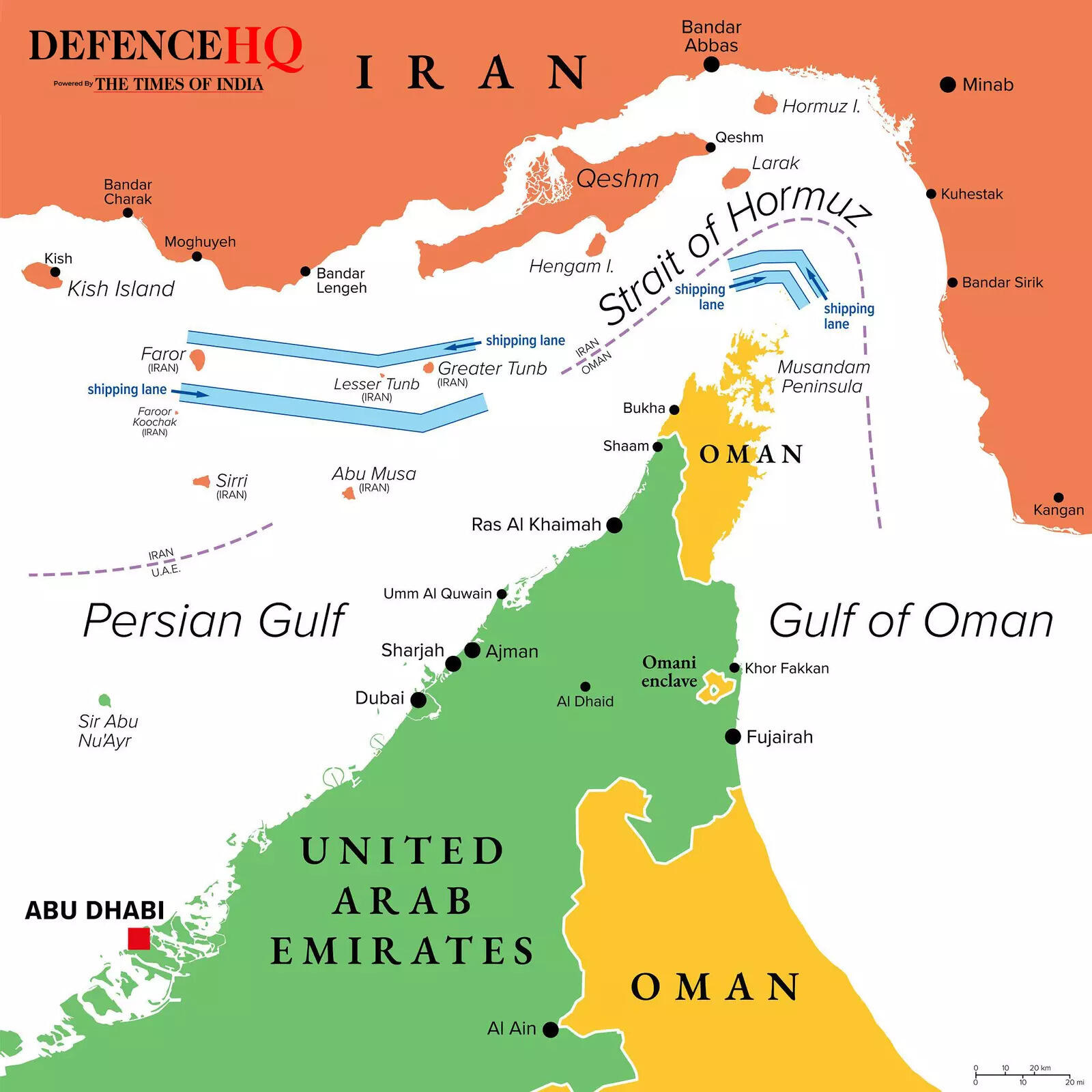
The threat of closure has already rattled energy markets, with oil prices jumping sharply amid fears of prolonged disruption. While there is no formal international confirmation that the strait is completely sealed, tanker traffic has fallen and reports of electronic interference and attacks near the waterway have heightened alarm.
A vital artery for global oil and gas
At its narrowest point, the Strait of Hormuz is just 21 miles (33km) wide, with shipping lanes only two miles wide in each direction. Yet it carries an outsized share of the world’s energy supplies.Key facts underline its importance:
- Around a fifth of global oil consumption passes through the strait.
- More than 20 million barrels of crude, condensate and fuels moved through it daily last year.
- Roughly 30% of global seaborne oil flows transit this route.
- Qatar sends almost all of its liquefied natural gas (LNG) exports through the passage.
Major producers — including Saudi Arabia, Iran, Iraq, Kuwait and the United Arab Emirates — rely heavily on this corridor to export crude, much of it destined for Asian markets.Energy analysts warn that even a short disruption could lift crude prices sharply. A closure lasting weeks rather than days could push oil well above $100 a barrel and send European gas prices back towards the crisis levels seen in 2022.
Limited alternatives and rising risks
Some Gulf producers have partial workarounds:
- Saudi Arabia can redirect some exports via its East-West pipeline to the Red Sea.
- The UAE operates the Habshan–Fujairah pipeline, bypassing Hormuz for part of its crude.
- Iraq has a northern pipeline through Turkey, but most of its exports still ship from Basra via Hormuz.
However, Kuwait, Qatar and Bahrain remain entirely dependent on the strait. Even with alternative pipelines, analysts say a full shutdown would significantly disrupt global supply.Iran itself produces over 3 million barrels of crude per day and exports most of it — largely to China — via terminals such as Kharg Island in the northern Gulf. Any strike on these facilities would further escalate the crisis.
Echoes of the 1970s energy shock
The current tensions have revived comparisons with the oil crises of the 1970s. In 1973–74, Arab producers imposed an embargo during the Yom Kippur War, triggering fuel shortages and soaring inflation. A second shock followed in 1979 after the Iranian Revolution slashed output.Analysts now warn that a prolonged closure of Hormuz could create a disruption even more severe, given today’s higher global demand and tighter supply chains.Beyond oil, the strait is also crucial for trade in refined fuels, petrochemicals and other commodities. For countries such as India, which exports significant volumes of rice and imports large quantities of Gulf crude, the fallout could extend well beyond energy markets.The central question is duration. A brief flare-up may be absorbed. A sustained blockade, however, would have profound consequences for global inflation, shipping costs and economic stability.