
‘Sonam Wangchuk tried to provoke Gen Z’: Centre’s massive ‘Nepal-Bangladesh’ charge in Supreme Court | India News – The Times of India
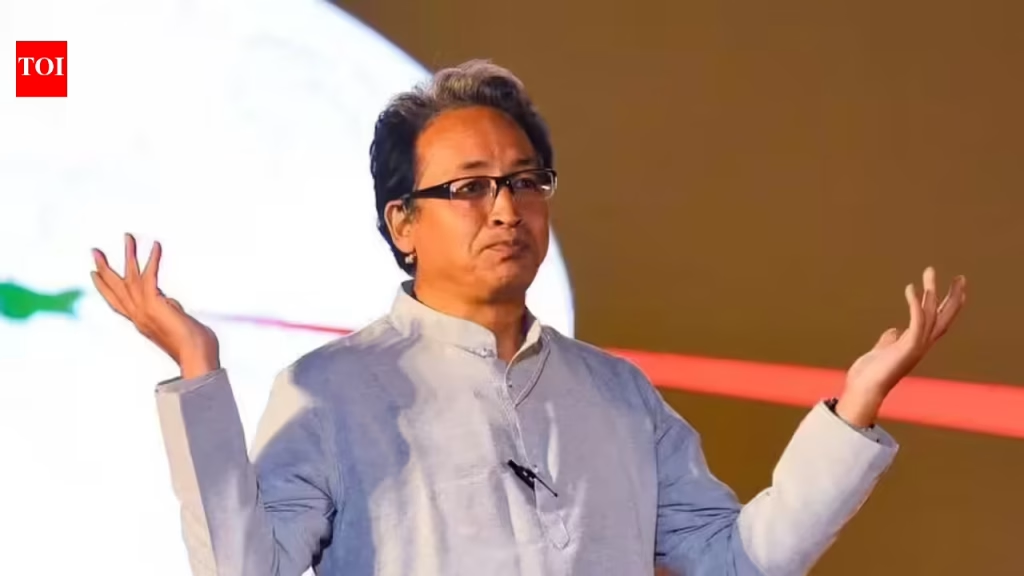
NEW DELHI: Environmental activist Sonam Wangchuk attempted to “instigate” Ladakh’s youth for protests inspired by regime-toppling movements in neighoburing Nepal and Bangladesh, the Centre and the Union territory administration said in the Supreme Court on Monday.Wangchuk was detained in September last year two days after deadly violence during pro-statehood protests in his native Ladakh. He is detained under the stringent National Security Act (NSA) and has been lodged in a prison in Jodhpur, Rajasthan.The NSA empowers the Centre and states to detain individuals to prevent them from acting in a manner “prejudicial to the defence of India”. The maximum detention period is 12 months, although it can be revoked earlier.The Supreme Court is currently hearing a writ petition filed by Wangchuk’s wife, social entrepreneur Gitanjali J Angmo, challenging his detention.“Wangchuk carefully crafted his speeches to mobilise Gen Z, urging agitations similar to those in Nepal and Bangladesh, while invoking Mahatma Gandhi’s speeches to mask his true intentions. He also referenced ‘Arab Spring’-style movements that led to the overthrow of multiple governments in the Arab world,” Solicitor General Tushar Mehta, representing the Centre, told a bench of Justices Aravind Kumar and PV Varale.Mehta further alleged that the former educationist sought to create a rift between the central government and the people of Ladakh by framing the government as “them” and the people as “us.” He also claimed Wangchuk called for a “plebiscite” and “referendum.”“There is no ‘them’ or ‘us’—we are all Indians. Ladakh shares borders with China and Pakistan, making it a very fragile region. His speeches must be considered in their entirety. He was allegedly misleading young people while selectively invoking Mahatma Gandhi, who never incited people against their own government,” the SG told the bench.Mehta argued that the district magistrate of Leh—the Union Territory capital where violence erupted on September 24, 2025—had carefully reviewed relevant materials, including videos of Wangchuk’s speeches, before issuing the preventive detention order. “It took four hours for the detention order to be executed. After the district magistrate passed it, a DIG-rank officer briefed him and showed him videos of Wangchuk’s speeches, explaining the grounds for detention,” the SG noted.Addressing the petitioner’s contention that the district magistrate relied on “borrowed material,” Mehta maintained that this argument is flawed. “The district magistrate is not required to witness every speech firsthand. Officials who heard the speeches recorded videos and submitted them as evidence. Based on these materials, the order was passed,” he contended.The arguments remained inconclusive and are set to continue on Tuesday.(With PTI inputs)