
David Greene: Popular radio show host David Greene claims Google stole his voice; Google responds | – The Times of India
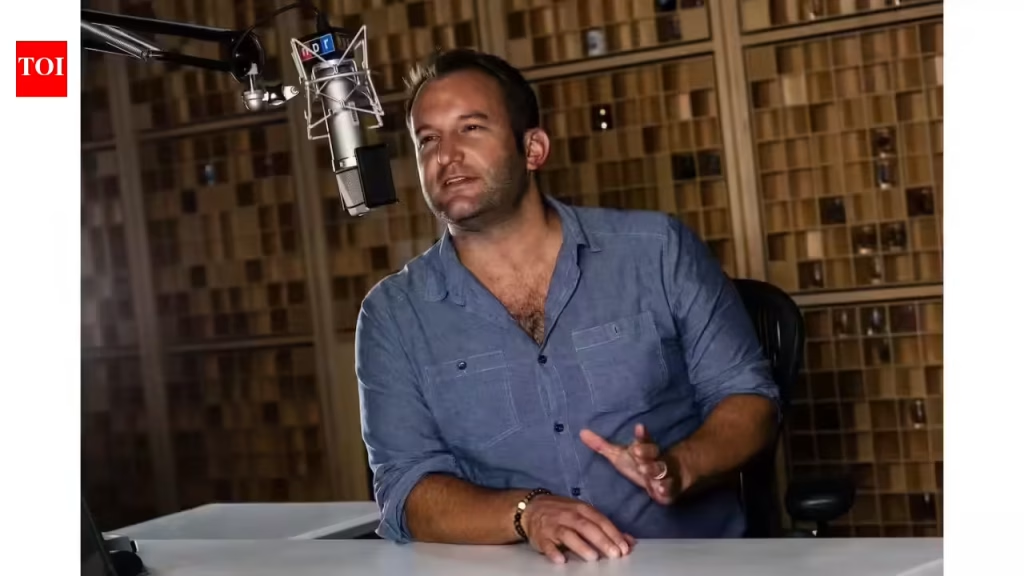

Popular radio show host David Greene has sued Google, alleging the tech giant of ‘stealing’ his voice for its NotebookLM tool, which uses AI to create on-demand podcasts. The lawsuit, filed in Santa Clara County alleges that Google cloned Greene’s voice and distinctive broadcasting style without permission or compensation. Greene argues that Google’s NotebookLM T tool voice’s rhythm, intonation, and even his characteristic verbal tics are so similar that even his friends, colleagues, and listeners assumed he’d licensed his voice to Google.“So… I’m probably the 148th person to ask this, but did you license your voice to Google? It sounds very much like you!,” a former co-worker asked David Greene in a fall 2024 email, a Washington Post report says.
What David Greene says
“I was, like, completely freaked out,” Greene told the publication, adding “It’s this eerie moment where you feel like you’re listening to yourself.” Greene said the AI voice sounds very similar to his own, and that the impact goes beyond losing a chance to make money from his best-known asset. “My voice is, like, the most important part of who I am,” Greene reportedly said. In the lawsuit, Greene’s lawyer argues that the recordings make the resemblance clear. “We have faith in the court and encourage people to listen to the example audio themselves,” said Joshua Michelangelo Stein, a partner at the firm Boies Schiller Flexner.
Google responds to the lawsuit
Google responded denying the allegations. Google spokesperson José Castañeda told Washington Post: “These allegations are baseless. The sound of the male voice in NotebookLM’s Audio Overviews is based on a paid professional actor Google hired.”The Washington Post reported, “The lawsuit is the latest to pit the rights of individual human creators against the rights of a burgeoning AI industry that promises to transform the economy by enabling the on-demand generation of stunningly lifelike speech, prose, images, and video. Behind the artificial voices found in tools like NotebookLM are language models trained on vast libraries of real-life human text and speech. The humans used to train these models are unaware that their words and voices will be used by AI, raising serious questions about copyright and ownership.”.