
Hand Wash Basin vs Countertop Wash Basin – Woman’s era Magazine
Some choices in a home seem small, but they quietly shape everyday comfort. A wash basin is one of them. You use it every morning, after meals, when guests arrive, often without a second thought. Yet the type of basin you choose can change how a space looks, feels, and works.
When planning a bathroom, dining area, or common wash space, many homeowners face the same question. Should you choose a hand-wash basin or a countertop wash basin? Both serve the same basic purpose, but the experience they offer is quite different. Let us break it down, so you can decide what works best for your home and lifestyle.
What is a Hand Wash Basin?
A hand-wash basin is a regular wash basin designed primarily for convenience and space efficiency. It is usually compact and installed in areas where quick hand washing is the main requirement rather than full grooming routines. You will often find these basins in common areas, dining areas, guest wash zones, corridors, or near living spaces.
The biggest advantage of a regular hand wash basin is how easily it fits into small or unused corners. Wall-mounted and corner styles are especially popular because they keep the floor open and make the room look less crowded. In homes with limited space, this type of basin ensures functionality without compromising movement.
From a visual point of view, regular wash basins are subtle. They are meant to blend in rather than stand out. When paired with clean wall tiles, they create a neat, well-balanced look without drawing attention.
Maintenance is also simple. Smaller bowls mean less surface area to clean, and most designs avoid deep curves or sharp edges that collect dirt. For households that value ease and practicality, this is a great benefit.
What is a Countertop Wash Basin?
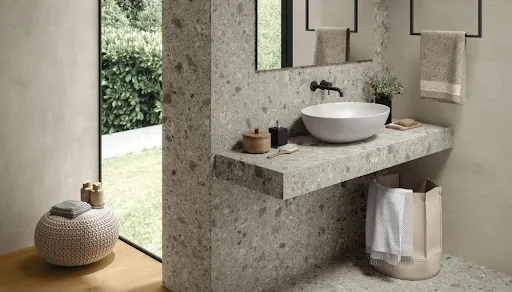
A countertop wash basin blends function with style. Placed on top of a vanity or counter, this basin style is more visible and more decorative. It is commonly used in master bathrooms, luxury guest bathrooms, or spaces where design plays a key role.
Unlike regular basins, counter basins are larger and deeper. This makes them more comfortable for everyday routines like washing your face, brushing, or even light grooming. The height and bowl depth also reduce water splashing, which helps keep the surrounding area dry.
Design flexibility is a major reason people choose countertop basins. They come in a wide range of shapes, finishes, and colours, allowing homeowners to match or contrast with tiles, mirrors, and fittings. When combined thoughtfully with wall or counter tiles, the basin becomes a visual anchor for the entire space.
That said, counter basins do require more planning. The counter height must be correct, plumbing must be concealed neatly, and regular cleaning is important since the basin remains fully visible.
Key Differences Between Hand Wash Basin and Countertop Wash Basin
The most obvious difference lies in size and purpose. A regular hand-wash basin is compact and designed for quick use, while a countertop wash basin is larger and built for comfort and style.
Space is another deciding factor. If you are working with a small area, a regular wash basin fits easily without making the room feel tight. The counter top wash basin needs a dedicated counter or vanity, which means more surface area and planning.
In terms of design impact, regular wash basins are understated. Counter basins, on the other hand, are meant to be seen and admired. They often act as a centrepiece in modern bathrooms.
Maintenance also differs slightly. Regular wash basins are easier to clean because of their size. Counter basins need more frequent wiping around the base and on the counter to avoid watermarks and soap residue.
Which One Should You Choose
The right choice depends entirely on where the basin will be installed and how it will be used.
If you need a basin for a dining room, hallway, or guest area where hand washing is occasional, and space is limited, a hand-wash basin is the sensible option. It keeps the area functional without overpowering the layout.
If you are designing a primary bathroom or a space where daily routines matter, a countertop wash basin offers better comfort and visual appeal. It adds character and pairs beautifully with modern tile designs and well-planned lighting.
Many homes actually use both. A compact hand-wash basin in shared areas and a statement countertop basin in private bathrooms create a balanced, practical layout.
The Role of Tiles in Enhancing the Basin
No matter which basin you choose, tiles play a supporting role that should not be overlooked. The right tile backdrop can elevate even the simplest basin design. Soft neutral tiles create calm, while textured or patterned tiles add depth and interest.
Conclusion
A basin is not just a fixture, it is part of how your home functions every single day. Choosing between a hand-wash basin and a countertop wash basin is about understanding your space, your habits, and the kind of experience you want to create.
Whether you value simple practicality or bold design, the right basin paired with well-chosen tiles can turn an ordinary corner into a finished, welcoming space. With options that suit both needs, brands like Simpolo Tiles & Bathware help homeowners find the right balance between everyday comfort and timeless style.
