
Suvendu Adhikari vs Mamata Banerjee: Why BJP’s Bengal Challenger Struggles To Match A Political Giant – Woman’s era Magazine
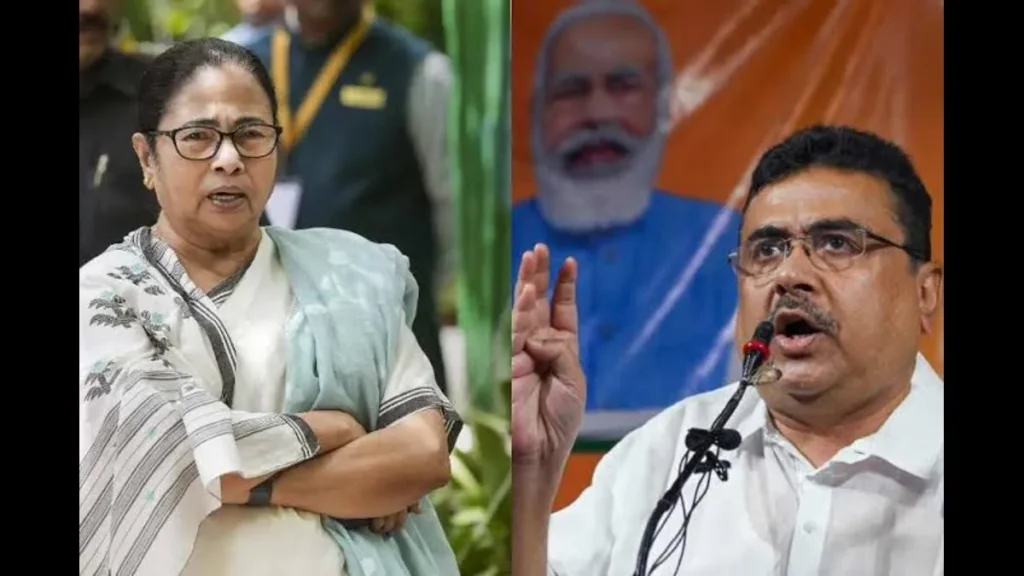
In the high-stakes theatre of West Bengal politics, the Bharatiya Janata Party (BJP) has long searched for a face capable of challenging Chief Minister Mamata Banerjee on her own turf. That role has largely fallen on Suvendu Adhikari, the former Trinamool Congress (TMC) strongman who defected to the BJP ahead of the 2021 Assembly elections and famously defeated Banerjee in Nandigram. Yet, despite that symbolic victory and his elevated status as Leader of the Opposition, Adhikari has struggled to emerge as a genuine statewide rival to Banerjee.
The gap between the two leaders is not merely electoral or organisational. It is ideological, cultural and strategic. While Banerjee projects herself as a rooted Bengali leader who blends populist governance with cultural symbolism, Adhikari often appears caught between advancing the BJP’s national political template and articulating a distinctly Bengali political narrative. The result is a paradox: a leader with strong credentials, organisational experience and insider knowledge of the TMC, yet one who has failed to translate those assets into mass resonance.
The Mamata Factor: A Political Ecosystem, Not Just a Leader
To understand Adhikari’s limitations, one must first understand the scale of the challenge. Mamata Banerjee is not simply a political opponent; she represents a complete political ecosystem in West Bengal. Over decades, she has cultivated an image of accessibility, emotional connection with voters, and cultural authenticity that transcends party lines.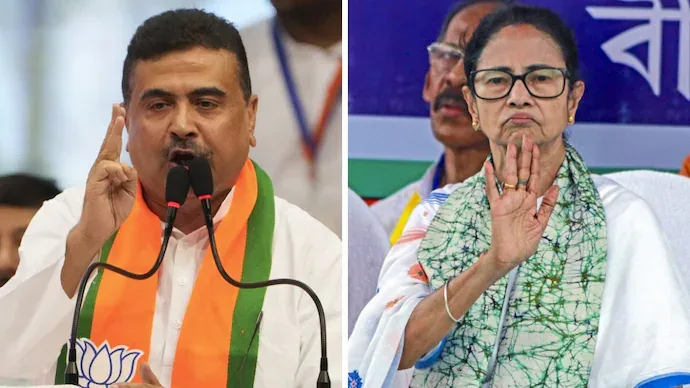
Her politics blends welfare populism, Bengali identity and an anti-Centre narrative that resonates deeply in a state historically sensitive to federal overreach. Even critics acknowledge that Banerjee’s ability to frame political battles as existential struggles, whether against the Left in the past or the BJP now, allows her to mobilise voters at an emotional level.
Adhikari, by contrast, has struggled to create a narrative that matches this depth. While he commands influence in certain regions, especially parts of coastal Bengal, he has yet to build a statewide persona capable of challenging Banerjee’s emotional and cultural appeal.
A Leader Between Two Worlds
One of the central dilemmas facing Adhikari is the tension between selling the BJP’s national vision and addressing the specific aspirations of Bengal’s electorate. The BJP’s political messaging often emphasises national security, religious polarisation, and centralised governance narratives. While these themes resonate strongly in several Hindi-belt states, Bengal’s political culture remains distinct, shaped by linguistic pride, intellectual traditions and a strong sense of regional identity.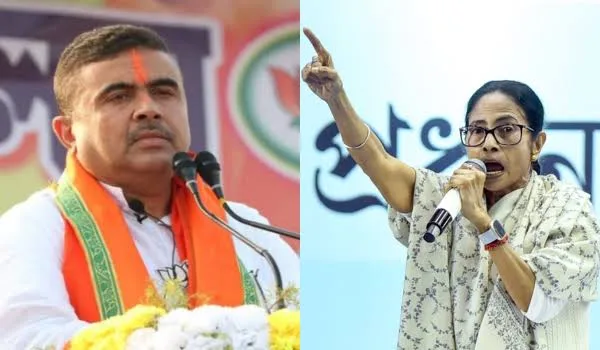
Adhikari frequently echoes national BJP rhetoric, including calls for Hindu unity and warnings about demographic shifts, as seen in his appeals for Hindus in Bengal to unite beyond language or caste divisions. While such messaging aligns with the BJP’s broader ideological framework, it does not always resonate uniformly with Bengal’s diverse electorate, where identity politics operates through a different cultural vocabulary.
This dual positioning leaves Adhikari appearing conflicted. On one hand, he must demonstrate loyalty to the BJP’s central leadership and ideological direction. On the other, he must present himself as an authentic Bengali alternative to Mamata Banerjee. Striking that balance has proved difficult, and the resulting ambiguity often weakens his appeal.
The Problem of Messaging: Technical vs Emotional Politics
A recurring criticism of Adhikari’s political approach is his reliance on technical or procedural critiques of the TMC government. He frequently highlights issues such as governance lapses, administrative irregularities or specific policy failures. While these critiques may hold merit, they rarely capture the public imagination in the way Banerjee’s emotive messaging does.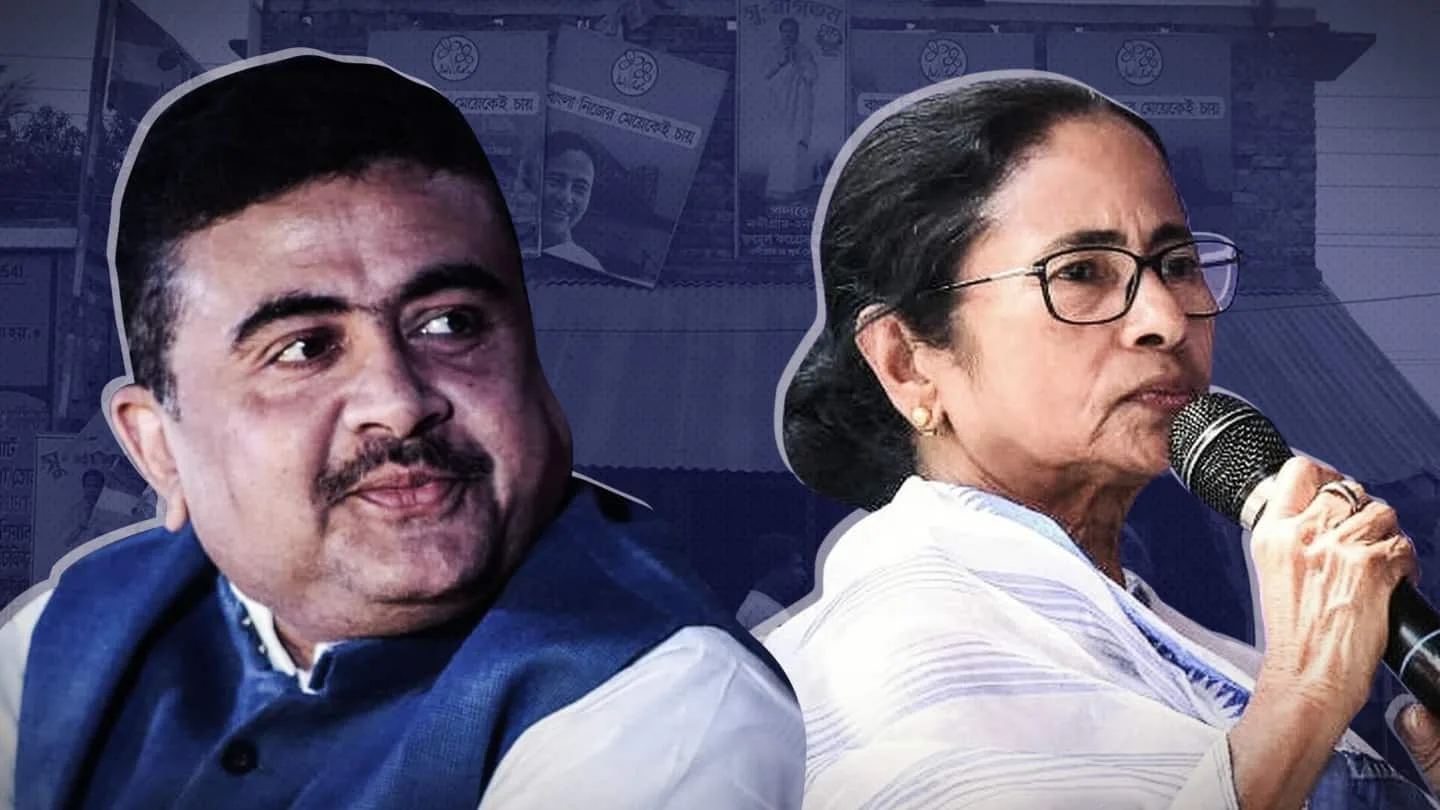
Banerjee frames political contests as battles over dignity, rights and identity, translating administrative disputes into narratives of existential struggle. Adhikari, meanwhile, often remains anchored in legalistic or bureaucratic arguments that fail to resonate at the grassroots level.
This difference in communication style matters enormously in a state where political mobilisation thrives on symbolism and storytelling. Voters may acknowledge governance concerns, but emotional connection often determines electoral loyalty. By focusing heavily on technical points, Adhikari risks appearing disconnected from everyday sentiment.
Losing Ground in Public Connection
Another factor contributing to Adhikari’s struggles is the perception that he lacks a consistent grassroots connect compared to Banerjee. Mamata Banerjee’s political style emphasises personal outreach — public rallies, spontaneous visits and an ability to communicate in culturally familiar idioms.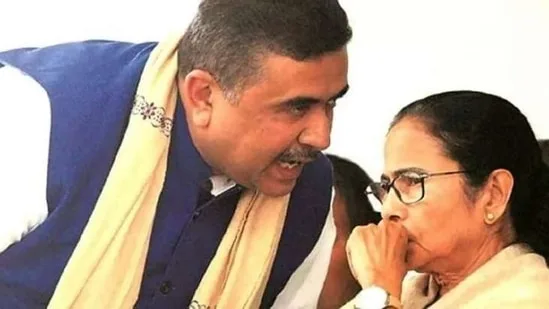
Adhikari’s trajectory has been different. His rapid transition from TMC insider to BJP’s principal challenger created expectations that he would bring organisational strength and insider credibility to the BJP’s Bengal campaign. However, the transition also carried risks. Some voters continue to view him as a defector whose ideological shift was motivated more by political calculation than conviction.
Moreover, despite his background in the TMC’s grassroots machinery, Adhikari’s public image increasingly aligns with the BJP’s central leadership rather than regional identity. This shift has arguably weakened his ability to connect with voters who value local authenticity.
BJP’s Strategic Dilemma: Underutilised Asset or Structural Limitation?
From the BJP’s perspective, Adhikari remains its most prominent Bengali leader with the potential to challenge Banerjee. Yet the party has struggled to effectively deploy him as a mass face of the campaign. This raises a critical question: is the problem Adhikari himself, or the broader strategy of the BJP in Bengal?
The BJP’s organisational structure in Bengal often relies heavily on central leaders and national narratives. While this approach has expanded its voter base significantly, it may also limit the emergence of regional leadership capable of competing with entrenched figures like Banerjee.
Adhikari’s position reflects this tension. He is expected to be both a regional strongman and a representative of the BJP’s national ideological agenda. The dual expectations can dilute his messaging, preventing him from fully occupying either role.
The Shadow of 2021: Symbolic Victory, Strategic Stagnation
Adhikari’s victory over Mamata Banerjee in Nandigram during the 2021 Assembly elections was widely seen as a turning point. It demonstrated that the BJP could challenge the TMC even in its strongholds. However, that victory did not translate into sustained statewide momentum.
Instead, the BJP struggled to maintain organisational cohesion after the election. Several leaders defected back to the TMC, internal factionalism emerged, and the party failed to consolidate its gains. In this context, Adhikari’s role as Leader of the Opposition became more symbolic than transformative.
Repeated predictions of a BJP victory in upcoming elections, including claims of a “Bihar-style” win, may energise party cadres, but they risk appearing disconnected from ground realities if not accompanied by visible organisational growth.
Cultural Politics and the Bengal Narrative
Perhaps the most significant obstacle for Adhikari is the cultural dimension of Bengal politics. Mamata Banerjee has successfully positioned herself as the protector of Bengali identity against perceived external forces. The BJP’s image as a party dominated by non-Bengali leadership complicates Adhikari’s efforts to project authenticity.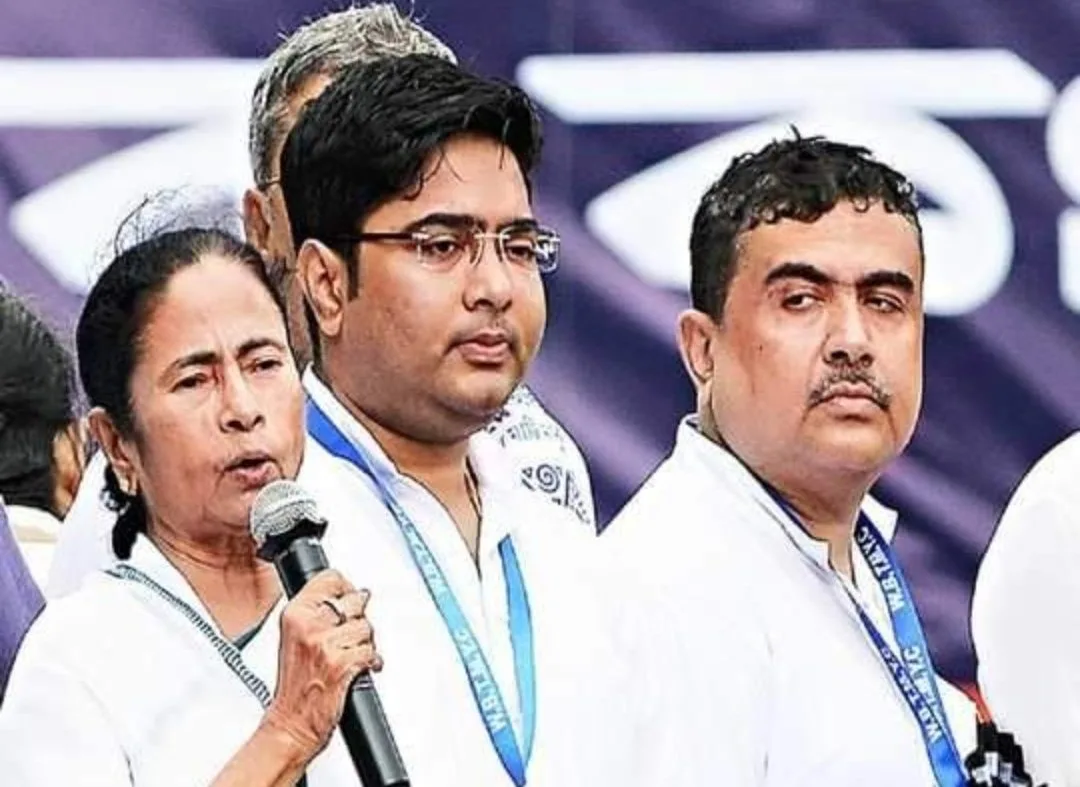
Although he is a Bengali leader, Adhikari’s messaging sometimes mirrors national party narratives more than regional cultural concerns. This creates a perception gap, reinforcing Banerjee’s framing of the BJP as an outsider force.
The Road Ahead
Despite these challenges, it would be premature to dismiss Adhikari entirely. He remains one of the few BJP leaders in Bengal with administrative experience, organisational networks and the ability to mobilise sections of voters. The party’s continued expansion in certain regions suggests that he retains relevance within the broader political landscape.
However, for Adhikari to become a genuine challenger to Mamata Banerjee, significant shifts may be necessary. He may need to craft a more distinctly Bengali political identity, prioritise emotional resonance over technical critique, and bridge the gap between national ideology and regional aspirations.
A Challenger Still Searching for a Narrative
Suvendu Adhikari’s struggle to match Mamata Banerjee reflects the deeper dynamics of West Bengal politics. Leadership here is not defined solely by organisational strength or ideological alignment but by cultural authenticity, emotional connection and narrative control.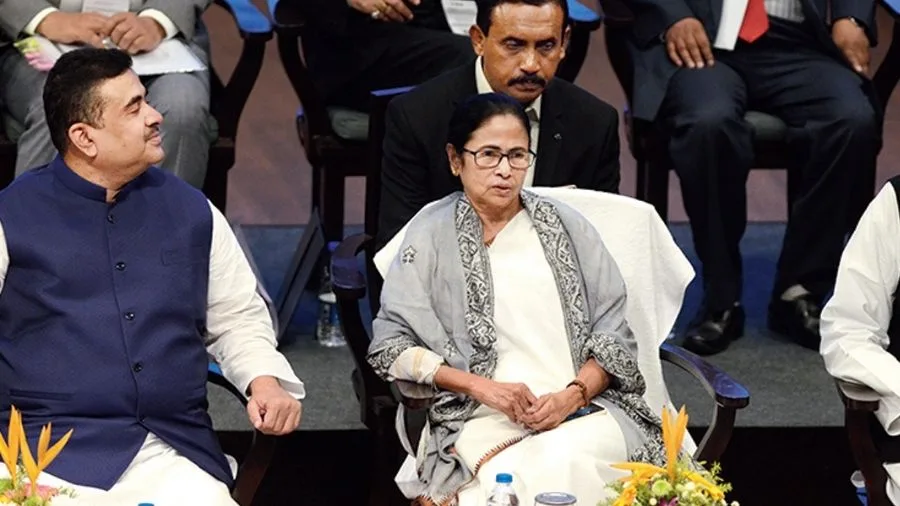
At present, Adhikari appears caught between roles, a former TMC insider trying to embody BJP’s ambitions while seeking acceptance as a regional leader. Until he resolves that contradiction, he risks remaining a secondary figure in a political landscape dominated by Mamata Banerjee’s enduring charisma and strategic adaptability.
In the coming election cycle, the question is not merely whether Adhikari can defeat Banerjee, but whether he can redefine himself in a way that resonates with Bengal’s unique political culture. Without such transformation, the BJP’s most prominent challenger may continue to struggle against a political giant who has mastered the art of connecting with her state’s pulse.