
‘What can you deliver in 30 days?’ US allies in Gulf turn to UK, South Korea for more ammo – The Times of India
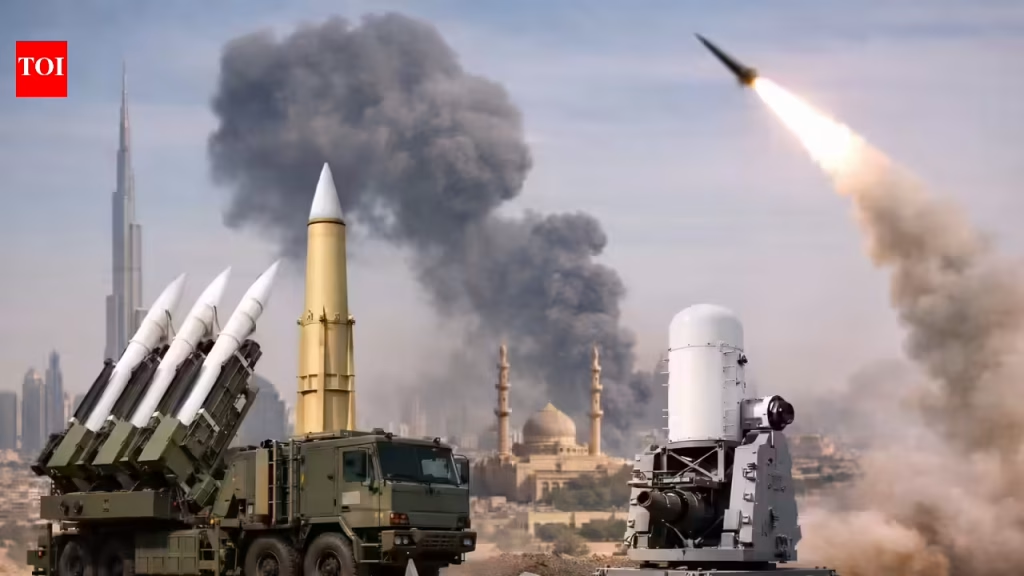
More than six weeks of sustained air bombardment in the Middle East have depleted air defence stockpiles, pushing key US allies such as Saudi Arabia, the United Arab Emirates and Qatar to urgently seek alternative weapons suppliers and systems.With a fragile ceasefire between the United States and Iran in place, Gulf nations are widening their procurement networks, exploring options ranging from South Korean missile defence systems to Ukrainian interceptor drones and low-cost British missiles. The shift reflects both the intensity of recent Iranian retaliatory attacks and growing concerns over delays in US arms deliveries.
Saudi Arabia has approached Japan for Patriot interceptor components and is in talks with South Korean firms Hanwha and LIG Nex1 to expedite deliveries of the M-SAM system, a medium-range surface-to-air defence platform capable of intercepting drones, missiles and aircraft. The UAE has already deployed the system to counter Iranian munitions, according to a South Korean lawmaker.At the same time, Gulf states are strengthening defence ties with Ukraine. Riyadh and Doha have signed cooperation agreements focused on weapons production and operational expertise, while UAE officials are also in discussions with Kyiv over a similar pact. Ukrainian firms and military units say Gulf countries have requested interceptor drones and electronic warfare systems.However, supply constraints remain a major hurdle. Ukrainian manufacturers are struggling to meet domestic wartime demand, limiting their ability to export. One supplier producing over 10,000 interceptor drones monthly said its output is largely committed to Ukraine’s own defence needs.Officials in the Gulf maintain that their defences remain intact. The UAE said it possesses “diverse, integrated, and multilayered air defense systems” along with “a robust strategic stockpile of munitions.” A Saudi official said, “We are working seamlessly with US providers but we also have excellent relationships with others,” pointing to recent agreements with Ukraine.The rush to diversify suppliers also exposes deeper structural issues in global arms production. “Investments in new capacity have already started to happen, but not at the required intensity to fill current demand,” said Adrien Rabier, an analyst at Bernstein.The United States, long the primary arms supplier to the region, is facing mounting pressure on its production capacity. Although Washington has approved $23 billion in weapons sales to the UAE, Kuwait and Jordan, including Patriot PAC-3 missiles and radar systems, delivery timelines for some systems stretch into years.The strain is partly due to the ongoing war in Ukraine, which has already absorbed significant US and allied defence inventories. Nearly 20 countries operate Patriot systems, further tightening global supply. Switzerland has even indicated it may reconsider its Patriot order due to delays after the US reprioritised deliveries to Ukraine.In response, Gulf nations are also exploring quicker and lower-cost alternatives. Raytheon has received inquiries for its Phalanx rapid-fire Gatling gun, a system that has proven effective against drones. Truck-mounted gun systems and other bullet-based defences are also being considered as stopgap solutions.The urgency of demand was evident at a recent meeting hosted by British officials near Buckingham Palace, where Gulf representatives pressed defence firms for rapid delivery timelines. “What can you deliver within 30, 60 and 90 days?” UK minister Luke Pollard asked industry executives, according to people present.The industry, however, is struggling to keep pace with simultaneous demand from Ukraine, the UK and Gulf states. Arms startups are now stepping in to fill gaps. Johannes Pinl, whose firm Marss provides jamming systems and air defence solutions, said he was contacted soon after the conflict escalated. “We need more ASAP, what more do you have on the shelf, what can you get to me?,” an official told him.The ongoing scramble underscores a shifting defence landscape, where Gulf states are no longer relying solely on Washington but are increasingly diversifying partnerships to secure faster and more flexible military supplies.