
Elon Musk says can’t trust WhatsApp’s end-to-end encryption, Meta-owned platform hits back: ‘Your messages …’ – The Times of India
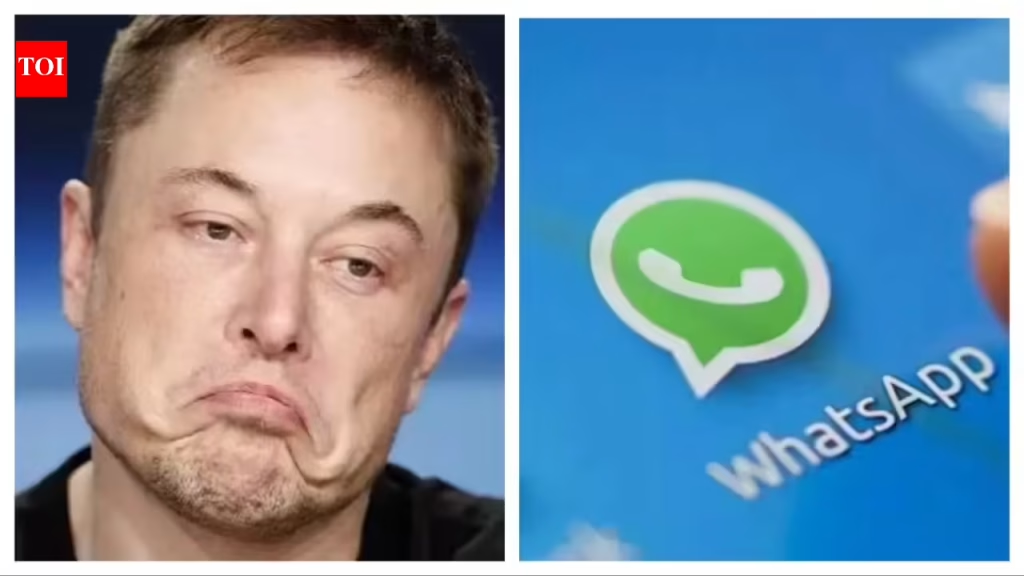

Elon Musk recently said that WhatsApp’s end-to-end-encryption (E2EE) cannot be trusted. The tech billionaire was responding to a post about a new class action lawsuit against Meta that blames the platform for reading users’ messages without consent. “WhatsApp’s “end-to-end encrypted” privacy is a total lie. New class-action lawsuit just dropped: Meta secretly let employees, contractors like Accenture, and third parties read, intercept, and store your private messages WITHOUT consent. All while marketing it as “only you and the recipient can read it.” Zuck lied to billions. Your chats were never safe,” X user Mario Nawfal posted. Elon Musk replied to the post writing “Can’t trust WhatsApp”.“Use X Chat for messaging and voice/video calls. Comes with this great benefit of actual privacy,” Musk said in another post.
WhatsApp hits back
The Meta-owned platform has rejected the claims made in the lawsuit. WhatsApp replied to Musk’s post on X stating:“The claims in this lawsuit are categorically false and absurd. WhatsApp has been end-to-end encrypted using the Signal protocol for a decade so your messages cannot be read by anyone other than the sender and recipient.”As explained on a WhatsApp FAQ, “WhatsApp’s end-to-end encryption is used when you chat with another person using WhatsApp Messenger. No one outside of the chat, not even WhatsApp, can read, listen to, or share them. This is because with end-to-end encryption, your messages are secured with a lock, and only the recipient and you have the special key needed to unlock and read them”.
Telegram CEO Pavel Durov targets WhatsApp
Telegram CEO Pavel Durov also shared a post criticizing the messaging platform. In an X post, Durov wrote:“WhatsApp’s “encryption” may be the biggest consumer fraud in history — deceiving billions of users. Despite its claims, it reads users’ messages and shares them with third parties. Telegram has never done this — and never will”.
Class action lawsuit against WhatsApp
Earlier this year, an international group of plaintiffs filed a class-action lawsuit against Meta-owned WhatsApp, accusing the company of defrauding billions of users by allegedly maintaining ‘backdoor’ access to private communications that the company claims are “end-to-end encryption”. Filed in the US District Court for Northern California, the lawsuit challenges Meta’s E2EE feature.According to a report by Bloomberg then, the lawsuit claims that Meta’s privacy claims are false as the company WhatsApp “store, analyze, and can access virtually all of WhatsApp users’ purportedly ‘private’ communications”. The plaintiffs represented users from India, Brazil, Australia, Mexico and South Africa.