
Burnout As Physical Illness: A Woman Doctor’s Journey To Unbecoming
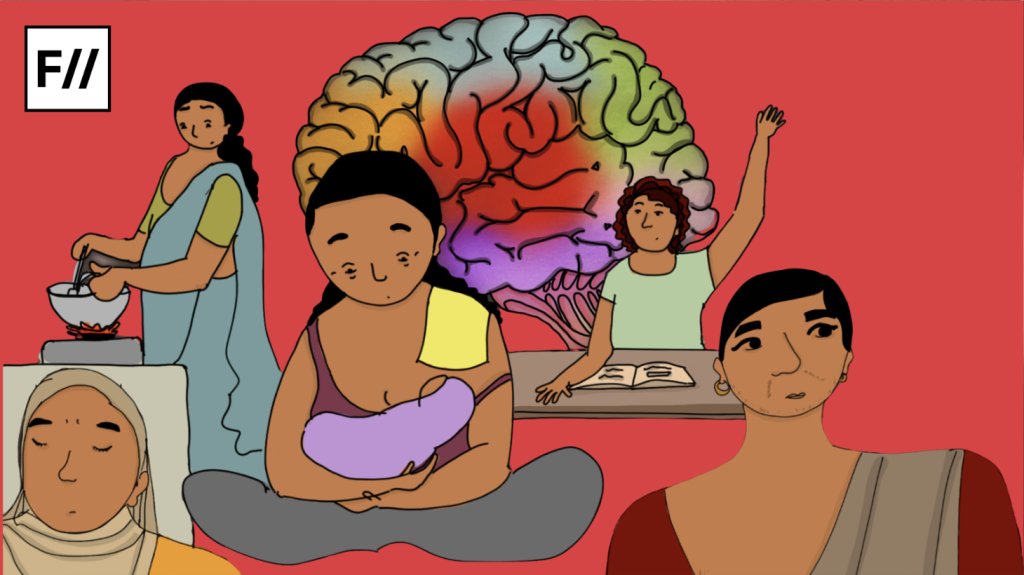
Kavya had just finished the certification courses. The next step was to own the identity she had worked hard a decade for, under her own label, her clinic was supposed to open soon. Friends and relatives are waiting in anticipation for the invite, and having a family doctor to flex with. But the invites weren’t sent. ‘When are you inviting us to your clinic?’ was the first question in every encounter she had. Initially excusing with a delay, she started avoiding lanes to avoid answering why the long-awaited future collapsed. Well, it wasn’t the future that collapsed; she did.
In India, women account for a large share of medical college admissions. The headlines read about the girls getting ahead of the boys—the feminine breakthrough. What nobody follows up on is what happens after the degree. According to WHO data, women make up nearly 57% of the NEET qualifiers – but only 14% of practicing doctors in India. 20% of medically trained women aged 30-40 are not working.
Dreams with terms & conditions applied
After the years of preparation, the stressful entrance attempts, intense competitive grinding, and the financial negotiation with family who are supporting until anything goes south. As you complete the internship, the specialization, the slow realization grows all over your plans that in most clinical fields, your skill is only as good as your financial investment – and that depends entirely on a family structure that holds all the way through.
After the years of preparation, the stressful entrance attempts, intense competitive grinding, and the financial negotiation with family who are supporting until anything goes south. As you complete the internship, the specialization, the slow realization grows all over your plans that in most clinical fields, your skill is only as good as your financial investment
For many women, that structure has a quiet expiry date, or comes with a star mark of terms & conditions applied, those reveal only at the time when the major part of the investment needs to be made, and not when you were choosing the most suitable career for a girl, the one that was most convincing to everyone. The support that holds you through the degree begins to shift when the idea of the clinic doesn’t materialize immediately. When the investment required is larger than anticipated, when the timeline between the real milestone lapses, and the marriage question arises. When a subtle denial of marriage is sensed from your end, you are reminded of the preset checklist of a settled life, especially for girls, that has to be ticked as marriage after a degree.
Was her degree something that was allowed to do just to fill the time gap till she reaches the preset timeline? Well, it wasn’t discussed while choosing a career as a doctor for her. What changed? Or was it just to make her biodata look good enough, well-suited for ‘a good family guy’?
The support slowly loses itself to impatience. For some women, there’s often an understood distribution of expenses that funds their dreams before and after marriage. If that load seems to be shifting on one family entirely, the frowning begins. Now the calculations start hitting the conversations: how much has been spent, the years that passed, how difficult this daughter has become compared to the simpler future that was always available to her.
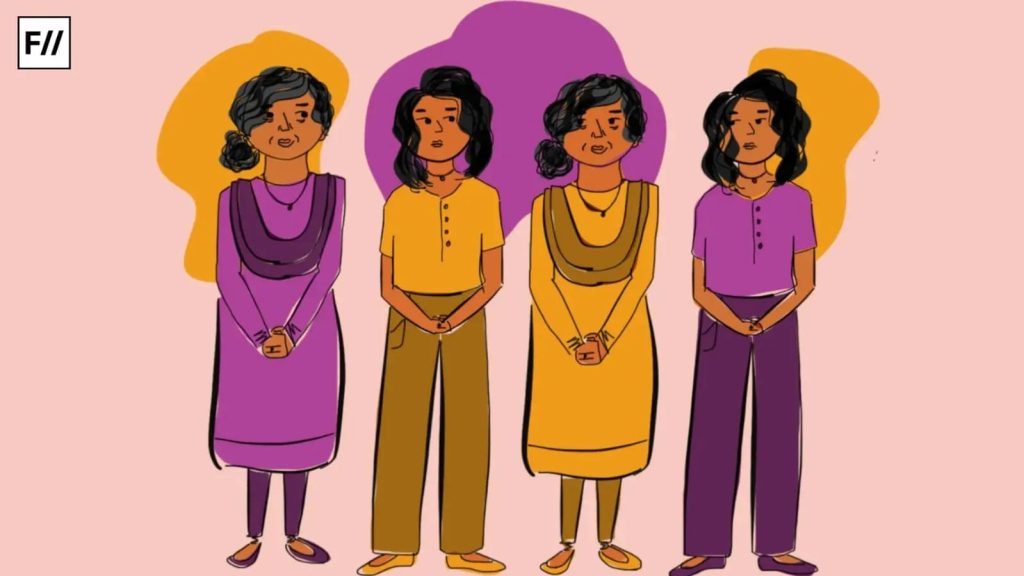
As disappointed as they get every time they fail upon trying to fit my identity into a closed box of what defines a settled life. The farther that support keeps moving.
Was she given wings of education to surrender years of hard work to just earn a title that looks good as a social status? Had it nothing to do with having an identity of her own, a life of her own? Were those wings meant to fly or subject to social display? What may happen to her career after she takes a stand in her own family or the family she owns as her…there’s one thing that goes overlooked even by herself. Nobody talks about what her body has gone through.
What her body presents as hormonal imbalances, recurring UTI infections, weakened immune responses, and fatigue that doesn’t go away with rest. Premature onset of hereditary diseases. Anxiety that has no single trigger because it has too many. A feeling of impending doom, nervous breakdowns. Is very casually dismissed by projecting women as moody, confused, too sensitive, low threshold, or too dramatic.
It’s not just women reacting in a certain way out of their disturbed physiology; it’s also how scientific researchers have documented it – that chronic stress in a female manifests differently, in a much more diffuse manner. These symptoms don’t announce themselves. They accumulate over time. And then we look for solutions in multiple specialist consultations and highly medicated treatments. Lecturing her about her habits, diet, and lifestyle. Even she ends up accepting the blame for herself.
But have you ever thought, how do you treat a non-physical cause with a physical treatment? You don’t. You manage. You push through because that sounds like an easier thing to do. Your body doesn’t shut you down immediately; it signals you one after another, either until you pay attention or until it can’t put up with more. And the career that should feel like establishment feels like a mountain. You are not the face of wrong decisions. You are just too burned out to feel lit by the moment.
wrecking mental health crossing the physical capacity
I am not coming from a few research studies, a philosophy to protect women, or some medical literature. I am encouraged by my personal experiences. When I was just a few months into my journey, I woke up with a headache one day and then a severely stiff neck out of nowhere, and how it became a part of all that I had to manage in a day, along with the career, peer, and family pressure. How I kept gaining weight without any significant change in my lifestyle and habits. Weight gain coupled with PCOS symptoms. How one thing kept adding to another. And how I lost my hope with medicines, as they were only treating symptoms. How my functionality at the clinic got affected, as I began to feel unorganized in my head, things kept falling out of my hand, even small procedures squeezed the energy out of me, the worry I felt for performing the next procedure, the next day at the clinic. I wasn’t tired of the work; it was the whole architecture of how I had been living all through these years that had collapsed in front of me. The circles I kept moving in my life, expecting them to spiral upwards – they didn’t.
Taking your time and choosing to stop when needed is not a failure. I want to say that clearly, because every instinct we are given tells us it is. “How can you leave this career- you’ve invested so much?” Exactly, I have invested enough. And I knew it can’t serve me, I couldn’t anymore.
And only when my body’s need to look deeper into the root cause outran the temporary symptomatic fixes I gave it. I could finally see what cost I paid along the journey to become what I was supposed to. Here I am now, unbecoming of what I need to be.
Before every other definition of a settled life, I am settling into a ground identity of who I am, and the rest will be led by it. When your body calls it out, you’d better be listening. The physical signs from my body weren’t the problem that depleted my mental health. They were the first expression of my wrecking mental health that was crossing the physical capacity to hold on to more of it.
These challenges are genuine, every other women face it in some form at some stage in their lives. The age concern that arrives uninvited when you’re in your late twenties and still building rather than settled. The financial concern that ties your professional future to family decisions you can’t fully control. The shifting perspectives of people who were proud of you at twenty-two and are quietly exasperated by you at thirty feels like a betrayal. A professional career is often treated as a Phase rather than a Life. Something to do before the real thing begins.
Life should not always feel like either/or to them. Because the option to choose their healthy being often steps out of the frame. Taking your time and choosing to stop when needed is not a failure. I want to say that clearly, because every instinct we are given tells us it is. “How can you leave this career- you’ve invested so much?” Exactly, I have invested enough. And I knew it can’t serve me, I couldn’t anymore.
Choosing yourself is the most rational decision you can make, in a series of decisions that were made around you, about you, and for you, with your compliance under obligation with love, care, and a fear of disappointing someone you love the most.
The perspectives will keep shifting, but your body won’t wait for them to align with your needs. Your health defines your being, and you can always make a new identity, not one but many. What matters is how you identify your ‘self’! I am done. Done paying the cost of all the important elements of me. Done trying to fit in everything that I don’t feel like I belong.
And if, while reading this, you feel like being narrated your own story through Kavya’s words.
If you see yourself in any of the physical mess with no relevant explanation, if you are in a career waiting to feel like an arrival but feel like an endurance, I am not writing this to tell you what to do.
I am writing this to tell you that no one will name this burnout for you, not your family, not your doctor. But you. And when you feel frustrated with the physical irritations in your body. Don’t feel cursed.
Your body isn’t failing you. It has been the only one in the entire process that has been honest with you. So don’t overlook, be a gentle listener. Even if everything else is still unresolved. Especially then.